
Introduction
A painting size guide for walls is one of the most important principles in interior design. While choosing a painting is often emotional, selecting the correct size is a practical decision that determines how balanced your space will feel.
Many beautiful artworks look misplaced simply because the scale is wrong. In most homes, the most common mistake is choosing artwork that is too small for the wall.
Using a simple painting size guide for walls, you can confidently choose artwork that feels intentional, elegant, and well-proportioned.
Interior design experts from the American Society of Interior Designers emphasize that correct artwork scale creates visual harmony within a room.
This guide will help you apply the most effective sizing rules used by professional interior designers.
Why a Painting Size Guide for Walls Matters
The right artwork size helps create balance in a room.
Without the correct proportions, even high-quality artwork can feel visually disconnected from the space.
A well-planned painting size guide for walls helps achieve:
- Better visual balance
- A stronger focal point
- Professional-looking interior styling
- Harmony between furniture and artwork
Design experts featured in Architectural Digest regularly highlight how scale determines whether artwork enhances or weakens a room’s design.
Similarly, curated installations at the Museum of Modern Art demonstrate how correct proportions allow artwork to command attention.
Art displays at Tate also show how wall spacing and artwork scale create visual rhythm in galleries.
You can explore modern abstract artworks sized for contemporary interiors from Mamta Jharia Arte.
Start With the Wall, Not the Artwork
The most reliable painting size guide for walls begins with measuring your wall space before selecting art.
Falling in love with a painting first often leads to choosing a size that does not fit the room.
Measure These Areas First
Before purchasing artwork, measure:
- The width of the wall space
- The height between furniture and ceiling
- Any obstacles such as switches or shelves
- The width of furniture below the artwork
If the painting will hang above a sofa, console table, or bed, always measure the furniture width.
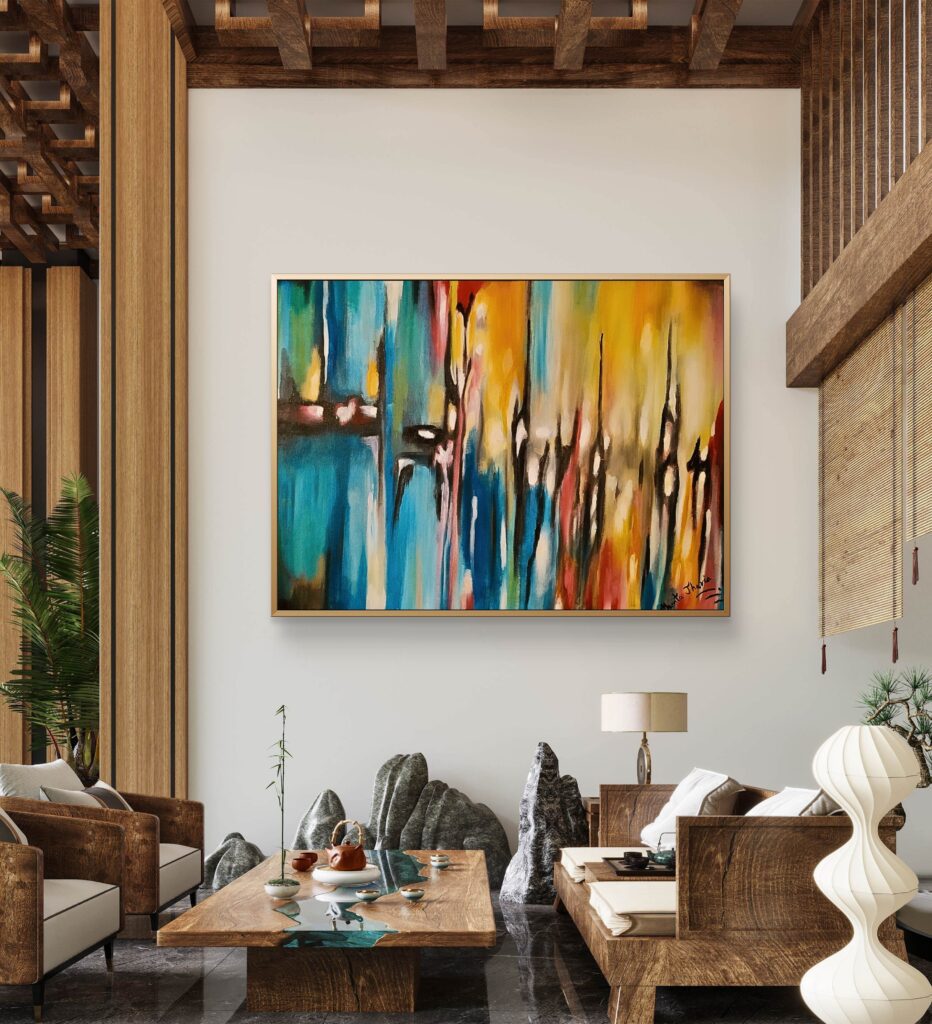
Interior styling tutorials from House Beautiful emphasize measuring wall space before selecting artwork.
Design publications like Dezeen also highlight how architectural proportions influence artwork placement.
Professional curators at The Metropolitan Museum of Art frequently design exhibitions using precise wall measurements.
The Most Reliable Painting Size Guide for Walls
Interior designers often follow a simple sizing rule that works in most homes.
The Two-Thirds Rule
Your artwork should be about two-thirds to three-quarters the width of the furniture below it.
This is the most trusted painting size guide for walls.
Real Examples
- 210 cm sofa → artwork around 140–160 cm wide
- 150 cm console → artwork around 100–115 cm wide
- 160 cm bed → artwork around 105–120 cm wide
This ratio creates visual stability.
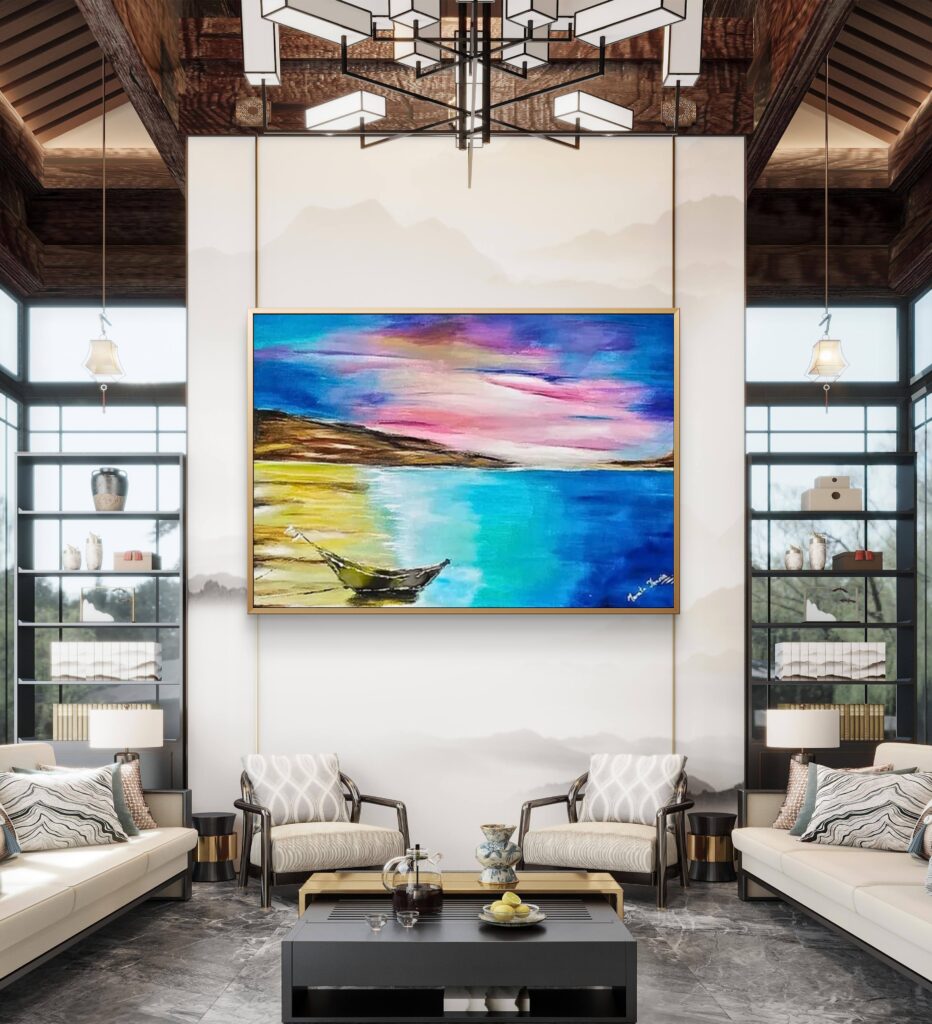
Design experts from Elle Decor frequently recommend the two-thirds rule when styling living rooms.
Art display strategies from Designboom also emphasize scale relationships between furniture and artwork.
Museum curators at Solomon R. Guggenheim Museum carefully use proportional placement when designing exhibitions.
How High to Hang Artwork on Your Wall
Another important part of the painting size guide for walls is hanging height.
Even correctly sized artwork can look awkward if placed too high or too low.
Standard Eye-Level Rule
Interior designers recommend:
- Il center of the artwork should sit 145–155 cm from the floor
This aligns artwork with natural eye level.
Above Furniture Placement
If hanging above furniture:
- Keep the bottom edge 15–25 cm above the sofa, console, or bed headboard
This creates visual connection between the artwork and furniture.
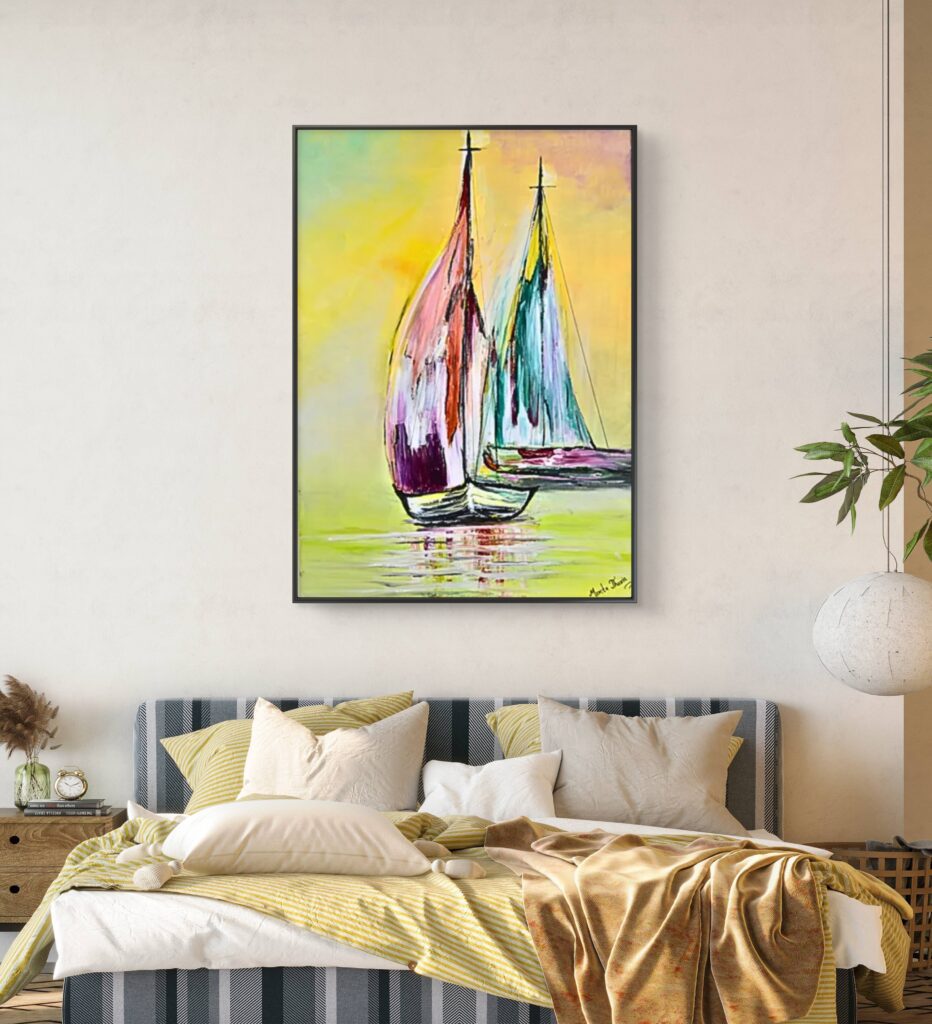
Art display guidelines from National Gallery also follow similar eye-level placement standards.
Architectural publications like Domus highlight the importance of proportional hanging height.
Museum installation guides from Victoria and Albert Museum further demonstrate professional artwork placement.
Choosing Between One Large Piece, Two Panels, or a Gallery Row
Another part of the painting size guide for walls involves deciding how many artworks to use.
Different layouts create different visual effects.
One Large Artwork
Best for:
- Minimalist homes
- Statement walls
- Luxury interior styling
Two Panels (Diptych)
Best for:
- Symmetry lovers
- Wide walls
- Above beds or long sofas
Gallery Row
Best for:
- Collected art displays
- Mixing prints and originals
- Eclectic interiors
When creating a gallery row, keep:
- Frame styles consistent
- Spacing equal
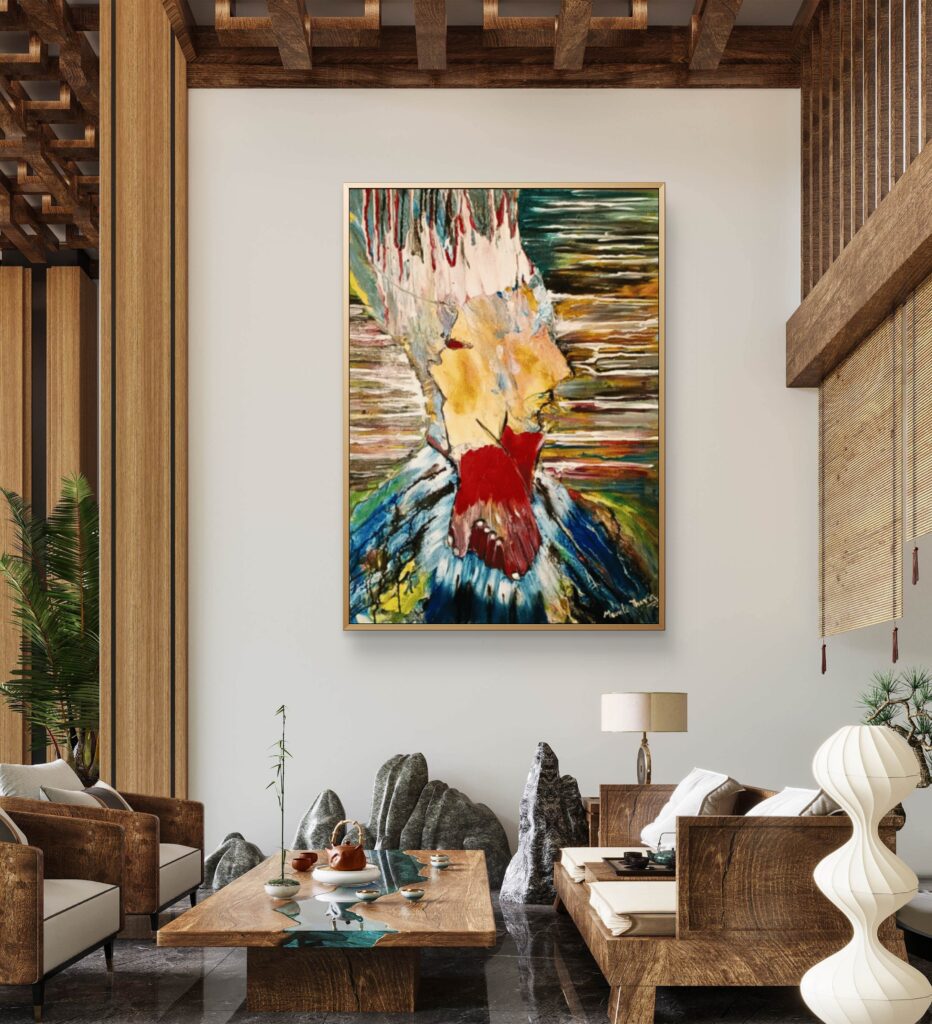
Explore artworks here:
Shop collection
https://mamtajhariaart.com/shop/
Canvas print example
https://mamtajhariaart.com/product/healing-abstract-wall-art-canvas-print-let-go/
Original painting example
https://mamtajhariaart.com/product/interconnection-original-acrylic-painting/
Curatorial installations at Los Angeles County Museum of Art often use multiple artwork formats to create visual hierarchy.
Contemporary galleries such as Saatchi Gallery also showcase diptych and gallery wall arrangements.
Art discovery platforms like Artsy highlight modern trends in multi-artwork wall styling.
Understanding Visual Weight in Painting Size Guide for Walls
Artwork scale is not only about physical dimensions.
Color and contrast also affect how large an artwork appears visually.
Dark Artwork Feels Heavier
Paintings with:
- Deep indigo
- Charcoal
- Violet
- Strong contrast
Often feel visually larger.
Therefore, slightly smaller artwork can still make a strong statement.
Light Artwork Feels Airy
Artworks with:
- Soft neutrals
- Minimal compositions
- Pale colors
May require larger sizes to maintain presence.
Understanding visual weight improves how you apply the painting size guide for walls.
Conclusion
The right artwork scale transforms a room from unfinished to professionally styled.
Using a reliable painting size guide for walls ensures your artwork feels balanced and intentional.
Remember these key principles:
- Measure your wall first
- Use the two-thirds width rule above furniture
- Hang artwork at eye level
- Choose layouts that match your interior style
When the scale is right, even a single painting can complete an entire room.
 Italian
  English