A wall does not need to be full to feel complete. A meditation space needs quiet, intention, and emotional clarity. Wall art for meditation space can support that feeling by shaping what your eyes rest on when you breathe, pause, and return to yourself.
In this guide, you will learn how to choose calming artwork, which colors work best, how to keep styling minimal, and which pieces create a peaceful atmosphere in modern homes.
Why wall art matters in a meditation space
Meditation is often described as “coming back.” Your space can make that return easier.
Wall art supports a meditation corner because it can:
- Create a gentle focal point for the eyes
- Reduce visual noise in the room
- Encourage slower breathing through soft movement
- Add warmth without clutter
If you are designing a mindfulness corner, the goal is not decoration. The goal is emotional calm.
External reference for design guidance: https://www.architecturaldigest.com/story/how-to-design-a-meditation-room
Wall art for meditation space: choose art that slows the mind
The best wall art for meditation space feels spacious.
It often has:
- Soft, open composition
- Balanced movement
- Gentle transitions between colors
- A sense of quiet depth
Wall art for meditation space that feels “soft and open”
Look for abstract art that gives the eye room to rest.
Good signs:
- Large areas of light or neutral tones
- Flowing shapes rather than sharp angles
- One clear visual rhythm (not many competing elements)
If the artwork feels like “too much,” your mind will keep scanning it.
Wall art for meditation space: choose calming colors
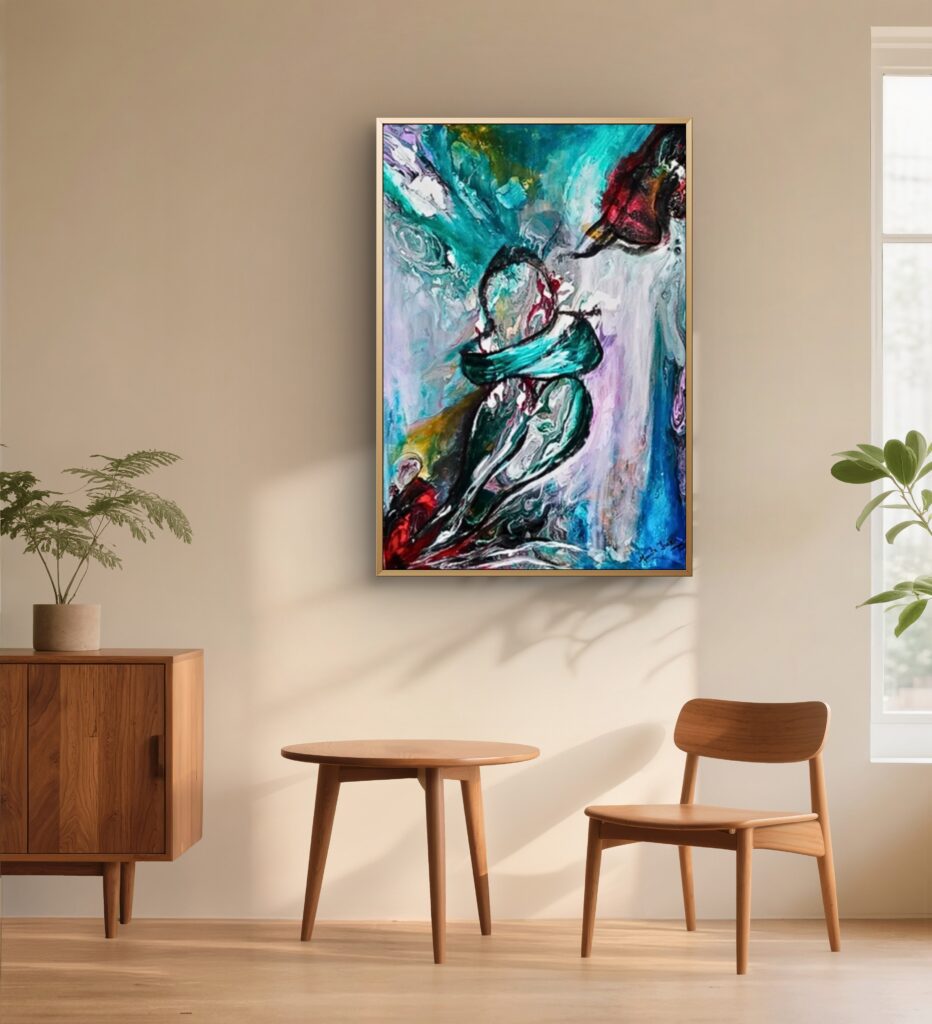
Color is emotional. In a meditation room, color should feel like a slow exhale.
For most homes, calming palettes include:
- Soft whites and creams
- Pale blues
- Muted violets
- Warm neutrals (sand, beige, stone)
Avoid overly busy patterns or aggressive contrast, especially in small rooms.
Wall art for meditation space color ideas by mood
Choose your mood first, then your palette.
- For calm and clarity: white, cream, pale blue
- For warmth and comfort: sand, beige, soft gold
- For creativity and depth: muted violet, gentle indigo
If your meditation space is near a window, lighter artwork can amplify natural light.
Keep the wall styling minimal (so the mind can rest)
A meditation space should not feel visually crowded.
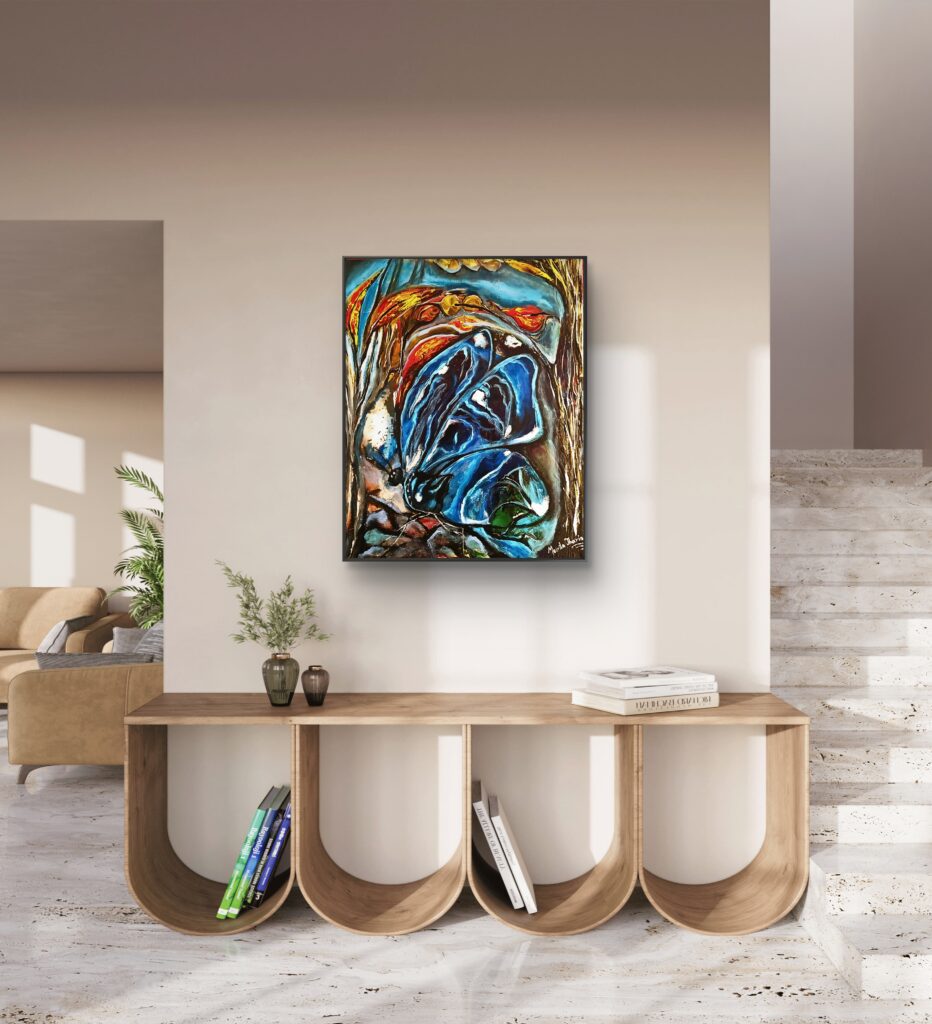
A simple formula that works internationally (small apartments, modern homes, and open-plan living):
- One artwork as the focal point
- Clean placement (centered and stable)
- Enough negative space around it
Instead of adding more frames, add more breathing room.
Practical styling checklist:
- Keep décor items to 1–3 pieces maximum
- Avoid busy gallery walls in the meditation zone
- Choose one bridge color from the artwork for a cushion or throw
Best wall art placements for a meditation corner
Placement changes how the artwork feels.
Try these placements:
- Above a meditation cushion or mat: creates a quiet focal point
- On the wall you face while seated: supports steady attention
- Near a window: pairs beautifully with soft, luminous palettes
- Behind a small altar or shelf: keeps the space intentional
Hanging tip (simple): keep the center of the artwork close to eye level when seated, not standing.
Wall art for meditation space: 9 peaceful ideas to try
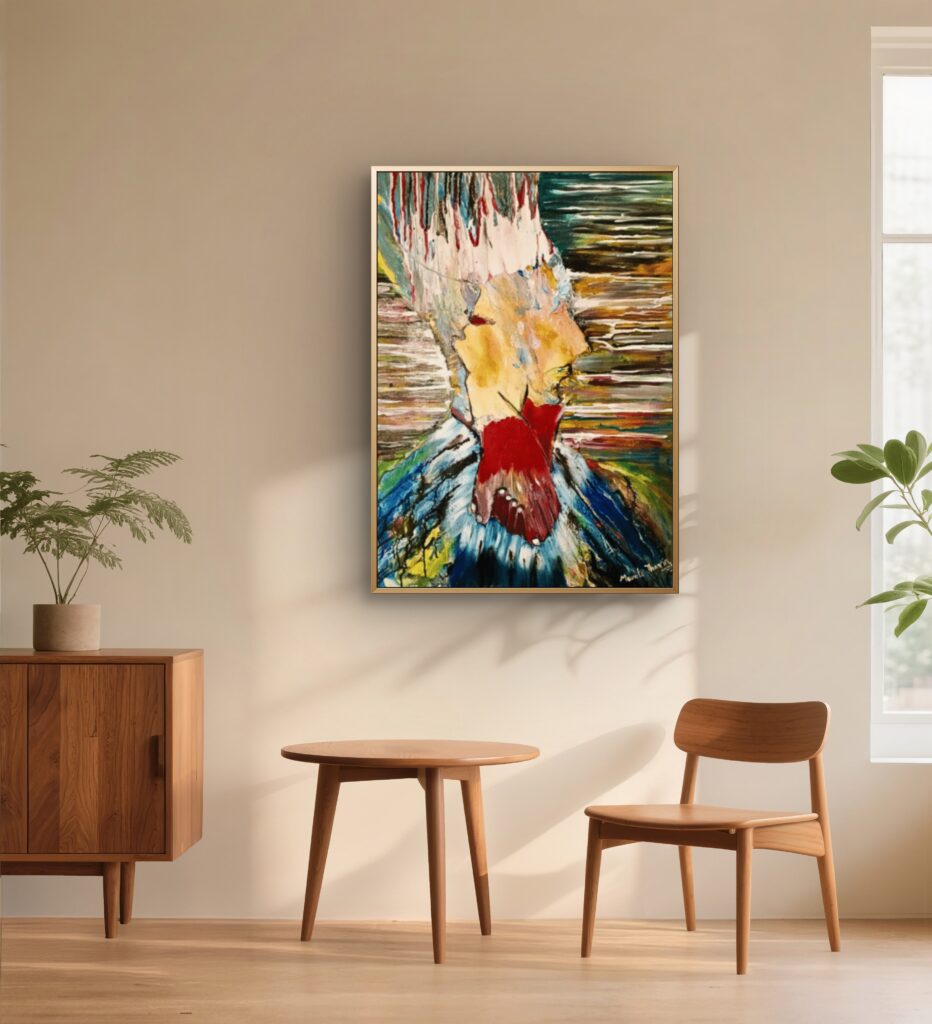
Use these ideas to choose artwork that feels calm, modern, and emotionally clean.
1) Minimalist abstract with soft movement
Choose a piece with one gentle rhythm.
Best for:
- Small meditation corners
- Minimalist interiors
- People who want “quiet” more than “statement”
2) Neutral abstract with warm undertones
Warm neutrals make a space feel safe and grounded.
Best for:
- Bedrooms
- Cozy corners
- Homes with beige, cream, or wood tones
3) Pale blue abstract for clarity
Blue is often associated with calm and mental clarity.
Best for:
- Home offices used for mindfulness breaks
- Meditation spaces near daylight
4) Muted violet abstract for depth
Muted violet can feel spiritual, creative, and introspective.
Best for:
- Evening meditation
- Spaces with soft lighting
5) One large canvas print (instead of many small frames)
One larger piece reduces visual clutter.
Best for:
- Modern homes
- Clean wall styling
Explore a canvas print option: https://mamtajhariaart.com/product/healing-abstract-wall-art-canvas-print-let-go/
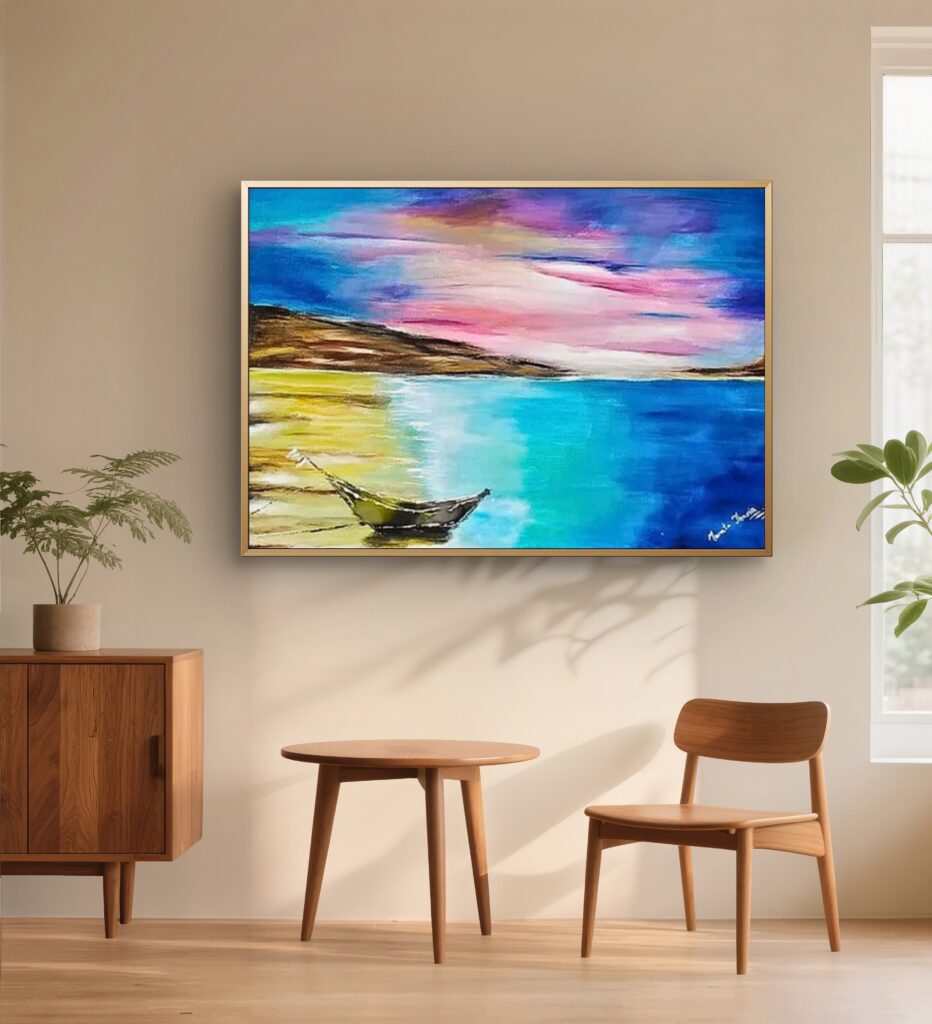
6) A single original painting as the “quiet centerpiece”
An original painting adds presence and texture.
Best for:
- Collectors
- People who want a one-of-one energy in the space
Explore an original painting: https://mamtajhariaart.com/product/interconnection-original-acrylic-painting/
7) Art with soft gradients and layered texture
Gradients feel like breath. Texture feels like warmth.
Best for:
- Meditation corners that feel too plain
- White walls that need depth
8) Art that repeats one calming color in your textiles
Choose one bridge color from the artwork.
Repeat it in:
- A cushion
- A throw
- A small rug
This creates a calm, designed look.
9) A “silence in color” piece for daily practice
Choose art that you can look at every day without feeling overstimulated.
If you want to browse more options:
- Shop all wall art and originals: https://mamtajhariaart.com/shop/
How to choose between an original and a canvas print
Both can be beautiful in a meditation room.
Choose an original if you want:
- One-of-one presence
- Visible texture and depth
- A collectible piece with lasting meaning
Choose a canvas print if you want:
- A larger size for impact
- A clean, modern look
- An accessible way to build a calming home gallery
A refined approach is to mix both: one original as the anchor, and a canvas print in another quiet corner.
FAQs
What is the best wall art for meditation space?
The best wall art for meditation space is calm, spacious, and softly expressive. Abstract art with gentle movement and minimal visual noise works especially well.
Which colors are best for wall art for meditation space?
Soft whites, creams, pale blues, muted violets, and warm neutrals are popular choices. They support calm without overstimulation.
Should a meditation room have one artwork or many?
Usually, one artwork is best. A single focal piece keeps the space minimal and helps the mind rest.
Conclusion
A meditation space does not need to be large. It needs to feel emotionally clean. The right wall art for meditation space becomes a quiet companion to your practice.
Choose art that slows the mind. Choose colors that feel like breath. Keep the wall styling minimal. Then let the space become a daily return to calm.
If you are ready to explore peaceful abstract art, you can start here: https://mamtajhariaart.com/shop/
Original painting
https://mamtajhariaart.com/product-category/original-abstract-paintings/page/2/
Stampa su tela
https://mamtajhariaart.com/product-category/modern-art-prints/canvas-print-abstract-art/
 Italian
  English