AI and Copyright in Art is one of the biggest questions for artists, collectors, designers, and creative entrepreneurs today. AI tools can create images in seconds, but the real sawaal is this: who owns the artwork, who gets copyright, and how can a human artist protect original creativity?
For international artists in the USA, UK, and Europe, this topic is no longer optional. Whether you create abstract paintings, digital artwork, wall art, prints, wearable art, or social media visuals, understanding AI and Copyright in Art helps you stay creative without putting your brand at risk.
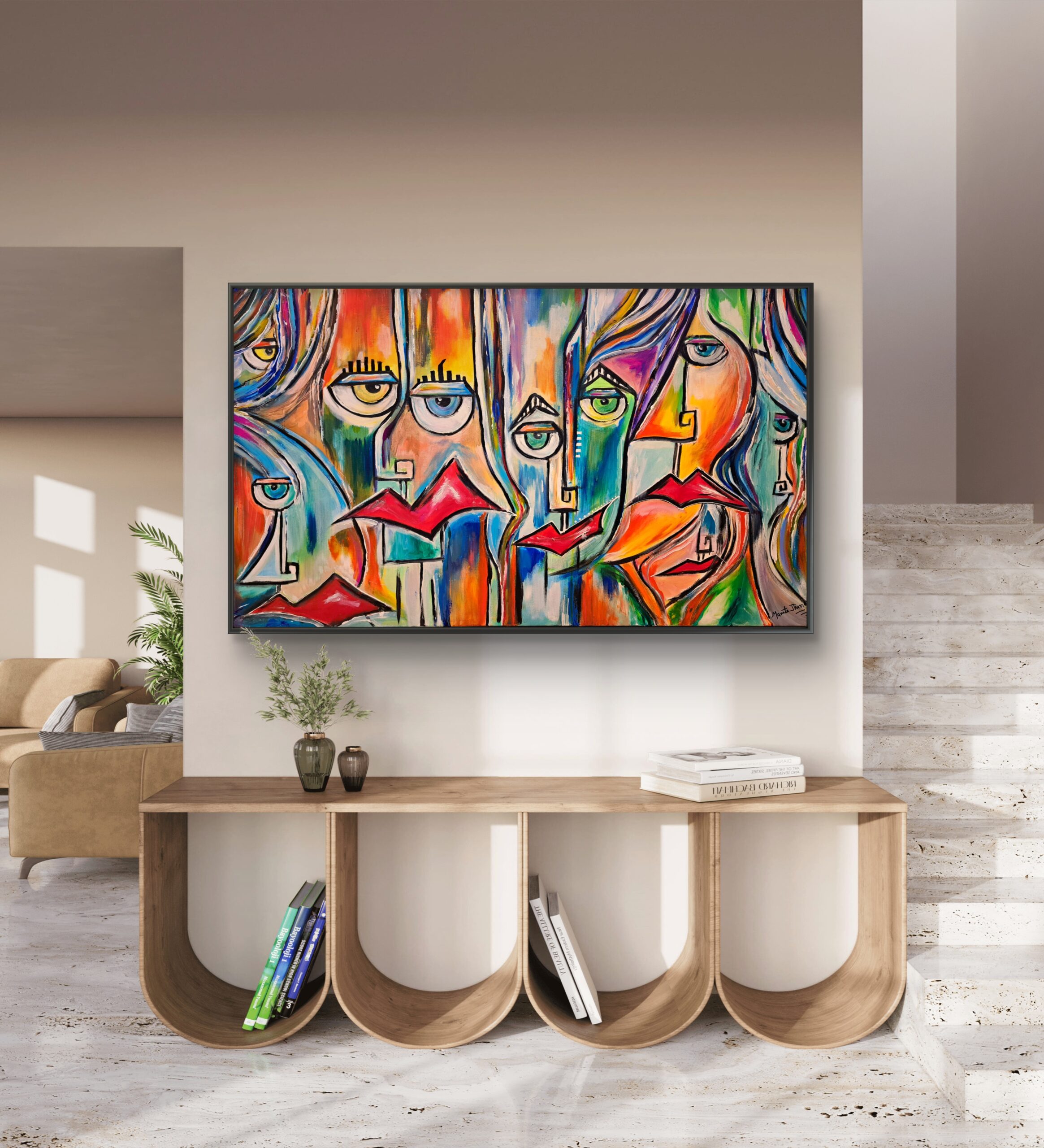
At Mamta Jharia Art, every artwork begins with human emotion, composition, color, and creative decision-making. You can explore original human-created works here:
“https://mamtajhariaart.com/product-category/original-abstract-paintings/“Shop Original Abstract Paintings by Mamta Jharia Art
This guide explains AI and Copyright in Art in a simple but practical way—English with a little Hindi touch—so artists can use technology with samajh, confidence, and protection.
What Is AI and Copyright in Art?
AI and Copyright in Art means understanding how copyright law applies when artificial intelligence is used to create, edit, inspire, or generate visual artwork.
Copyright usually protects original human expression. That means the artist’s personal choices—composition, color, brush movement, texture, concept, emotional direction, and final creative control—matter deeply.
AI becomes complicated because some images are generated from prompts, datasets, and automated outputs. If the human role is too small, copyright protection may become weak or uncertain. That is why artists should use AI carefully, not blindly.
A simple rule: AI can assist your creativity, but your human authorship should remain visible and meaningful.
For more background, artists can read the official “https://www.copyright.gov/ai/“>U.S. Copyright Office “https://www.wipo.int/en/web/frontier-technologies/artificial-intelligence/index” Artificial Intelligence and Intellectual Property resource
Why AI and Copyright in Art Matters for USA, UK, and Europe Artists
Artists selling internationally need to think beyond one country. A buyer in New York, London, Paris, Berlin, Milan, or Amsterdam may ask whether the work is original, AI-assisted, hand-painted, digitally created, or reproduced as a print.
This matters for:
- Original paintings
- Canvas prints
- Poster prints
- Framed prints
- Digital downloads
- Fashion accessories using artwork
- AI-assisted promotional images
- Online portfolios
- Social media posts
- NFT-style digital collectibles
- Licensing deals
You can see how original artwork can become lifestyle products through artist-designed accessories here:
“https://mamtajhariaart.com/product-category/modern-art-prints/accessories/bags/product-category-artist-designed-printed-backpacks/” Artist Designed Printed Backpacks
When collectors buy art, they are not buying only a picture. They are buying story, originality, emotion, and authenticity. AI confusion can damage trust if the artist is not transparent.
AI and Copyright in Art: 7 Powerful Ways to Protect Original Work
1. Keep Human Creativity at the Center of AI and Copyright in Art
The strongest protection starts with human authorship. Use AI as a tool, not as the full creator.
For example, an artist may use AI to test color palettes, mood boards, lighting ideas, or room mockups. But the final artwork should still come from the artist’s own hand, mind, and creative judgement.
For Mamta Jharia Art, this means the painting process, emotional theme, color movement, and final artistic expression remain human-led. That human layer is the real jaan of the artwork.
“https://mamtajhariaart.com/about/“
2. Document Your Creative Process for AI and Copyright in Art
Documentation is powerful. If someone questions your artwork, your process can support your originality.
Keep records such as:
- Sketches
- Canvas progress photos
- Studio videos
- Color experiments
- Prompt notes, if AI was used
- Editing history
- Final file dates
- Artwork certificates
- Product mockup records
This is especially useful for artists selling in the USA, UK, and Europe, where collectors and galleries often value provenance. Provenance means the history and authenticity of the artwork.
A simple habit: take 3–5 progress photos for every original painting. This creates trust and protects your brand.
3. Be Transparent About AI and Copyright in Art
Transparency builds buyer confidence. If AI was used only for inspiration, mockup, background planning, or marketing layout, say it clearly when needed.
You do not need to make every caption legal and boring. But you should avoid misleading buyers.
Good wording:
“This artwork is an original hand-created painting. AI tools may be used only for marketing mockups or presentation visuals.”
Bad wording:
“100% handmade” when the final visual was mostly AI-generated.
For original artwork and prints, transparency protects your reputation. Collectors appreciate sachai.
Explore modern art prints here:
“https://mamtajhariaart.com/product-category/modern-art-prints/” Shop Modern Art Prints
4. Avoid Copying Living Artists’ Styles in AI and Copyright in Art
One risky area is asking AI to create artwork “in the style of” a living artist. Even when copyright does not protect a general style in the same way it protects a specific artwork, copying a living artist’s recognizable visual identity can create ethical, reputational, and sometimes legal problems.
Safer prompts use mood, composition, emotion, or technique—not another artist’s name.
Better AI prompt style:
“Create a bold abstract composition with flowing warm and cool contrasts, expressive movement, and luxury interior mood.”
Avoid:
“Create a painting exactly like [living artist name].”
For Mamta Jharia Art, the brand value comes from original emotional abstraction—not imitation.
5. Understand AI-Generated Images Copyright Before Selling
Not every AI-generated image will receive strong copyright protection. In the United States, copyright analysis focuses heavily on human authorship. The U.S. Copyright Office has explained that AI-assisted works may be considered case by case, but prompts alone may not be enough to prove copyrightable human expression.
That means artists should be careful before selling pure AI outputs as protected original works.
Better approach:
- Use AI for brainstorming
- Create the final art yourself
- Modify and transform ideas through human skill
- Keep process records
- Clearly separate original art from AI-assisted content
This is important for luxury art branding because serious collectors want authenticity, not confusion.
6. Know the EU Rules Around AI and Copyright in Art
For Europe, the EU AI Act is important because it introduces transparency and copyright-related obligations for general-purpose AI model providers. These rules are especially relevant to the companies building AI systems, but artists should still understand the direction of regulation.
The EU is moving toward more transparency around AI systems, training data summaries, and copyright-related compliance. Artists selling in Europe should watch these developments because they may influence licensing, disclosure, and platform policies.
Official EU source:
“https://digital-strategy.ec.europa.eu/en/policies/regulatory-framework-ai“>European Commission: EU
EU GPAI copyright transparency source:
“https://digital-strategy.ec.europa.eu/en/policies/ai-code-practice“
7. Use AI as a Marketing Tool, Not a Replacement for Your Art
AI can be excellent for marketing. Artists can use it for:
- Blog ideas
- SEO titles
- Product descriptions
- Mockup scenes
- Room visualization
- Social media captions
- Email drafts
- Brand storytelling
- Keyword research
- Website content planning
But your actual creative identity should stay human. AI should amplify your kalakari, not replace it.
For example, an original abstract painting can be photographed, turned into prints, displayed in lifestyle mockups, and promoted through SEO content. But the soul of the product remains the original human artwork.
Helpful related article:
<a href=”https://mamtajhariaart.com/ai-powered-content-creation-7-powerful-ways-artists-can-grow-without-losing-originality/
“Powered Content Creation for Artists
For digital marketing learning, artists can also visit:
“https://digitalbhor.com/“
AI and Copyright in Art for Collectors: What Buyers Should Ask
Collectors in the USA, UK, and Europe should ask clear questions before buying art online:
- Is this original hand-created art?
- Was AI used in the final artwork?
- Is this a print of an original painting?
- Does the artist provide authenticity details?
- Is the image licensed for reproduction?
- Can the artwork be used commercially?
- Is the piece one-of-a-kind or part of an edition?
At Mamta Jharia Art, collectors can browse original paintings and print collections with clear product categories:
https://mamtajhariaart.com/product-category/original-abstract-paintings/
AI and Copyright in Art: What Artists Should Avoid
Artists should avoid these common mistakes:
- Selling AI-generated images as fully hand-painted originals
- Using copyrighted images as direct AI input without permission
- Copying living artists’ recognizable style
- Ignoring platform AI disclosure rules
- Using AI outputs for logos without checking rights
- Assuming every AI image is copyright-protected
- Uploading client-owned or licensed artwork into AI tools without permission
- Not keeping records of the creative process
The biggest mistake is not using AI. The biggest mistake is using AI without samajh.
AI and Copyright in Art: Best Practice Checklist for Artists
Before publishing or selling AI-assisted artwork, ask:
- Did I create the final expressive elements myself?
- Can I show my process?
- Did I avoid copying a living artist’s style?
- Did I use my own sketches, photos, or paintings?
- Did I check the AI tool’s commercial-use terms?
- Did I disclose AI involvement if necessary?
- Did I keep the buyer’s trust at the center?
This checklist helps artists protect both legal position and brand reputation.
AI and Copyright in Art for Original Abstract Artists
Abstract artists have a special advantage. Original abstract art depends on intuition, movement, gesture, layering, color balance, and emotion. These are deeply human qualities.
AI can imitate visual patterns, but it does not live the artist’s experience. It does not feel memory, motherhood, migration, ambition, struggle, or transformation. That emotional source is what makes original art powerful.
This is why human-created abstract art still has strong value in an AI world.
Browse original emotional abstract paintings here:
https://mamtajhariaart.com/product-category/original-abstract-paintings/
Conclusion: AI and Copyright in Art Needs Balance, Not Fear
AI and Copyright in Art is not only a legal issue. It is also a trust issue, branding issue, and creativity issue.
Artists should not fear AI. But they should not surrender their originality to it either. The best future is balanced: human creativity first, AI as support, transparency with buyers, and strong documentation of process.
For artists selling to the USA, UK, and Europe, the winning formula is simple:
Use AI smartly. Protect your originality. Stay transparent. Keep your human kala at the center.
Explore original artwork, prints, and artist-designed lifestyle products at:
Mamta Jharia Art
FAQ Section
FAQ 1: What is AI and Copyright in Art for artists in the USA?
AI and Copyright in Art in the USA focuses strongly on human authorship. Artists should make sure their final artwork includes meaningful human creativity, not only an AI prompt. If AI is used for support, keep records showing your own creative decisions.
FAQ 2: Can AI-generated art be copyrighted in the UK?
AI and copyright in the UK is still developing. Artists should be careful when selling AI-generated art and should clearly disclose whether a work is hand-created, AI-assisted, or fully AI-generated. UK artists should also follow government updates on copyright and artificial intelligence.
FAQ 3: What should European artists know about AI and Copyright in Art?
European artists should understand that the EU AI Act includes transparency and copyright-related obligations for general-purpose AI model providers. Artists selling in Europe should keep records, avoid misleading claims, and stay updated on AI disclosure rules.
FAQ 4: Is it safe to sell AI-assisted art in the USA, UK, and Europe?
Yes, it can be safe if the artist uses AI responsibly. The safest approach is to keep human creativity central, document the process, avoid copying protected works, and clearly explain whether AI was used in the final artwork.
FAQ 5: Can I use AI to make mockups for my paintings?
Yes. Artists can use AI or digital tools for mockups, room previews, marketing images, and social media visuals. But the product page should clearly explain that the original artwork itself is human-created if that is the case.
FAQ 6: Does AI and Copyright in Art affect collectors?
Yes. Collectors should ask whether the artwork is original, hand-created, AI-assisted, printed, licensed, or limited edition. Clear answers help buyers in the USA, UK, and Europe purchase with confidence.
FAQ 7: Can DigitalBhor.com help artists learn AI marketing and SEO?
Yes. Artists who want to learn website creation, SEO, social media, and AI content planning can visit <a href=”https://digitalbhor.com/“>DigitalBhor.com</a>. Marketing knowledge helps artists promote original artwork without depending only on paid ads.
FAQ 8: Should artists mention AI use on product pages?
If AI was used in the final artwork or heavily influenced the output, disclosure is recommended. If AI was used only for marketing mockups or caption ideas, artists can mention it in a simple and transparent way when relevant.
FAQ 9: Can I upload my original painting to an AI tool?
You can, but be careful. Before uploading original artwork, read the AI platform’s terms. Some tools may use uploaded content for training or service improvement. For high-value art, use trusted tools and keep original files protected.
FAQ 10: What is the best way to protect original artwork online?
The best way is to combine copyright awareness, process documentation, watermarked previews, clear product descriptions, authenticity certificates, and strong branding. Human creativity should be visible in every stage of the artwork.
 English
  Italian