
How to Style a Statement Art Handbag: 7 Sophisticated Outfit Ideas
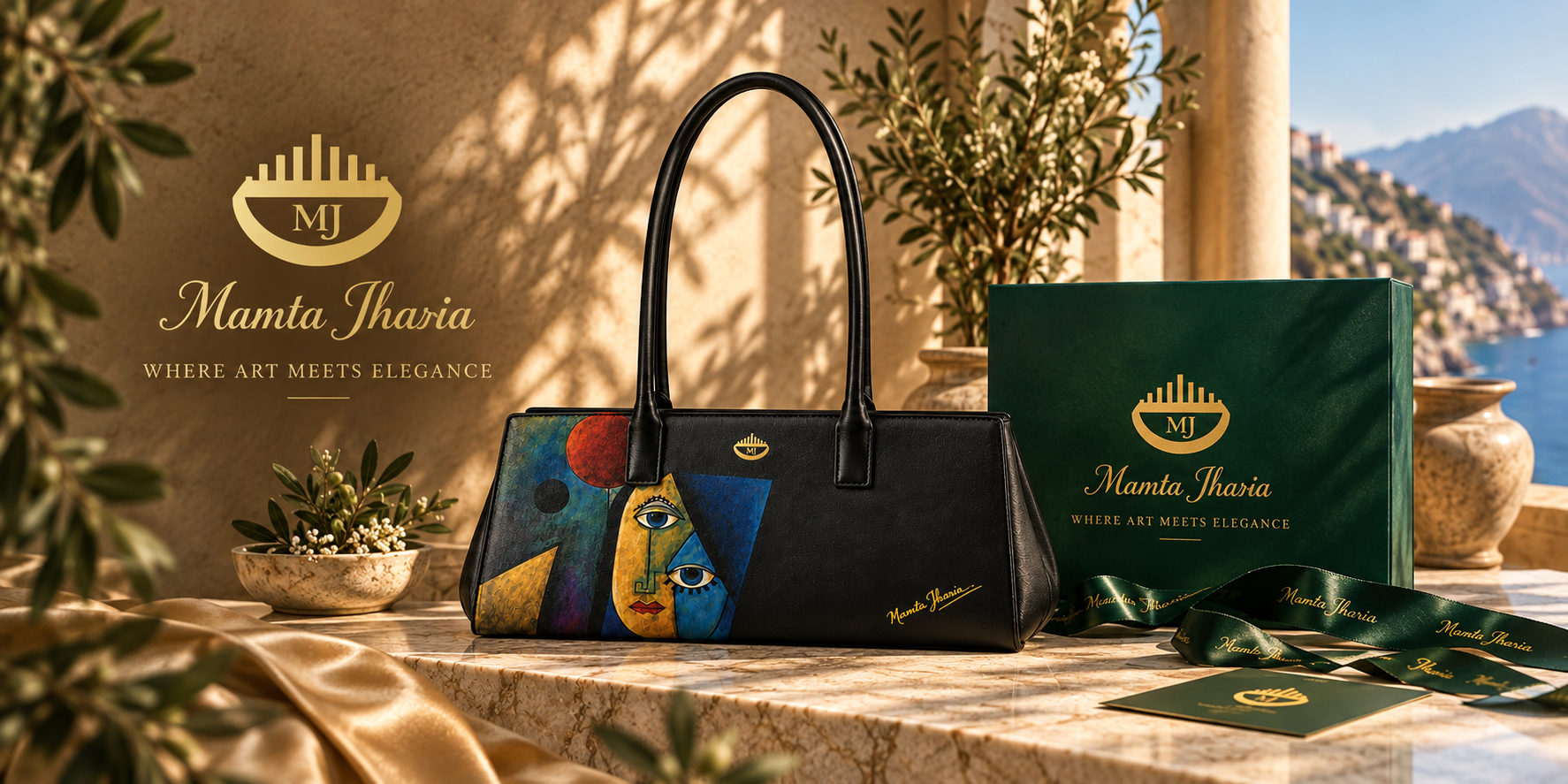
Learning how to style a statement handbag begins with looking at the bag itself.
Notice its colours, proportions and artistic focal point. Is it an expressive portrait against a black background? A botanical composition? A geometric face with touches of blue, ochre or green?
These details can guide an outfit without requiring you to match every element.
An art handbag brings a ready-made composition into your wardrobe. The clothing around it can provide a quiet background, repeat one colour or introduce an interesting contrast.
At MAMTA JHARIA, original paintings inspire handbags with their own visual character. Expressive imagery, selected colour and negative space create opportunities to build outfits that feel personal and considered.
The following seven combinations offer practical starting points. Adapt the silhouettes, shoes and layers to your preferences, the occasion and the weather.
How to Style a Statement Handbag: Start with Visual Balance
Before choosing an outfit, decide what you want people to notice first.
If the handbag is the focal point, simple clothing can give its artwork room to be seen. If your outfit is already expressive, look for a connection through colour, shape or texture.
This approach also appears in fashion styling coverage. Vogue illustrates how an impactful handbag can bring interest to a simpler outfit in its feature on styling a statement bag with understated clothing.
For an artist handbag, three questions are especially useful:
Which colour could I repeat elsewhere?
Does the bag’s size feel balanced with the clothing?
Is the artwork visible when I carry it?
You can then build around the answers.
1. Black Tailoring with an Expressive Portrait Bag
The outfit: A black blazer, straight-leg trousers, a simple ivory or black top, and loafers or ankle boots.
The bag: A black-base handbag featuring an expressive face, eye or profile.
Where to wear it: Meetings, gallery visits, presentations or dinner after work.
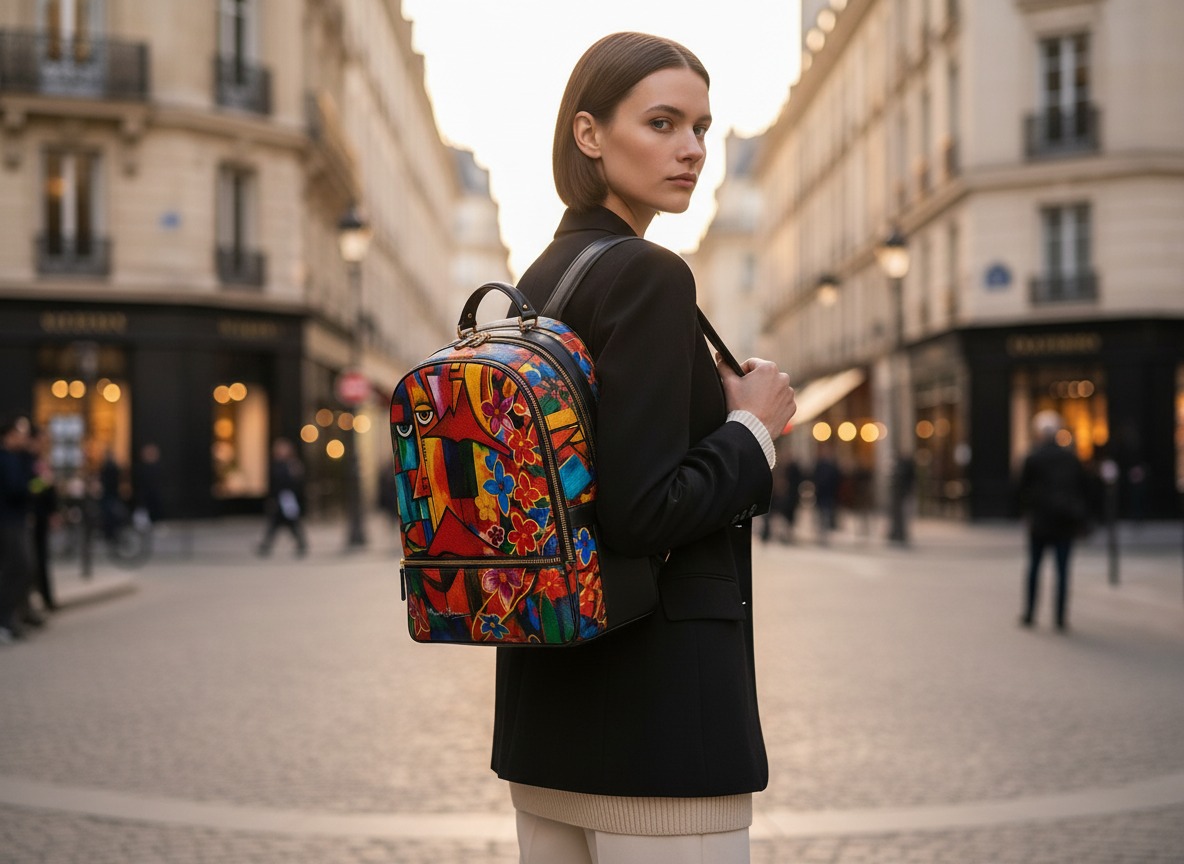
Black tailoring creates a cohesive setting for artistic imagery. When the bag shares the same dark foundation, its painted detail becomes especially noticeable.
An ivory top can introduce a lighter area near the face, while an all-black combination produces a more continuous silhouette.
Choose the blazer and trousers according to the proportions you enjoy. A softly tailored jacket can feel relaxed; a more defined shoulder creates a different mood.
Keep the shoes visually simple. The portrait already provides an expressive element, so footwear can support the outfit through shape and finish.
The Finishing Detail
Choose one small piece of jewellery that connects with the hardware: earrings, a ring or a bracelet.
You do not need to repeat every metal component. A subtle relationship is enough.
For a MAMTA JHARIA portrait design, carry the bag with the artistic panel facing outward so the image remains part of the outfit.
2. Cream and Beige with a Dark Artistic Handbag
The outfit: Cream trousers, an ivory knit or blouse, and a beige jacket or lightweight coat.
The bag: A dark handbag with selected colour or gold-tone details.
Where to wear it: Lunch, daytime events, appointments or a weekend exhibition.
A light neutral outfit creates a clear contrast with a predominantly black art handbag.
The difference between the clothing and the accessory defines the bag’s silhouette. Its artwork becomes easier to notice without requiring bright clothing.
Use related neutral tones rather than trying to make every garment identical. Ivory, cream and beige can sit together when their undertones feel harmonious.
Texture adds interest, too. A fine knit beside tailored trousers provides variation while maintaining a restrained palette.
The Finishing Detail
Choose tan, cream or black shoes depending on the balance you prefer.
Black footwear can connect with the bag’s base. A lighter shoe keeps the lower half of the outfit visually soft.
For botanical or portrait artwork, this combination provides a quiet setting that allows the composition to remain prominent.
3. Dark Denim and a White Shirt for Everyday Wear
The outfit: Dark straight-leg jeans, a white cotton shirt, and loafers, clean trainers or low boots.
The bag: A medium artistic handbag or shoulder bag.
Where to wear it: Coffee, shopping, informal meetings or weekend outings.
A white shirt and denim offer an easy way to bring an art handbag into regular use.
The clothing is familiar and flexible. The bag introduces a specific creative detail, helping the outfit feel more individual.
Dark denim creates a polished foundation, although other washes can work if they suit your wardrobe. The key is the overall relationship between the pieces.
Wear the shirt tucked, partially tucked or loose according to its length and the shape of the jeans.
A simple belt can define the waist, but check whether its buckle introduces another prominent focal point.
The Finishing Detail
Use one connection to bring the outfit together.
A black belt might echo the bag’s leather base. Small gold-tone earrings can relate to the hardware. A blue element in the artwork can sit naturally beside denim.
When exploring how to style a statement handbag casually, start with clothes you already feel comfortable wearing.
4. A Tailored Work Outfit with an Artistic Tote
The outfit: Navy or charcoal trousers, a plain blouse, a structured jacket, and comfortable closed shoes.
The bag: A larger artistic tote suited to the items you need to carry.
Where to wear it: Office days, teaching, client appointments or professional events.
An artistic tote can introduce personality into workwear while preserving a clear, organised silhouette.
Navy and charcoal provide alternatives to black. Both can create a restrained background for portrait or botanical imagery.
Choose clothing with enough structure to relate to the scale of the bag. A substantial tote can sit comfortably beside a blazer and full-length trousers.
The bag’s practical suitability remains important. Check its capacity, closure and carrying style for your routine.
A tote’s external size does not establish laptop compatibility. Compare your device measurements with the usable internal space if you need to carry one.
The Finishing Detail
Keep additional accessories purposeful.
A watch, small earrings and a simple belt may provide everything the outfit needs.
MAMTA JHARIA’s larger artistic tote direction, including designs such as Azure Nocturne Tote 38 and Festival Bloom Tote 38, offers possibilities for this combination. Select the model according to its final specifications and your carrying requirements.
5. A Simple Evening Dress with an Artistic Pouch
The outfit: A clean midi dress in black, navy, burgundy or another solid colour.
The bag: A compact art pouch or small handbag.
Where to wear it: Dinner, an exhibition opening, a celebration or an evening performance.
A simple dress gives a compact artistic accessory a clear role.
The dress establishes the silhouette, while the bag introduces imagery and colour. This can create a considered evening look without requiring several decorative elements.
Choose a dress whose fabric and cut feel comfortable for the occasion. A softly draped design and a more structured dress will each produce a different relationship with the bag.
Consider the artwork’s palette when selecting the dress colour. Burgundy might connect with a warm painted detail; navy can complement selected blues.
The Finishing Detail
Decide whether the bag or jewellery should provide the stronger emphasis.
If the artwork is prominent, smaller earrings may be enough. If the artistic detail is restrained, you may enjoy a more substantial piece of jewellery.
A Gilded Profile Pouch 30 or another compact MAMTA JHARIA design can support this direction, subject to the carrying style and capacity you prefer.
6. A Tonal Outfit That Echoes One Colour in the Artwork
The outfit: Separates in one colour family, such as navy, grey, olive or warm brown.
The bag: An artistic handbag containing a related colour.
Where to wear it: Creative meetings, daytime events, lunch or travel.
This combination begins with the painting.
Choose one colour from the bag and build a clothing palette around it. You do not need an exact match.
A deep blue painted detail could connect with navy trousers and a lighter blue shirt. A muted green might work beside olive clothing. An ochre accent could sit well with warm brown or tan.
Related shades create continuity while giving the artwork space to remain distinctive.
Pay attention to the bag’s background colour as well. A black base can provide a strong boundary within an otherwise tonal outfit.
The Finishing Detail
Vary the textures.
A knit top, woven trousers and leather shoes can create interest within a limited palette.
This is a useful approach to statement handbag outfits when you enjoy colour but prefer a coherent result.
7. Relaxed Knitwear and a Long Coat with a Structured Art Bag
The outfit: A fine or medium-weight knit, relaxed trousers or a simple skirt, and a long coat.
The bag: A structured artistic handbag with a clearly visible front panel.
Where to wear it: Cooler-weather outings, museum visits, lunch or everyday appointments.
Soft clothing and a structured bag create a pleasing relationship between different forms.
The knit introduces texture. The coat establishes a longer silhouette. The handbag adds a defined shape and an artistic focal point.
Choose a coat in black, camel, navy or grey for a flexible foundation. A solid colour makes it easier to appreciate the artwork beside it.
Consider where the bag sits when carried. A shoulder bag should fit comfortably over the coat, while a top-handle style offers another arrangement.
The Finishing Detail
Use shoes that suit the length and shape of the clothing.
Loafers, ankle boots or other comfortable footwear can work depending on the weather and occasion.
Keep any scarf selective in colour and pattern. It can echo the artwork, but it should also leave the bag’s composition visible.
Matching Colours Without Matching Everything
A handbag does not need identical shoes, clothing and jewellery to feel connected to an outfit.
One repeated element can be enough.
You might echo a blue painted detail through a shirt, connect black leather with a belt or repeat a warm metal finish in earrings.
Too many exact matches can make the styling feel overly planned if that is not the effect you want.
Instead, consider relationships:
Similar colours in different shades.
A quiet outfit beside expressive artwork.
Soft fabric beside a structured bag.
A small metal detail repeated once.
These connections help the outfit feel cohesive while preserving individuality.
How to Choose the Right Bag Size for an Outfit
Scale affects visual balance, but it should also support function.
A larger tote may suit workwear and layered clothing. A medium handbag can move across several occasions. A small pouch can provide a concentrated artistic detail for eveningwear.
These are starting points rather than rules tied to body size.
Choose according to the outfit, what you need to carry and how the bag feels in use.
View the combination in a full-length mirror. Check where the bag sits and whether it obscures an important part of the clothing.
For artistic handbags, also notice whether the image is easy to see in the carrying position.
The best scale is one you find both practical and visually comfortable.
Adding a Twilly or Charm to an Art Handbag
An art handbag already contains a focal point, so any additional accessory should have a clear place within the composition.
A narrow twilly can introduce softness around a handle. Choose a colour related to the artwork and tie it so the main image remains visible.
A small pendant can echo the hardware. A tonal leather tassel can add movement.
Start with one accessory and assess the effect before adding more.
Use an appropriate attachment point and check that hard components do not repeatedly rub against the artistic surface.
Some designs look complete without extra decoration. Leaving the bag as it is can be a thoughtful styling choice.
Common Styling Problems and Simple Adjustments
Several Details Compete for Attention
A patterned outfit, prominent jewellery, decorated shoes and an artistic bag can create a busy composition.
If the result feels crowded, simplify one or two elements. Try solid clothing or quieter footwear and reassess.
The Bag Looks Disconnected from the Outfit
Look for one relationship through colour, texture or shape.
A small repeated detail can help connect the accessory without changing the entire outfit.
The Artwork Is Hidden
Check the carrying position.
A coat, scarf or charm may cover the most expressive part of the image. Adjust how you carry or accessorise the bag.
The Styling Works, but the Bag Is Impractical
Consider capacity and comfort alongside appearance.
An evening pouch may suit the outfit while struggling to carry your essentials. Choose another format or reduce what you need to bring.
Frequently Asked Questions
How do you style a statement handbag with everyday clothing?
Start with simple pieces such as jeans, a plain shirt or knitwear. Let the artwork introduce interest, then repeat one colour or hardware finish if you want a visual connection.
Can I wear an art handbag with patterned clothing?
Yes. Look for a shared colour and consider the scale of the patterns. If the combination feels crowded, simplify another part of the outfit.
Should shoes match a statement handbag?
They do not need to match exactly. Shoes can relate through colour, finish or overall mood, or remain neutral while the bag provides the focal point.
Can an artistic handbag look professional?
Yes, depending on the workplace and design. Balanced proportions, controlled artwork and cohesive clothing can create a polished appearance.
What jewellery works with an art bag?
Choose according to the overall outfit. Small pieces can support prominent artwork, while a restrained bag may leave room for stronger jewellery.
Do I need different art bags for every outfit?
No. One thoughtfully chosen design can work across several combinations. Try changing the surrounding clothing before assuming you need another bag.
MAMTA JHARIA — Where Art Meets Elegance
Understanding how to style a statement handbag gives you more ways to enjoy the artwork you carry.
Black tailoring can frame a portrait. Cream clothing can highlight a dark silhouette. Denim brings the design into everyday life, while a simple dress creates a setting for evening expression.
At MAMTA JHARIA, original paintings inspire accessories through expressive imagery, selected colour and considered placement.
Your wardrobe adds another interpretation each time the bag is worn.
Explore the MAMTA JHARIA artist bag collection and discover a design you can make part of your personal style.
Where Art Meets Elegance.
 English
 Italian