
Quiet Luxury Meets Wearable Art: The Rise of Expressive Luxury Handbags
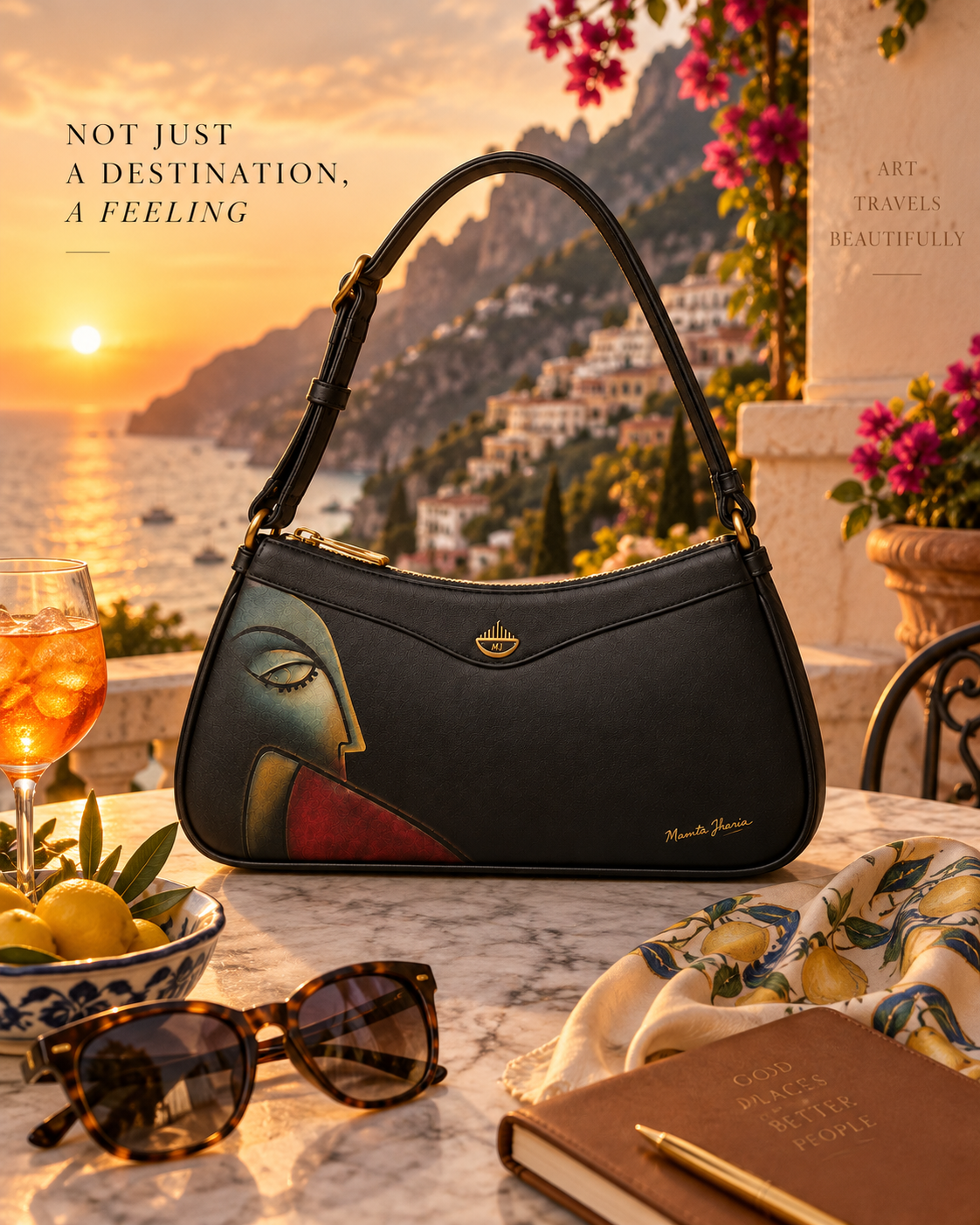
Imagine a black handbag with a carefully balanced silhouette. Its hardware catches the light gently. The handles feel proportionate, the stitching follows clean lines, and a fragment of an original painting draws your attention.
Perhaps it is an expressive eye. A profile. A botanical detail emerging from a dark background.
The surrounding space allows that image to hold your gaze.
This is where quiet luxury meets wearable art: a restrained foundation with a distinct artistic presence.
For MAMTA JHARIA, that relationship offers a compelling way to approach contemporary handbag design. Original paintings bring emotion and individuality, while considered proportions give the artwork a clear setting.
What Quiet Luxury Means for Handbags
Quiet luxury is often associated with clean silhouettes, discreet branding and an emphasis on materials and finishing. Vogue’s minimalist handbag coverage describes a similar combination of clean lines, rich materials and understated branding.
Applied to a handbag, this approach draws attention towards the object itself.
You notice the shape, the surface, the way a handle meets the body and the relationship between the hardware and leather. Small details become more visible because there is less competing for attention.
A quiet luxury aesthetic can include:
Balanced proportions.
Carefully selected materials.
Consistent stitching and clean edges.
Hardware suited to the scale of the bag.
A practical, thoughtfully arranged interior.
These qualities provide a strong foundation for artistic expression.
What Are Expressive Luxury Handbags?
Expressive luxury handbags combine considered design with a recognisable creative point of view.
That expression may come through colour, sculptural form, unusual texture or original artwork. It can be subtle or prominent, depending on how the elements are arranged.
A portrait detail placed on one section of a bag can create a strong impression. So can a sweep of blue across a predominantly black surface.
The effect depends on composition: where the eye travels, which detail receives emphasis and how much space surrounds it.
For an artist-designed handbag, the painting becomes part of the bag’s visual identity. Its placement should feel connected to the silhouette, handles, seams and carrying style.
Why Personal Expression Matters in Modern Luxury
Current luxury research helps explain why this connection between design and identity is relevant.
McKinsey and The Business of Fashion’s 2026 research into luxury clients in the United States and China identifies emotional connection as a leading driver of brand desirability among surveyed consumers. The findings concern those markets and suggest that how a brand makes someone feel plays an important role alongside traditional luxury attributes.
For artist-designed accessories, this provides a useful context.
People respond differently to the same painting. One person may be drawn to its colours; another may recognise something familiar in an expression or gesture.
When artwork becomes part of a handbag, that response accompanies a practical object. The bag can connect with its owner through both its usefulness and its imagery.
Our view is that this creates an opportunity for expressive luxury: pieces chosen because their design feels personally meaningful.
Negative Space Makes the Artwork More Visible
One of the most important decisions in an art handbag is how much of the surface to leave visually quiet.
Negative space is an active part of the composition. It gives the focal point room to be seen and helps establish a clear hierarchy.
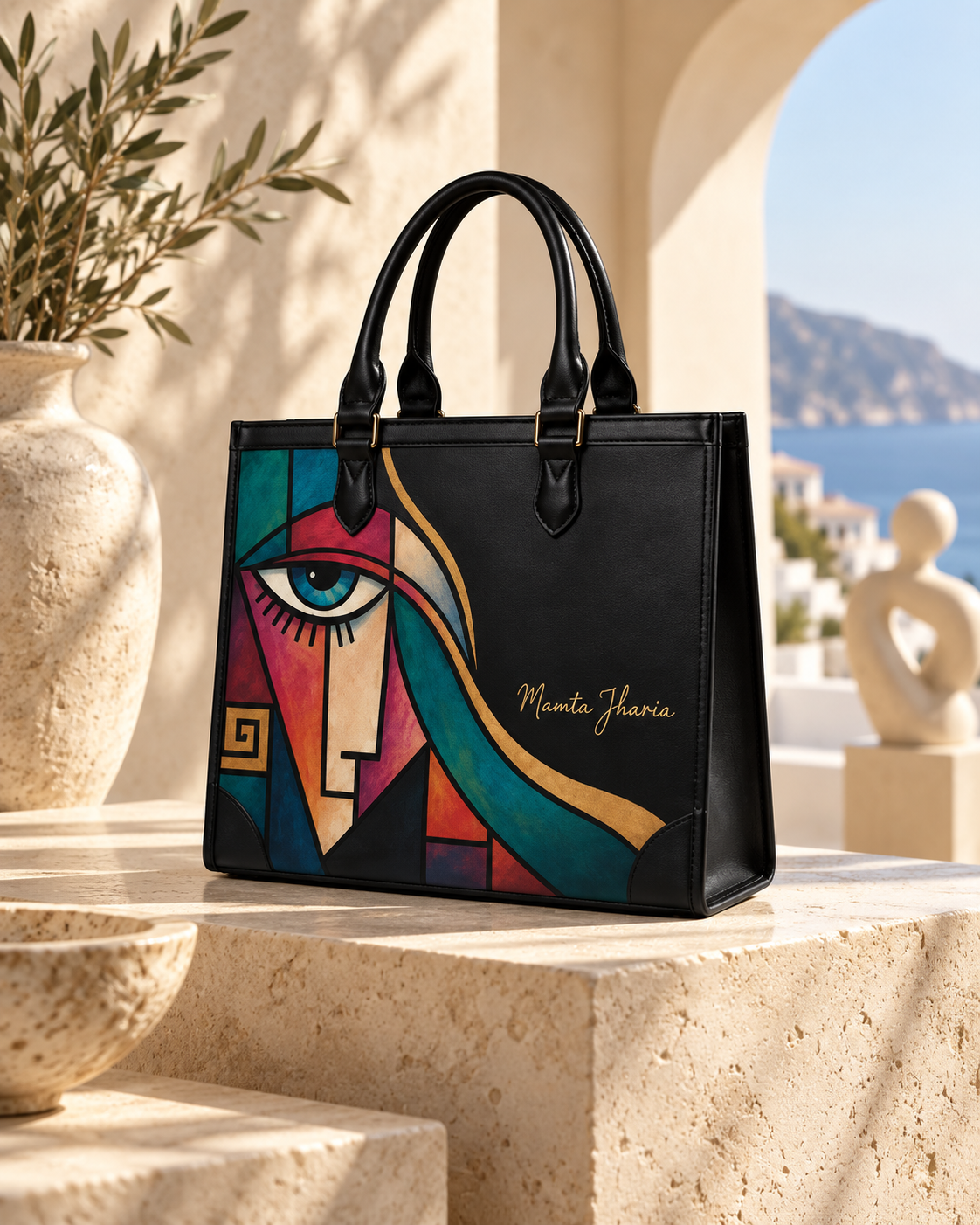
On a black handbag, a carefully placed eye or face can become especially striking when surrounded by an uninterrupted dark surface.
The viewer notices the expression first, then discovers the other details.
Covering every available area with imagery creates a different effect. That may suit some designs, but a more restrained composition can preserve clarity and make the relationship between art and silhouette easier to appreciate.
At MAMTA JHARIA, the use of negative space supports a visual direction built around expressive artwork and controlled placement.
From Original Painting to Handbag Design
A painting and a handbag have different requirements.
A painting is usually viewed on a flat, stationary surface. A handbag moves, curves, opens and changes position as it is carried.
Adapting artwork therefore involves more than selecting an image.
The design needs to consider:
Which section of the painting retains its character at the intended size.
Where seams and handle attachments fall.
How curved surfaces affect the image.
What remains visible when the bag is carried.
How the artwork relates to the bag’s proportions.
A fragment can sometimes communicate more clearly than an entire composition.
An expressive eye may retain the emotional force of a portrait. A selected botanical form can create a graceful rhythm. A cropped geometric detail can give a small bag a strong identity.
The aim is to carry the painting’s character into a new setting.
Craftsmanship Gives the Design Substance
Artistic originality creates interest. Materials and construction support the experience of using the bag.
McKinsey’s State of Fashion 2026 reports that higher product quality and craftsmanship are among the factors that could encourage surveyed high-net-worth consumers to purchase more from luxury brands, with differences between regional markets.
For a premium handbag, this brings attention to details that extend beyond the front panel.
Handle Attachments
The handles and their attachment points should suit the size and intended use of the bag. Reinforcement, stitching and hardware all contribute to this part of the construction.
Edges and Stitching
Clean edges and controlled stitching help define the silhouette. On a design with substantial negative space, irregular finishing can become particularly noticeable.
Hardware
The scale and placement of metal components affect the overall balance. A ring, clasp or logo should sit comfortably within the design.
Interior Organisation
A useful interior makes the bag easier to enjoy. Pockets, closures and lining should respond to the intended purpose, whether the piece is a compact shoulder bag or a larger everyday tote.
Artwork and Surface Care
The finish used for the artistic panel also matters. Follow the care instructions for the individual model, particularly where printed surfaces and leather require different treatment.
These details help the visual idea become a considered everyday object.
The MAMTA JHARIA Approach
MAMTA JHARIA’s artistic language brings together expressive faces, eyes, botanical forms and abstract compositions.
Across the collection’s designs, the creative challenge is to give each image an appropriate setting.
A predominantly black base can establish a clear background. Selected colour brings emphasis. Negative space allows the artwork to breathe, while the silhouette shapes how it
 Italian
  English