East West Bags: Why the Horizontal Handbag Is One of 2026’s Biggest Trends
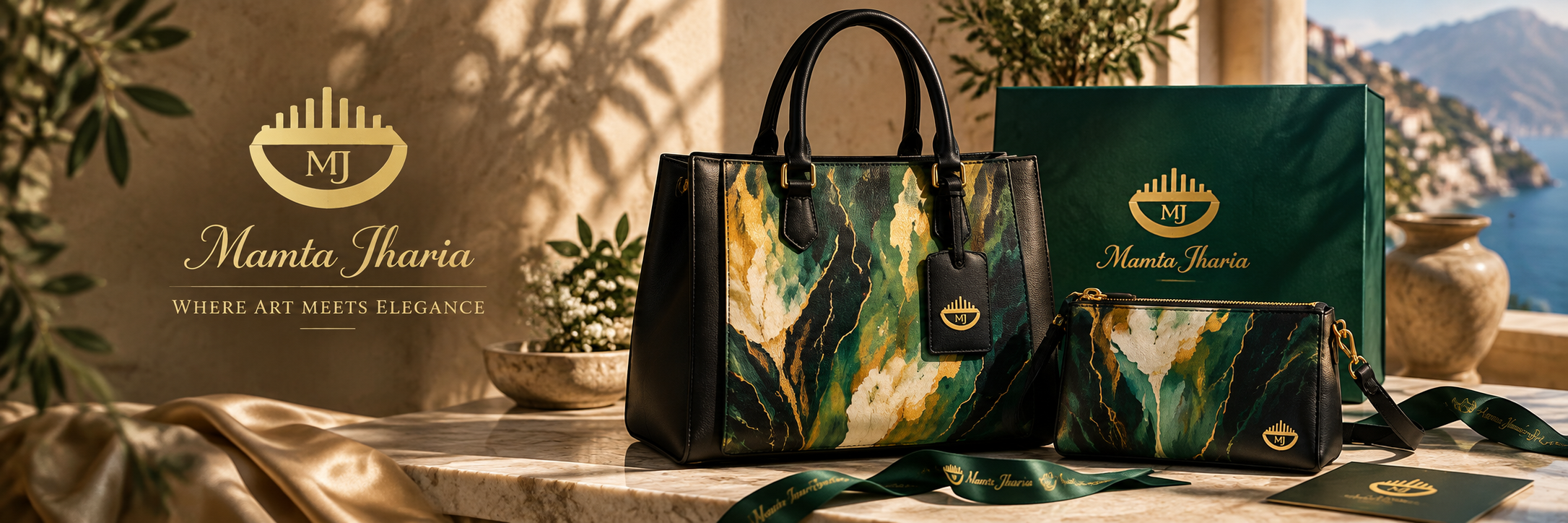
Some handbags make an impression through colour. Others through intricate details. East-west bags make their statement through proportion.
Long, low and distinctly horizontal, this silhouette brings a fresh perspective to everyday accessories. Its appeal lies in a simple design decision: stretching the handbag across the body rather than building it upwards.
The result can feel elegant, architectural and surprisingly expressive.
In 2026, the horizontal handbag remains a prominent part of the fashion conversation. Vogue highlighted east-west bags as a key spring shape, while its autumn/winter coverage continued to spotlight streamlined, elongated top-handle designs. This is a silhouette with relevance across seasons.
For MAMTA JHARIA, the trend also opens an interesting creative conversation: how can the proportions of a handbag give original artwork a new way to be seen?
What Are East-West Bags?
An east-west bag has a noticeably elongated shape, with its width taking visual priority over its height.
Think of a horizontal rectangle, a softly stretched oval or a long, compact shoulder bag. The exact construction can vary, but the defining characteristic is the relationship between width and height.
Common features include:
An elongated body with relatively shallow height.
Short or medium handles, depending on the carrying style.
A silhouette that may sit neatly beneath the arm.
A structured, softly rounded or relaxed construction.
A strong horizontal line when viewed from the front.
The term describes proportions rather than one specific material, closure or handle type.
A baguette-style shoulder bag can belong to this family, as can certain elongated top-handle bags. However, being wider than it is tall does not automatically make every tote an east-west design. The horizontal emphasis needs to be a defining part of its appearance.
Why the East-West Bag Trend Works in 2026
The appeal of east-west bags is easy to understand when you consider how they change an outfit.
A compact horizontal bag introduces a clear line beside the body. Against an oversized blazer, a flowing dress or wide-leg trousers, that line can create a pleasing contrast.
It offers visual interest without requiring elaborate decoration.
Proportion Becomes the Statement
A handbag does not need to be covered in embellishment to attract attention.
An unusually elongated shape can become its most distinctive feature. Even in plain black leather, a horizontal bag can feel expressive because its proportions interrupt the familiar outline of an outfit.
This makes the silhouette especially appealing to anyone who enjoys distinctive accessories with restrained styling.
It Can Move Between Different Occasions
Depending on its size, handles and construction, an east-west bag can accompany casual outfits, tailoring or eveningwear.
A softly shaped shoulder version may suit everyday use. A compact, structured design can feel more formal. An elongated top-handle bag offers another interpretation entirely.
That variety is part of the shape’s appeal: the same horizontal idea can support several different moods.
It Encourages a More Considered Choice
The silhouette also asks the wearer to think about what they actually carry.
A smaller horizontal bag may comfortably accommodate essentials, while its shallow height limits taller objects. A larger version may offer more space, but capacity still depends on depth, opening width and internal layout.
The best choice is one whose proportions work for both your wardrobe and your routine.
When a Horizontal Handbag Becomes a Canvas
For an artist, changing the shape of a canvas changes the composition.
A tall surface encourages one kind of arrangement. A wide surface creates another.
The same principle applies to artist-designed handbags.
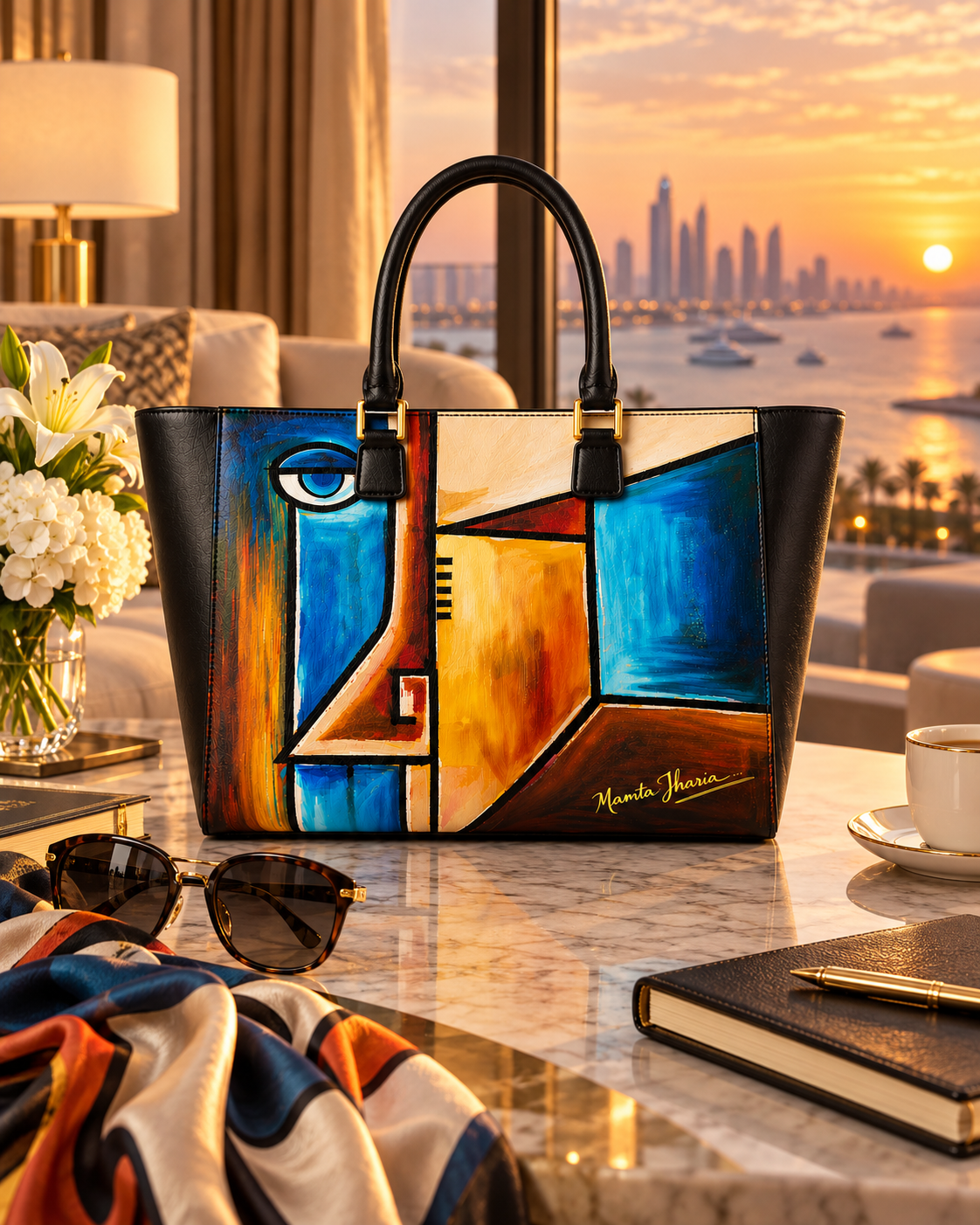
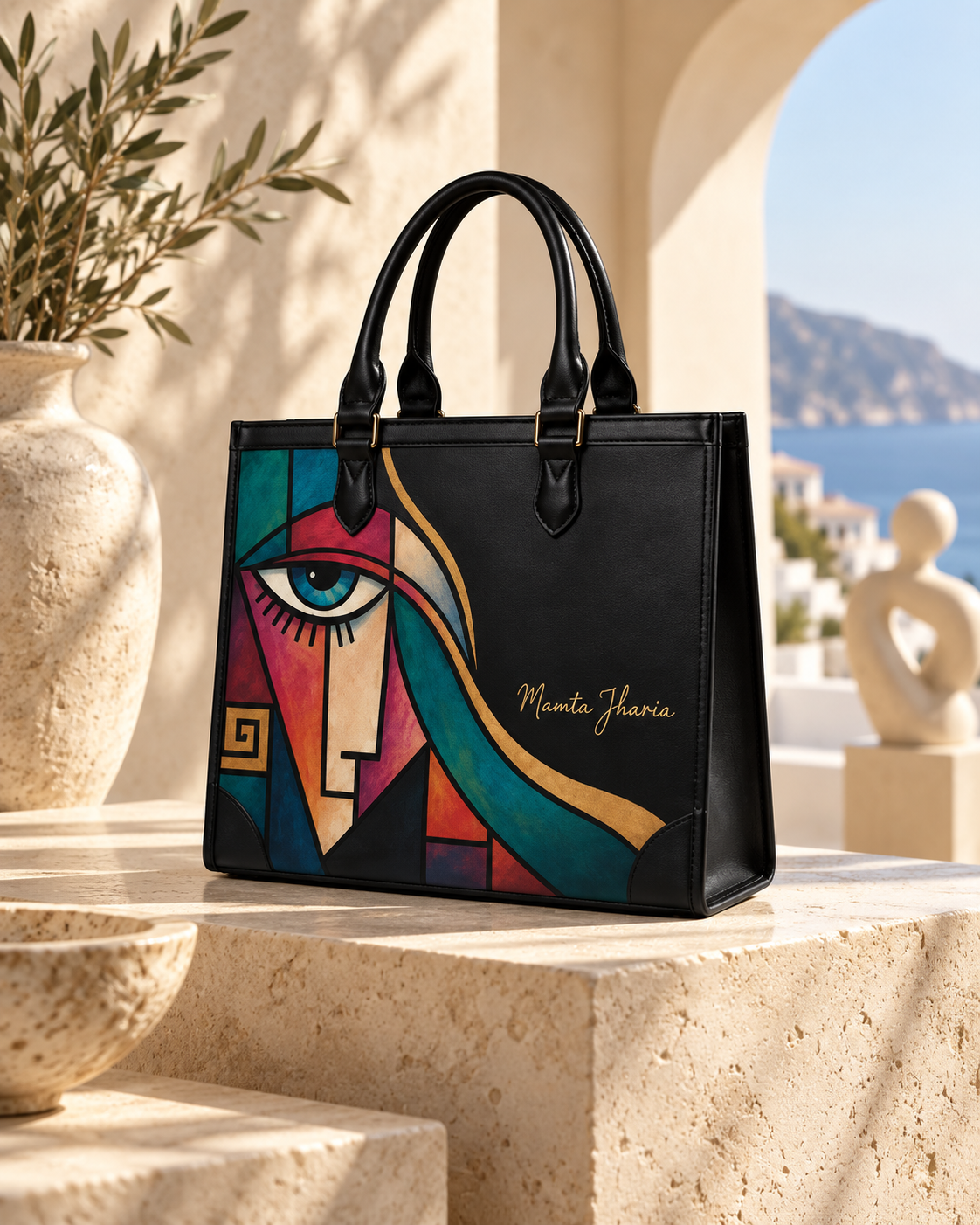
A horizontal panel can create space for a face positioned to one side, a pair of expressive eyes, a botanical composition or a sweep of abstract colour. It encourages the viewer’s gaze to move across the design.
But translating a painting onto a handbag requires more than stretching an image to fit.
The composition needs to respond to the object.
Where does the artwork begin? Where should it stop? Does a handle attachment interrupt an important detail? Will a seam cut through the focal point? How does the image look when the bag is carried rather than photographed flat?
These decisions determine whether the art and the silhouette feel connected.
Negative Space Gives Artwork Room to Breathe
One of the most compelling ways to combine art with a horizontal handbag is to leave part of the surface visually quiet.
Negative space gives the focal point room to be noticed.
Imagine a black leather surface with a carefully placed fragment of a portrait. The surrounding space allows the eye, profile or colour to become more prominent.
The artwork does not need to occupy every centimetre to create an impression.
This approach is central to the visual direction of MAMTA JHARIA’s art-led designs: expressive imagery balanced with considered placement and breathing room.
Across different handbag formats, the aim is to preserve the character of the original painting while respecting the proportions of the finished accessory.
For a horizontal silhouette, that might mean placing an artistic detail towards one end or developing a composition along the lower section. The right solution depends on the individual painting and bag.
Shape Creates Interest; Construction Supports It
A strong silhouette can attract attention immediately. Its construction determines how it behaves in use.
With east-west bags, several details deserve particular consideration.
The Opening
A long body does not necessarily mean easy access.
Look at how far the opening extends and whether you can comfortably reach items at either end. A beautiful silhouette becomes more useful when its closure supports everyday handling.
The Handles
Handle length affects where the bag sits and how it feels to carry.
If you intend to wear it on your shoulder, check the handle drop and allow room for the clothing you normally wear. A bag that fits comfortably over a light blouse may feel different over a winter coat.
The Base and Structure
An elongated design should maintain the intended shape when filled.
Some bags are deliberately soft; others rely on structure. In either case, the base and body should work together so the bag carries your essentials comfortably.
The Finishing
Stitching, edge finishing, lining and hardware contribute to the overall impression.
On a restrained design, these details are especially visible. Their proportions should complement the bag rather than compete with its shape or artwork.
For an artist handbag, it is also useful to understand the surface treatment and follow the specific care guidance provided for that model.
How to Style East-West Bags
A horizontal handbag can become a natural part of several outfit combinations.
With Tailored Separates
Pair it with a blazer, straight-leg trousers and a simple top.
The bag’s elongated shape adds another clear line to the outfit. An artistic panel can introduce colour while keeping the rest of the look cohesive.
With Denim and a White Shirt
A white shirt and dark denim create an uncomplicated background for expressive artwork.
Keep additional accessories selective so the bag has room to become the focal point.
With a Monochrome Outfit
Black, cream, navy or grey worn from head to toe can give an art handbag particular presence.
Choose a colour from the artwork for a subtle connection through shoes, jewellery or a scarf.
With a Simple Evening Dress
A compact horizontal bag can work beautifully beside a clean dress silhouette.
Check its scale against the outfit and choose a carrying style that feels comfortable for the occasion.
Choosing an East-West Bag Beyond the Trend
Before choosing an east-west bag, consider more than its appearance in a photograph.
Check the measurements, opening, strap or handle drop, and internal arrangement. Compare those details with the items you carry every day.
Then consider the design itself.
Does the shape feel natural with your clothes? Does the artwork hold your attention? Can you imagine reaching for it across different occasions?
A trend can introduce you to a silhouette. Your own habits and preferences determine whether it deserves a lasting place in your wardrobe.
Limited-edition designs add another consideration: the relationship with a particular artistic series. Look for clear information about the edition and the story behind the artwork, alongside the practical product details.
The MAMTA JHARIA Perspective: Art, Proportion and Personality
The east-west bag trend highlights how much proportion can contribute to an accessory’s identity.
A MAMTA JHARIA, that relationship between shape and expression is part of a wider creative approach. Original paintings inform handbag designs through selected imagery, colour, placement and negative space.
A portrait detail can create intimacy. An abstract composition can introduce movement. A botanical fragment can bring softness to a structured form.
The silhouette provides the framework; the artwork gives it a personal voice.
Whether you prefer an elongated shoulder bag, a structured handbag or a practical tote, the most rewarding design is one that connects visual character with the way you live.
Explore the MAMTA JHARIA artist bag collection and discover original art reimagined for everyday expression.
Where Art Meets Elegance.
 Italian
  English