
Introduction
How to style abstract art is one of the most important skills in modern interior design. Abstract paintings bring emotion, movement, and individuality into a home without relying on literal imagery.
When styled thoughtfully, abstract art can instantly elevate a room. It adds personality while maintaining the clean aesthetic that modern interiors are known for.
Understanding how to style abstract art allows you to transform blank walls into curated focal points.
According to the American Society of Interior Designers, artwork is one of the most influential elements in shaping the emotional atmosphere of a space.
In this guide, you will learn practical and designer-approved techniques for styling abstract art beautifully in a contemporary home.
Why Learning How to Style Abstract Art Matters
Modern homes often rely on simplicity and clean design.
However, without artwork, minimalist spaces can sometimes feel unfinished.
Learning how to style abstract art allows you to add personality without clutter.
Benefits include:
- Creating a visual focal point
- Enhancing the room’s color palette
- Adding emotional depth to interiors
- Making spaces feel curated and intentional
Design publications like Architectural Digest frequently showcase abstract artwork in modern interiors.
Contemporary galleries such as Museum of Modern Art also highlight the influence of abstract art in modern design.
Art collections at Tate further demonstrate how abstract compositions shape visual storytelling.
You can explore contemporary abstract artworks from Mamta Jharia Arte, where many pieces are designed specifically for modern interiors.
Start with the Room’s Color Palette
The first step in understanding how to style abstract art is studying the colors already present in the room.
Look carefully at the following elements:
- Sofa fabric
- Rugs and cushions
- Wood tones
- Metal finishes such as gold, black, or chrome
Once you identify the room’s palette, choose abstract art that complements it.
Two Styling Approaches
- Harmonious Palette
The artwork echoes existing colors.
This creates a calm, cohesive environment.
- Bold Accent
The artwork introduces one striking color.
This adds energy and modern contrast.
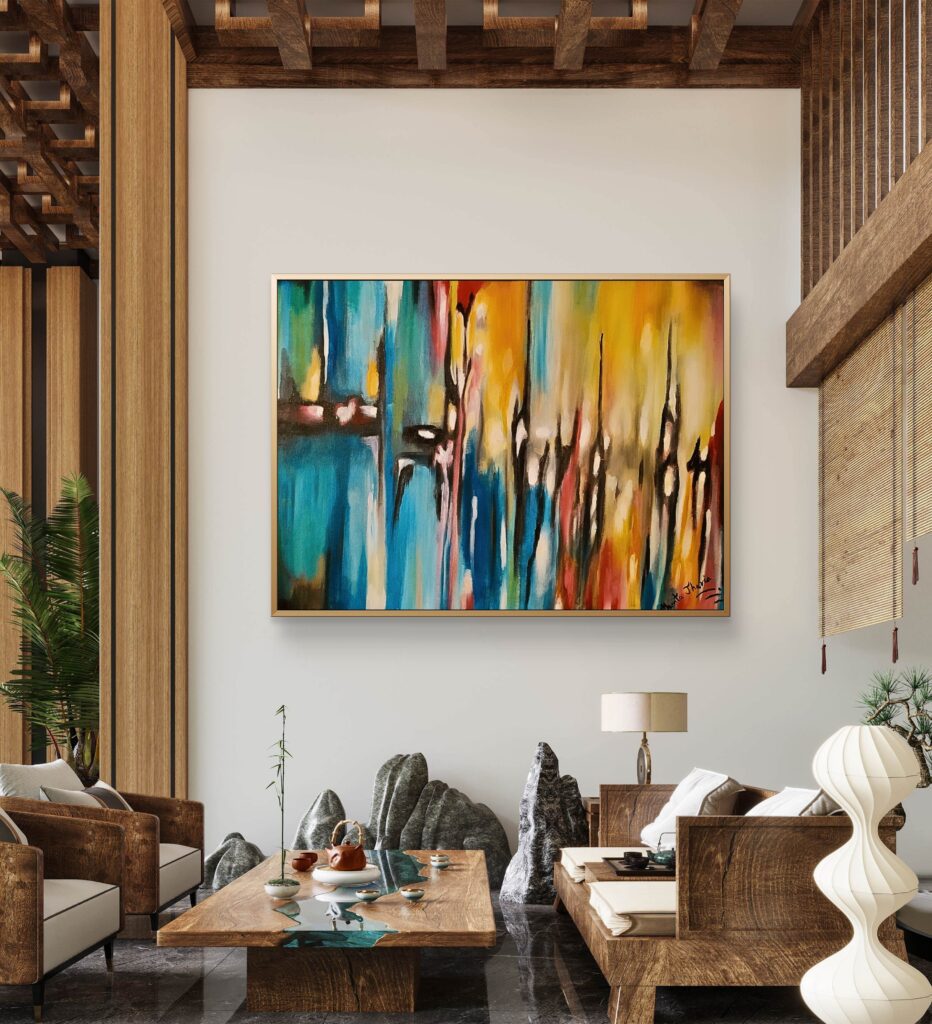
Interior styling experts at House Beautiful often recommend selecting artwork after identifying the room’s color scheme.
Architecture platforms like Dezeen highlight how abstract art can anchor contemporary interiors.
Design inspiration from The Metropolitan Museum of Art also shows how color relationships enhance artwork display.
How to Style Abstract Art as a Statement Piece
Another important principle in how to style abstract art is creating a focal point.
Modern interiors typically look best when one artwork anchors the room.
Ideal Locations for a Statement Artwork
Place your abstract artwork:
Above the sofa
Above a console table
On the first wall visible when entering the room
This immediately draws attention.
Why Statement Art Works
One large artwork:
Creates visual clarity
Makes the room feel intentional
Prevents cluttered wall arrangements
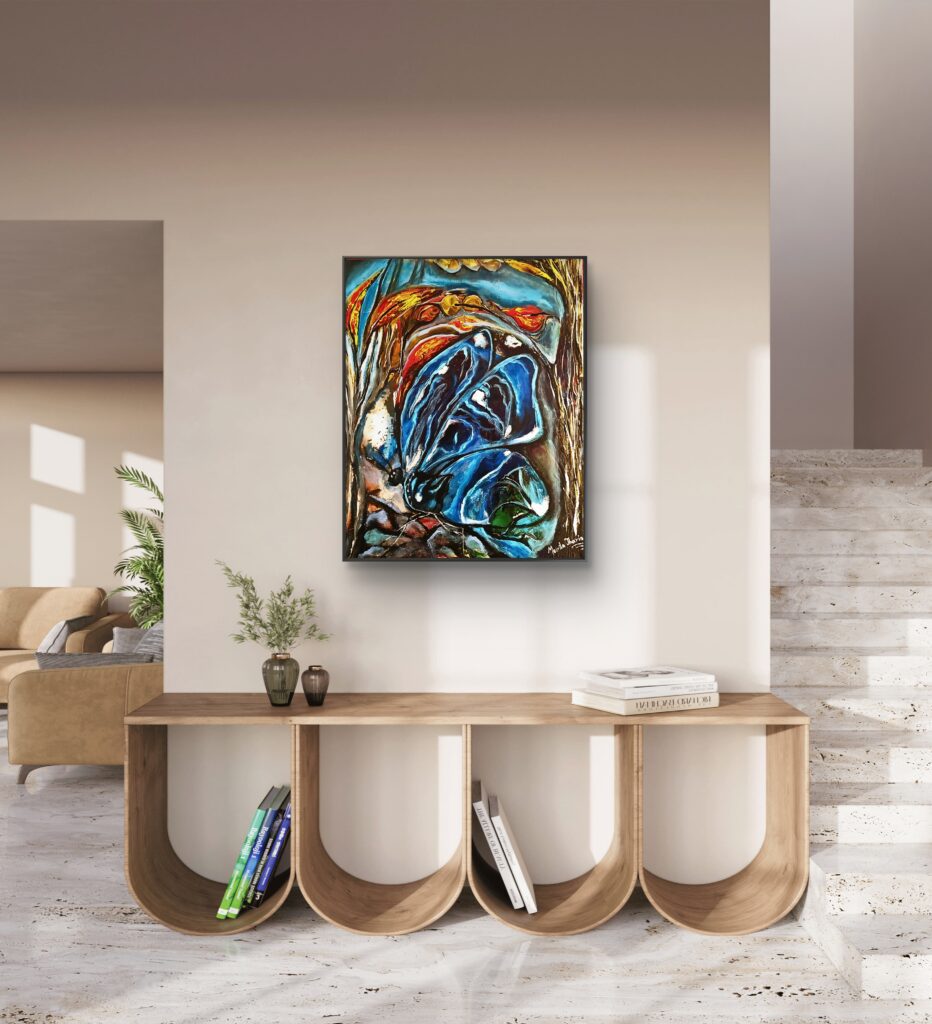
The easiest sizing rule (works in most homes)
A reliable guideline:
- Your artwork should be about two-thirds to three-quarters the width of the furniture below it.
Examples:
- 210 cm sofa → artwork around 140–160 cm wide
- 150 cm console table → artwork around 100–115 cm wide
- 160 cm bed → artwork around 105–120 cm wide
This creates visual stability.
How high should you hang the painting?
A simple rule:
- Il center of the artwork should be around 145–155 cm from the floor (eye level).
If you are hanging above furniture:
- Keep the bottom edge about 15–25 cm above the sofa/console/headboard
Design experts featured in Elle Decor frequently use statement artworks in modern living rooms.
Architectural design platforms such as Designboom also showcase interiors built around one dominant artwork.
Curated exhibitions at Solomon R. Guggenheim Museum demonstrate how a single artwork can command visual focus.
Use Negative Space When Styling Abstract Art
A crucial concept in how to style abstract art is allowing the artwork space to breathe.
Modern design values balance more than decoration.
What Is Negative Space?
Negative space is the empty area around the artwork.
This space helps highlight the painting rather than compete with it.
Tips for Using Negative Space
Avoid filling every wall with frames
Keep nearby décor minimal
Allow the artwork to remain the emotional center
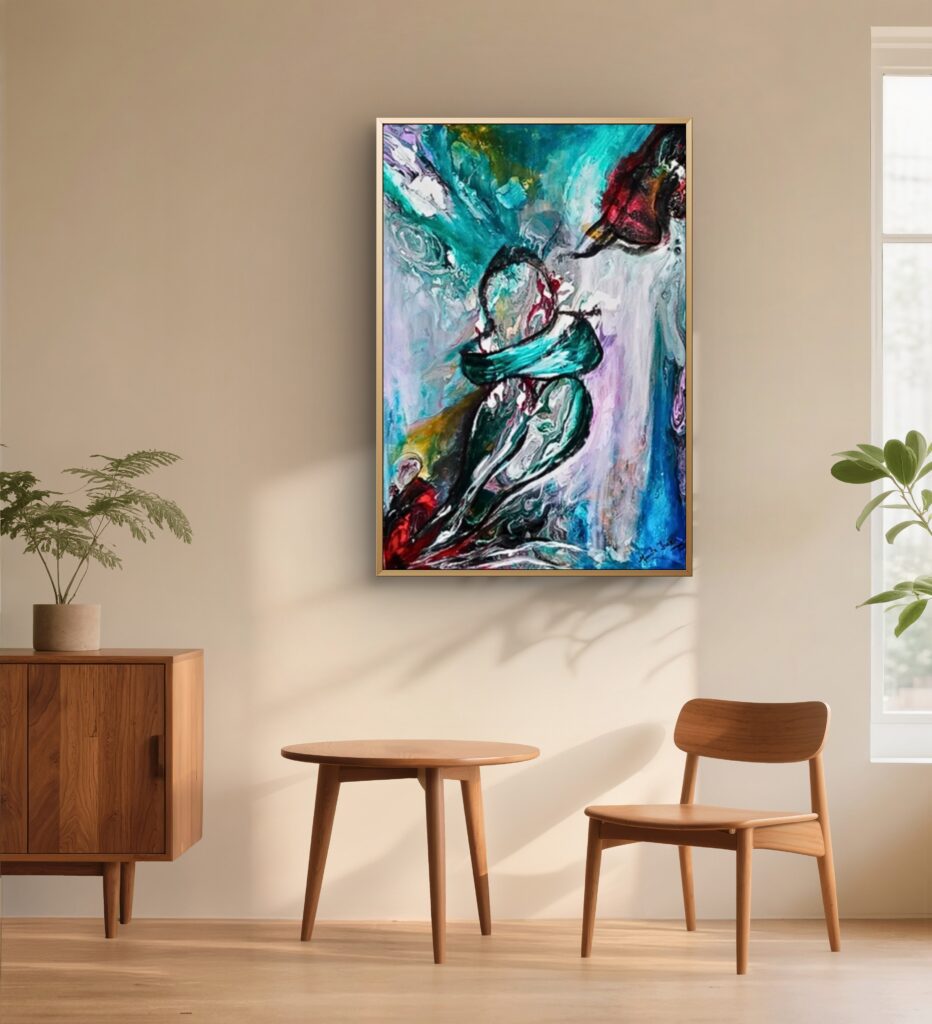
Museum curators at National Gallery often design exhibitions using generous negative space around paintings.
Interior design resources from Domus emphasize how empty space enhances visual balance.
Art installation techniques at Victoria and Albert Museum also illustrate how spacing elevates artwork presentation.
Frame Choices for Styling Abstract Art in Modern Homes
Frame selection is another essential part of how to style abstract art.
The frame should support the artwork without overwhelming it.
Modern Frame Options
Unframed Canvas
Clean contemporary look
Works beautifully with abstract art
Thin Black Frame
Minimal and elegant
Works well with modern interiors
White Frame
Light and airy aesthetic
Natural Wood Frame
Adds warmth and texture
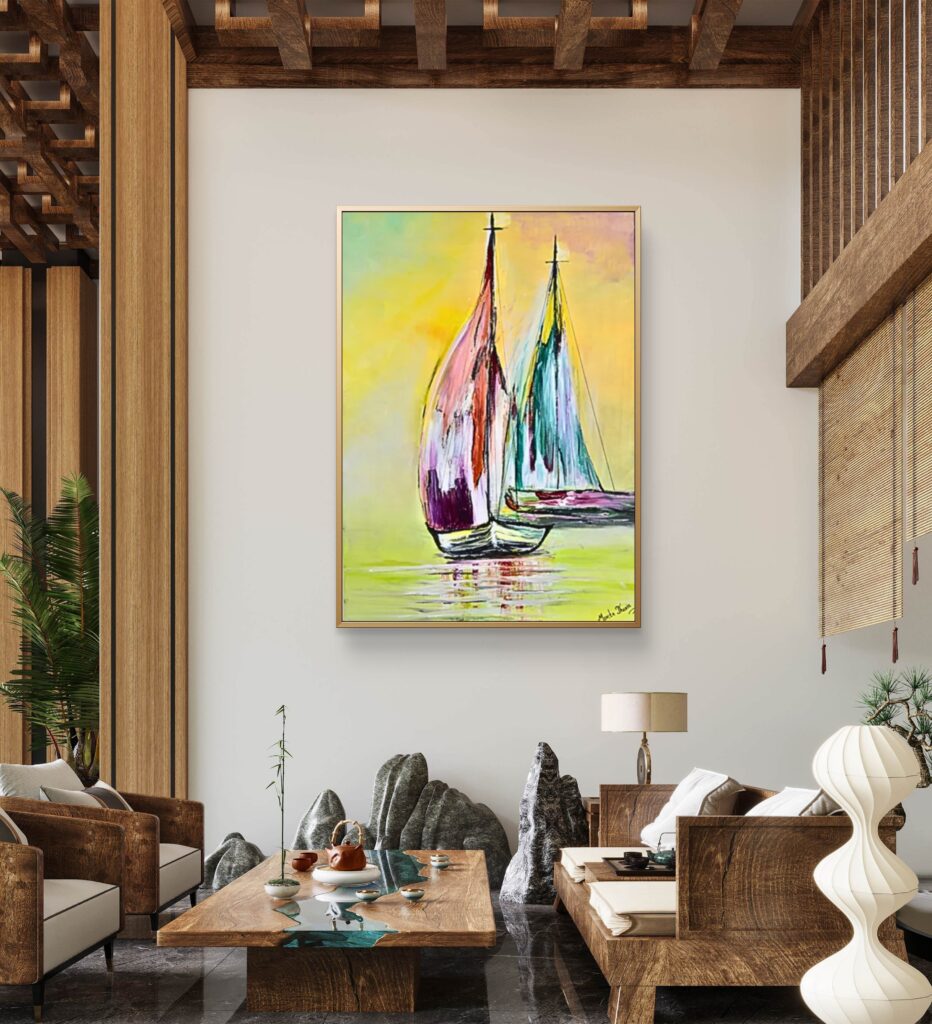
Explore abstract artworks here:
Shop all artwork
https://mamtajhariaart.com/shop/
Canvas print example
https://mamtajhariaart.com/product-category/modern-art-prints/canvas-print-abstract-art/
Original painting example
https://mamtajhariaart.com/product-category/original-abstract-paintings/page/3/
Contemporary art installations at Los Angeles County Museum of Art frequently feature minimalist framing.
Modern gallery designs at Saatchi Gallery also emphasize subtle framing styles.
Art platforms such as Artsy discuss how framing choices influence artwork perception.
Connect Abstract Art with the Room’s Décor
A final principle in how to style abstract art is creating visual connections between the artwork and the rest of the room.
Use a “Bridge Element”
Repeat one color from the artwork in small décor items such as:
Cushions
Throws
Vases
Decorative objects
This subtle repetition makes the design feel intentional.
Interior designers often use this technique to create harmony between artwork and furniture.
Conclusion
Learning how to style abstract art helps transform a modern home into a curated and expressive space.
Instead of filling every wall, focus on thoughtful placement and balance.
Remember these key principles:
Start with the room’s color palette
Use one statement artwork
Allow negative space around the painting
Choose frames that suit modern design
Repeat colors from the artwork in décor
When styled intentionally, abstract art becomes the emotional centerpiece of a home.
 Italian
  English