









Description
Original Symbolic Eye Painting for Sale – The Third Gaze
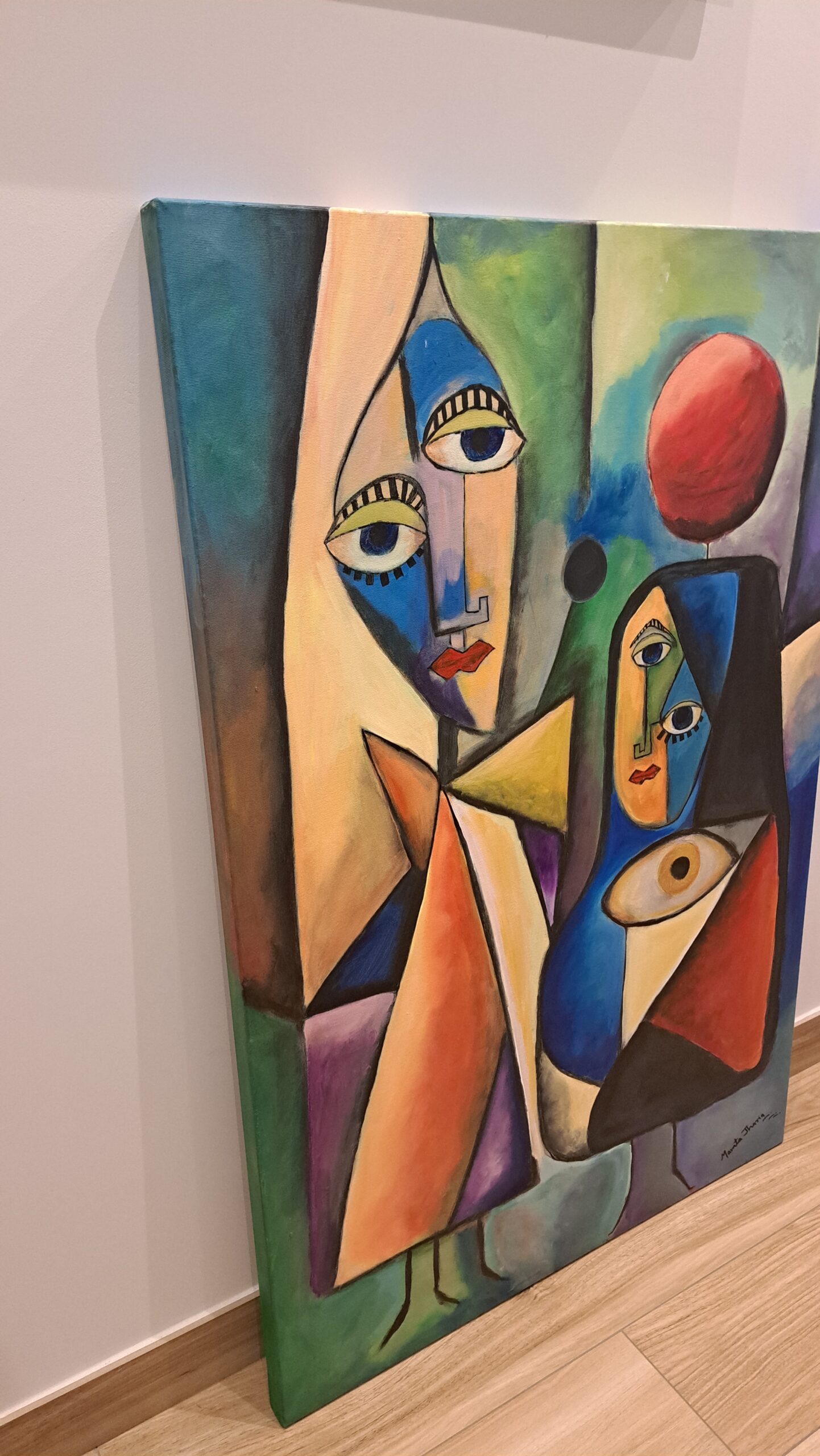
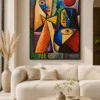
The Third Gaze is an original symbolic eye painting for sale by contemporary artist Mamta Jharia, created for collectors drawn to intuition, perception and psychologically layered figurative art. This one-of-a-kind contemporary figurative eye painting combines the human connection of a two figure symbolic painting, the fragmented structure of a cubist portrait painting with eyes, and the emotional depth of a psychological figurative painting. As an intuition and perception artwork, this substantial 80 × 120 cm portrait-format painting offers a distinctive statement for collectors seeking contemporary art with both immediate visual presence and an open intellectual narrative.
Created in acrylic on stretched canvas in 2026, The Third Gaze explores a kind of perception that exists beyond ordinary sight.
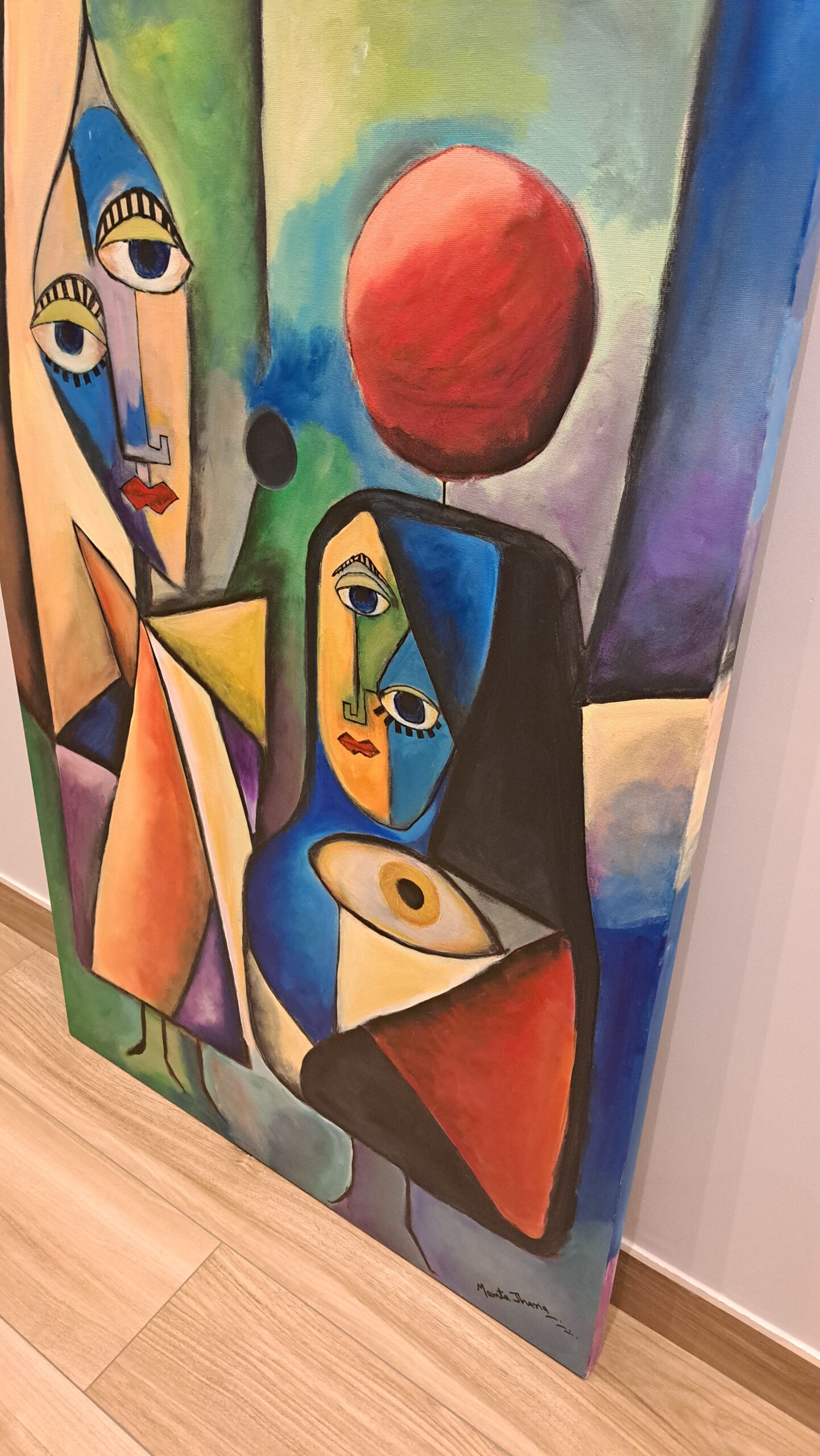
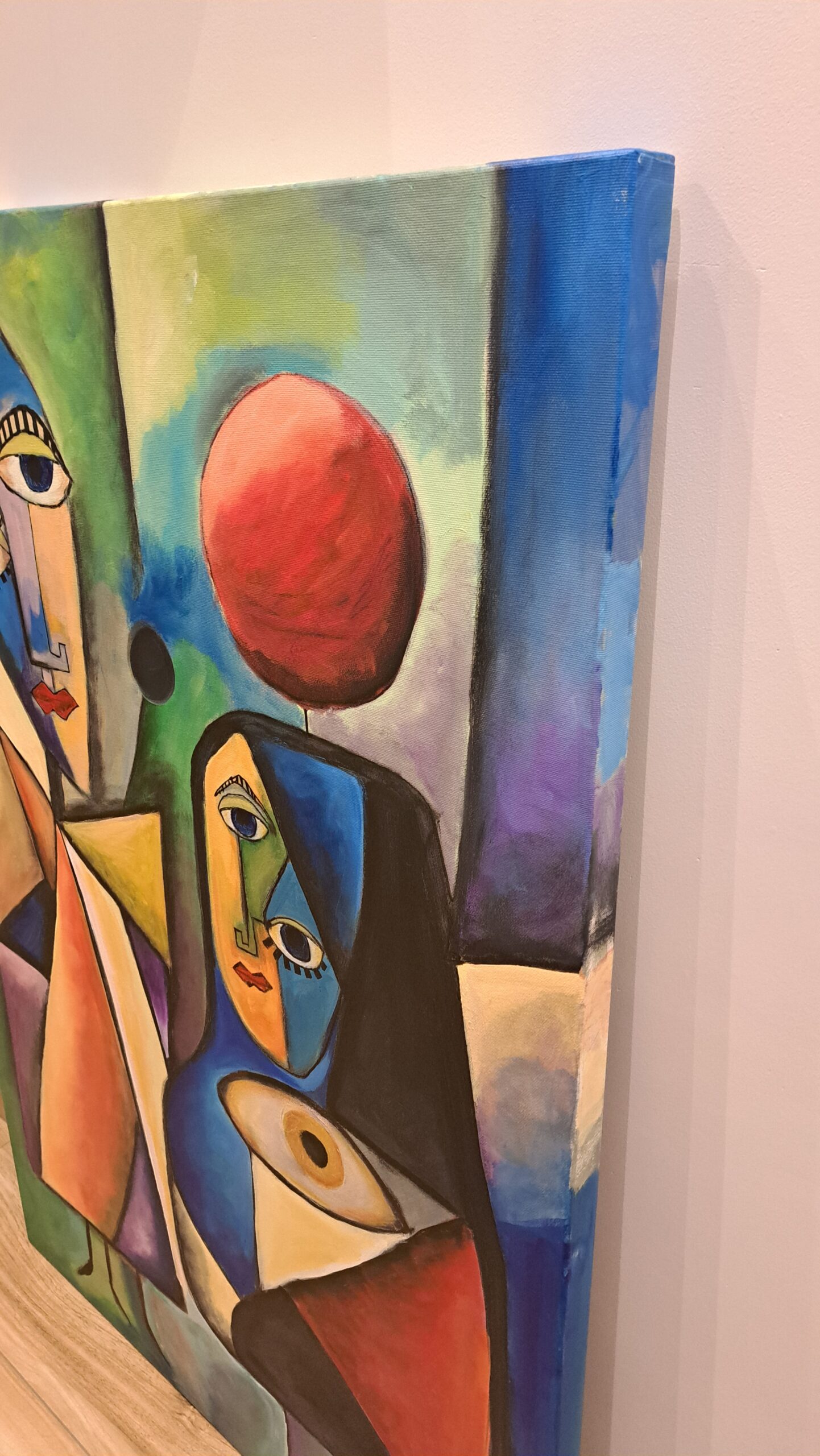
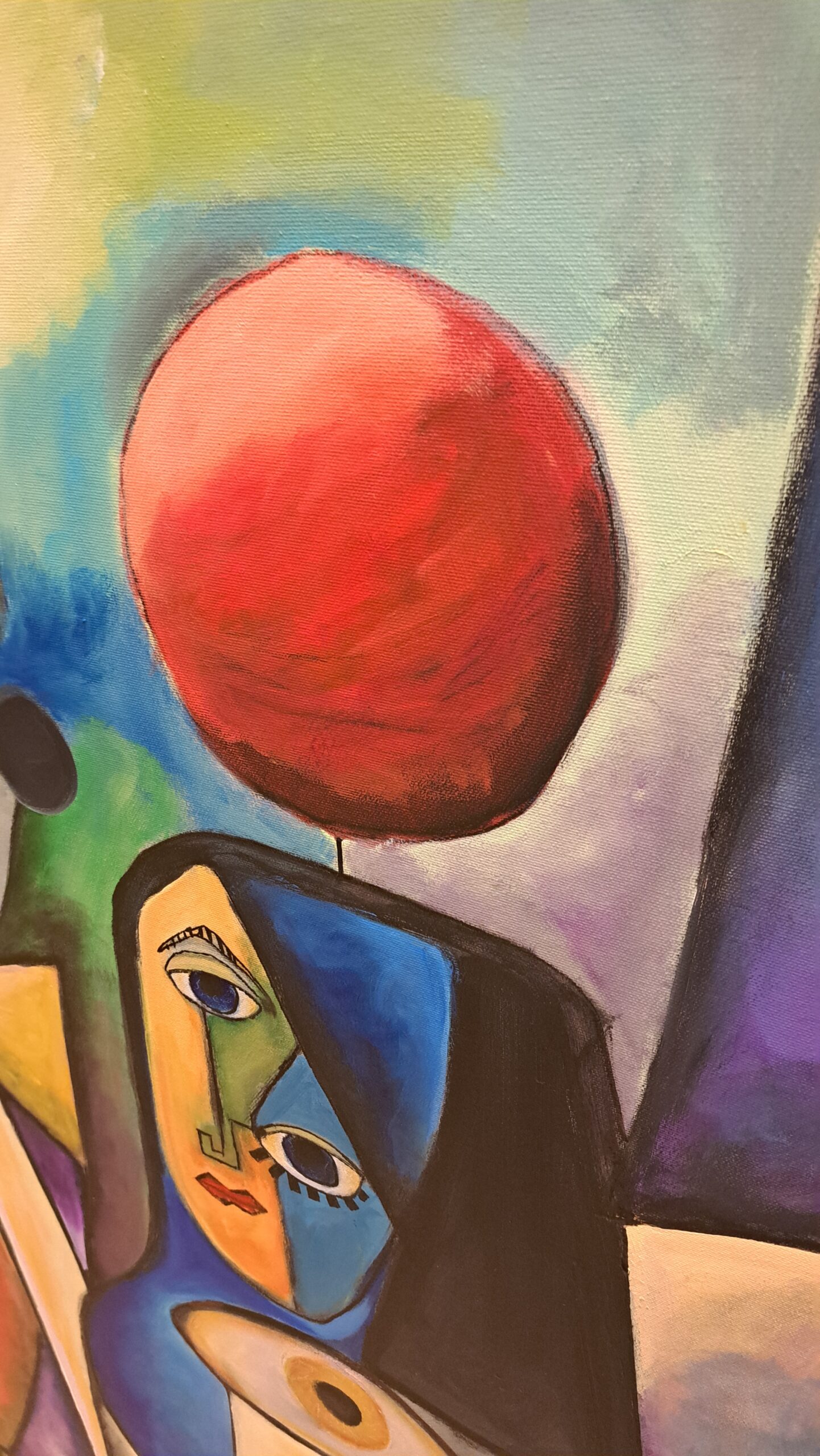
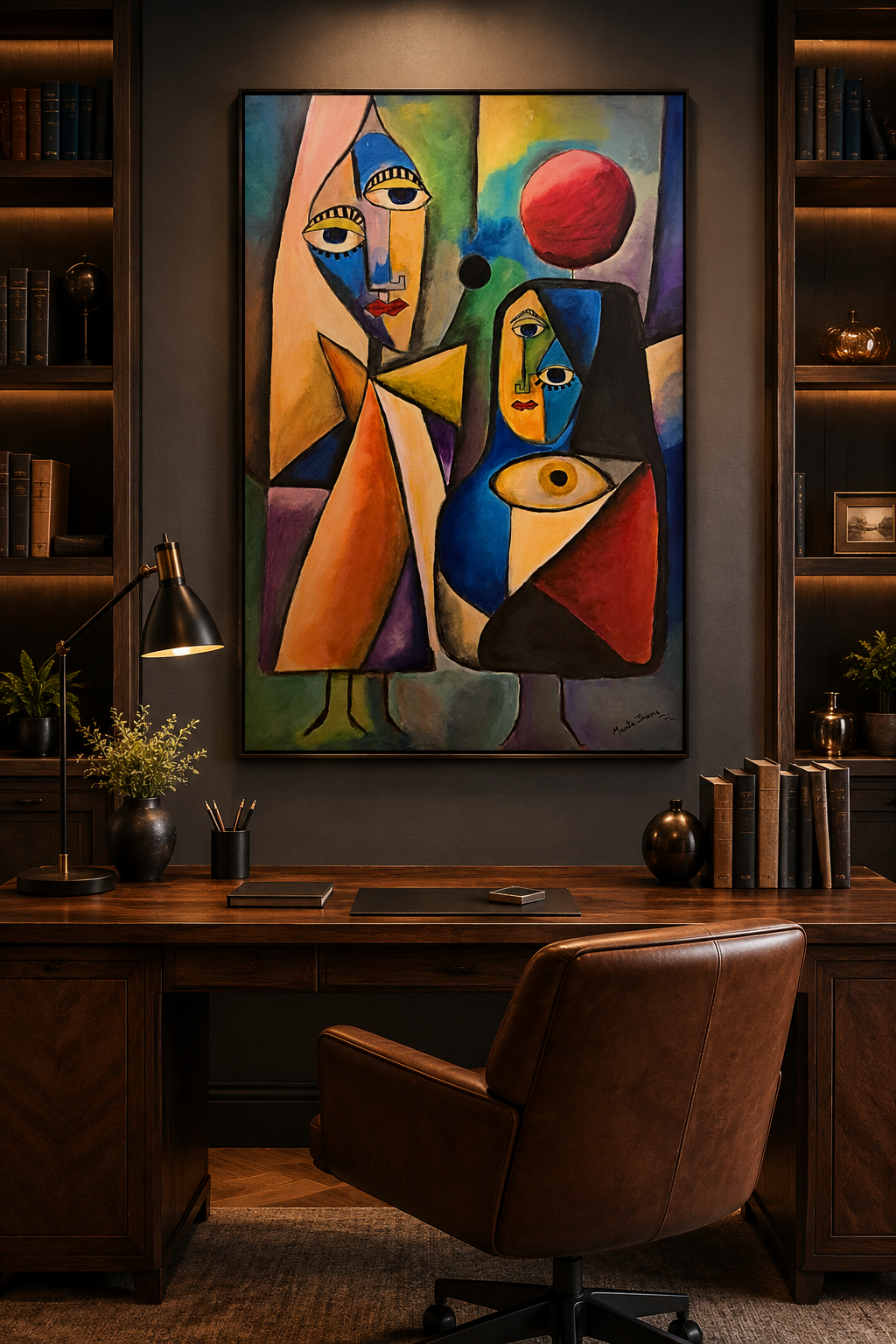
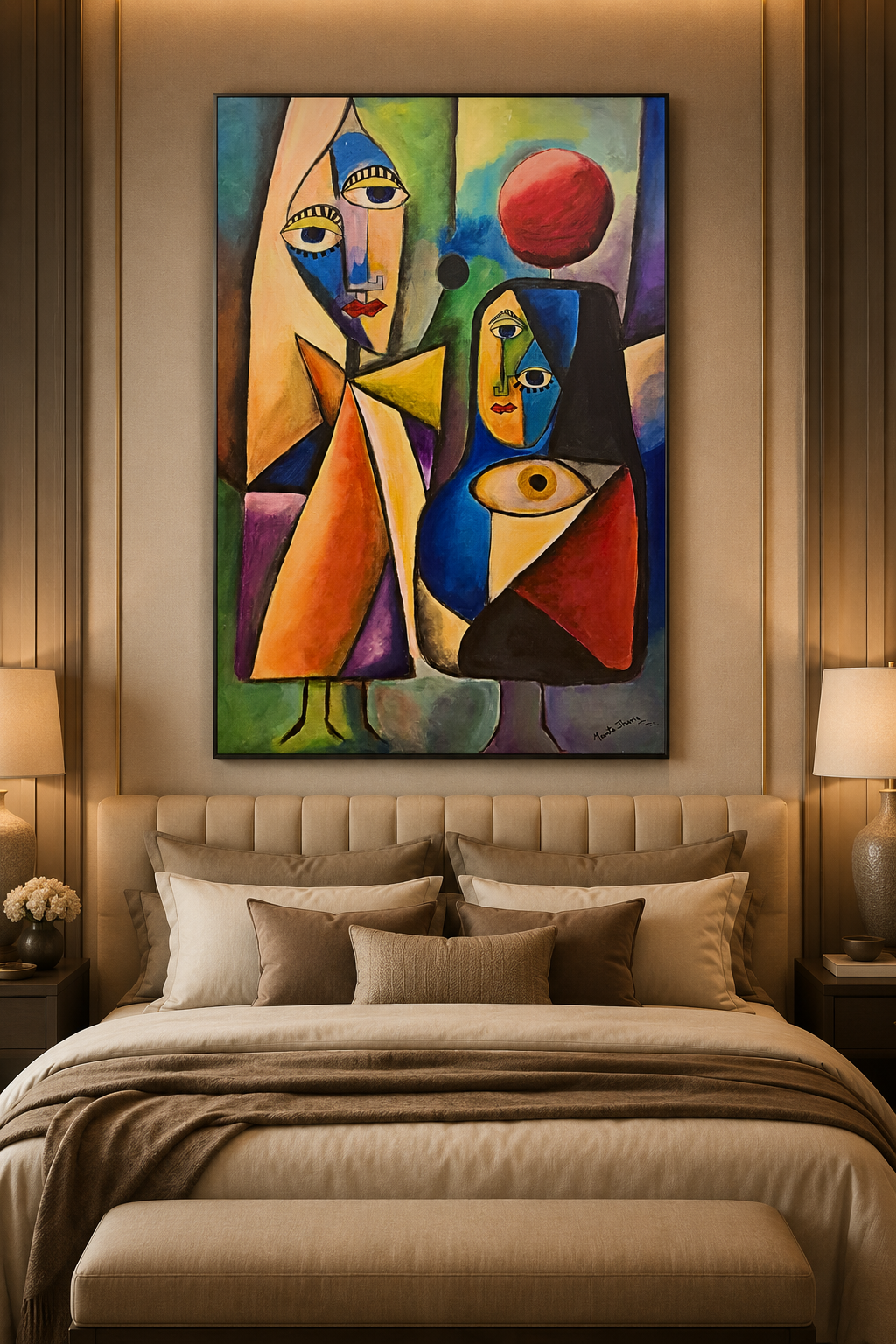
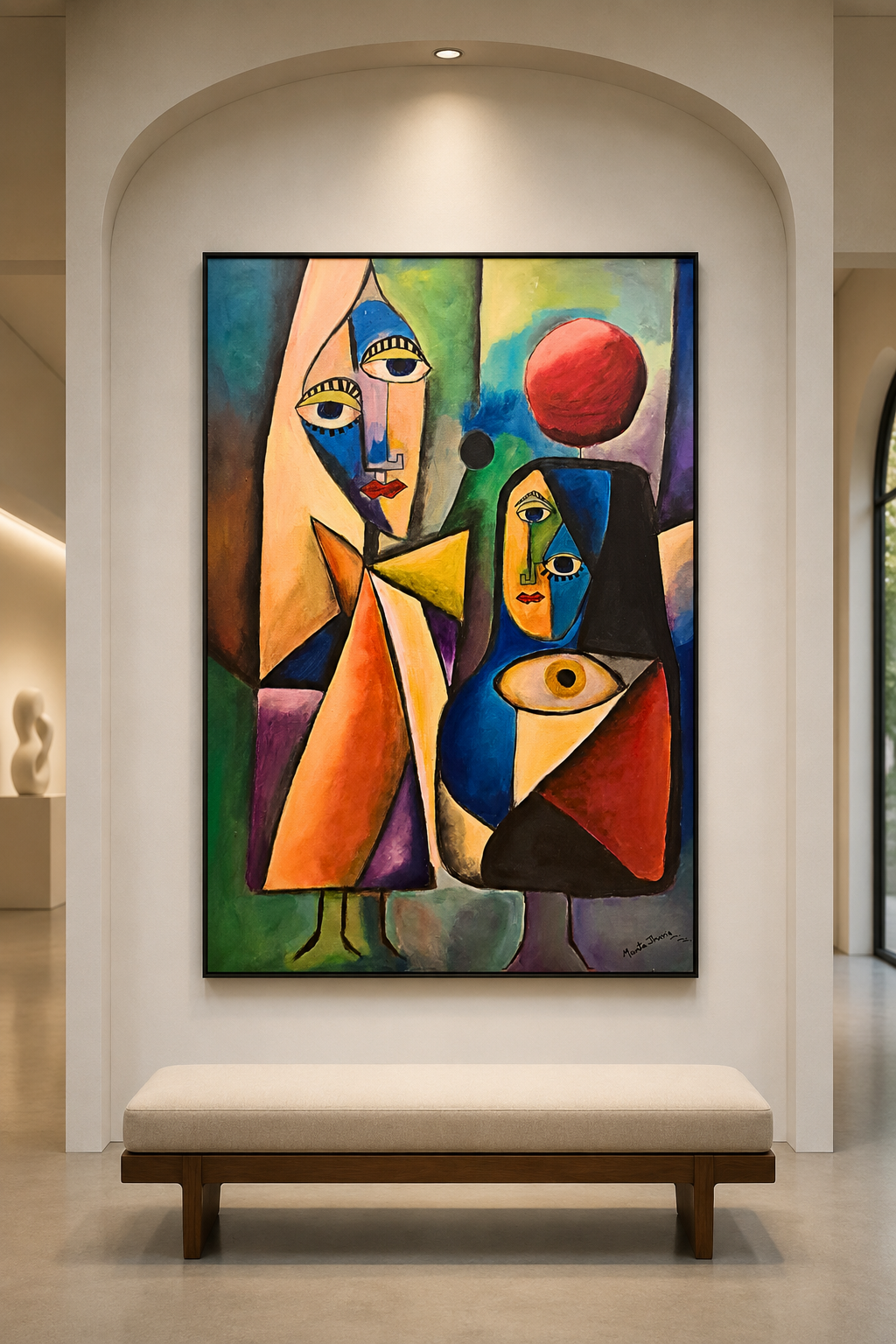
Two stylised figures stand beside one another. Their faces are divided into geometric planes, their expressions calm yet deliberately ambiguous. Around and within them, repeated eyes create a visual language of observation.
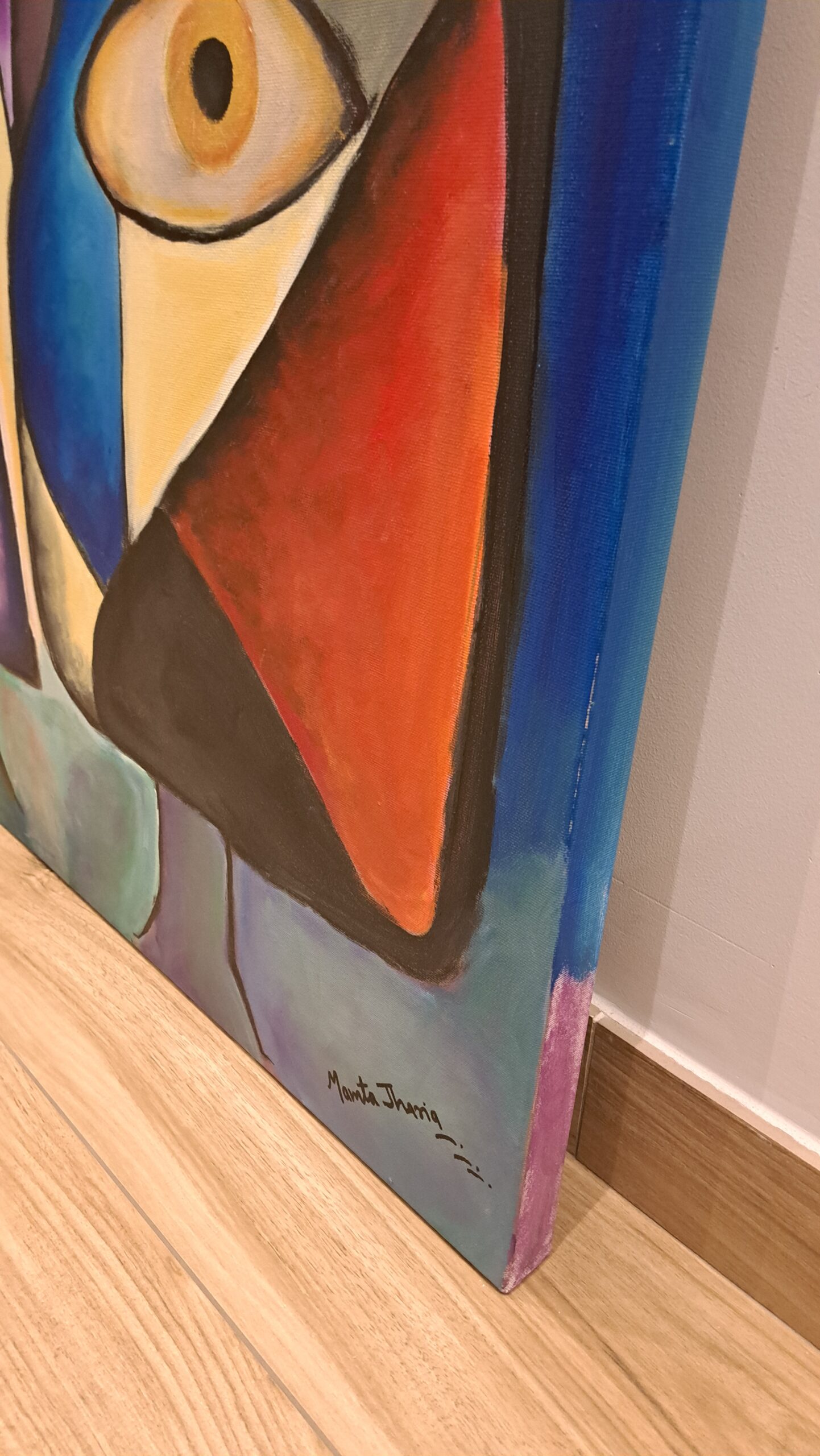
Most striking is the large symbolic eye positioned prominently within the lower figure.
It changes the painting from a portrait of two people into something deeper: a meditation on intuition, awareness and what human beings sometimes understand without words.
A Contemporary Figurative Painting About Perception
The title The Third Gaze does not refer simply to another pair of eyes.
It suggests another way of seeing.
Ordinary vision allows us to recognise appearance, gesture and physical presence. But relationships are rarely understood through appearance alone. Intuition, emotional recognition, silence, memory and instinct can reveal dimensions that literal sight cannot.
Mamta Jharia transforms that idea into visual form.
Repeated eyes appear throughout the composition, but the central symbolic gaze carries a different presence. It appears inward, heightened and instinctive.
Beyond What the Eyes Can See
The painting raises a fundamental question:
What can we understand when ordinary seeing is no longer enough?
The two figures are physically close, yet their exact relationship remains undefined.
They could be companions.
They could be reflections of one another.
They could represent two different states of the same identity.
Or they may be two individuals linked by a form of unspoken recognition.
By refusing to provide one definitive answer, Mamta allows the viewer to enter the painting with their own interpretation.
The Symbolic Eye as Inner Vision
The eye is the conceptual centre of the artwork.
Rather than functioning merely as a visual motif, it becomes a metaphor for intuition, heightened awareness and inner vision.
It suggests the kind of understanding that does not always depend upon explanation.
A person may recognise another person’s emotional state without being told. A memory may return before we consciously understand why. An instinct may register something that visible information has not yet explained.
The Third Gaze gives that invisible process a physical presence.
For collectors specifically searching for an original symbolic eye painting for sale, this conceptual dimension distinguishes the work from decorative eye imagery.
The eye is not ornament.
It carries the central meaning of the composition.
Cubist Structure and Symbolic Figuration
The two elongated figures are constructed through simplified geometric planes and fragmented facial structures.
Blue, deep blue and turquoise provide much of the atmospheric foundation, balanced by cream, ochre, muted orange, red, black, soft green and purple.
The palette moves between coolness and warmth, creating both structural clarity and psychological tension.
Cubist influence is present in the fragmentation and shifting planes, while Symbolic elements move the work beyond physical portraiture.
The figures remain clearly recognisable, which is why the painting should be positioned commercially as Contemporary Figurative Art rather than primarily as Abstract.
The Red Circular Form
Above the figures, a red circular form introduces an additional symbolic layer.
It can suggest a sun, a thought, a memory, energy, destiny or an emotional presence orbiting the relationship.
Its meaning is deliberately unresolved.
Like the symbolic eye, it invites interpretation rather than prescribing it.
Identity Is Never One Complete Image
Fragmentation is not used only for visual effect.
For Mamta Jharia, identity is never singular or completely visible.
Human beings are composed of experiences, memories, relationships, contradictions and invisible aspects that cannot be understood through outward appearance alone.
The faces in The Third Gaze therefore remain recognisable yet incomplete.
This gives the cubist portrait painting with eyes a psychological dimension: the geometry becomes a language for the complexity of identity.
The artwork asks the viewer to consider not only what the figures look like, but what may exist beneath their visible forms.
Human Connection Without a Fixed Story
The emotional relationship between the two figures is intentionally open.
There is connection, but no explanation.
This makes The Third Gaze particularly compelling as a two figure symbolic painting.
Rather than illustrating a specific couple, family relationship or narrative event, it explores the invisible awareness that can exist between people.
The connection may suggest companionship, recognition, mirrored identity or an intuitive understanding that cannot easily be translated into language.
That openness gives the painting longevity.
Different viewers can encounter completely different relationships within the same composition.
Interior Placement Suggestions
Living Room
At 80 × 120 cm, the portrait format creates considerable vertical presence.
In a contemporary living room, The Third Gaze works particularly well on a dedicated feature wall, above a low console or between architectural elements.
Warm white, cream, stone, beige and soft-grey walls provide an elegant setting for its blues, reds, ochres and turquoise tones.
Executive Office or Creative Studio
The themes of intuition, perception and human understanding make this psychological figurative painting particularly appropriate for an executive office, design practice, architecture studio or creative environment.
It offers intellectual presence without relying on literal motivational imagery.
Bedroom or Reading Room
Its introspective and contemplative quality also suits a sophisticated bedroom, library or quiet reading area.
The painting is visually strong, yet its narrative remains reflective rather than aggressive.
Private Gallery or Boutique Interior
As a major 80 × 120 cm original work, The Third Gaze has enough physical presence for a private gallery, collector residence, boutique hotel or curated hospitality environment.
Why Choose The Third Gaze?
This is not a reproduction, poster or mass-produced decorative print.
It is a one-of-a-kind original acrylic painting by Mamta Jharia.
Its distinction lies in the combination of recognisable human figures, Cubist fragmentation and a powerful symbolic centre.
For collectors seeking a contemporary figurative eye painting, it offers sophisticated human imagery rather than decorative symbolism alone.
For those drawn to an intuition and perception artwork, its meaning extends into questions of instinct, awareness, identity and invisible human connection.
Its 80 × 120 cm format gives it the scale required to function as a genuine statement piece while retaining the intimacy of figurative portraiture.
FEATURE BULLETS
- One-of-a-kind original artwork
- Acrylic on stretched canvas
- Created by Mamta Jharia in 2026
- Major 80 × 120 cm portrait format
- Two stylised human figures
- Powerful central symbolic eye
- Repeated gaze imagery
- Contemporary Figurative composition
- Cubist-inspired fragmentation
- Geometric structure
- Symbolic exploration of perception
- Themes of intuition and inner vision
- Psychological human connection
- Distinctive blue, turquoise, red and cream palette
- Strong visual recognition from a distance
- Layered interpretation at closer viewing
- Suitable for premium residential and professional interiors
- No duplicate original available
TECHNICAL SPECIFICATIONS
- Artwork Title: The Third Gaze
- Artist: Mamta Jharia
- Brand: Mamta Jharia Art
- Year: 2026
- Artwork Type: Original Painting
- Medium: Acrylic on stretched canvas
- Support: Stretched canvas
- Dimensions: 80 × 120 cm
- Orientation: Portrait
- Primary Style: Contemporary Figurative
- Secondary Style: Cubism
- Additional Influences: Geometric / Symbolic
- Main Theme: Portrait / People
- Secondary Theme: Relationships / Identity
- Subject: Two figures, symbolic eye, connection, perception and intuition
- Dominant Colours: Blue, deep blue, turquoise, cream, ochre, muted orange, red, black, soft green and purple
- Mood: Psychological, symbolic, introspective, mysterious, reflective, connected and contemplative
- Originality: One of a kind
CARE INSTRUCTIONS
Display the artwork indoors in a stable environment.
Avoid prolonged exposure to strong direct sunlight, excessive humidity, condensation and direct heat sources.
For routine maintenance, gently remove surface dust with a clean, dry and very soft brush or microfiber cloth.
Do not apply water, solvents, household cleaning products or abrasive materials directly to the painted surface.
For specialist cleaning, restoration or structural conservation, consult a qualified art conservator.
FREQUENTLY ASKED QUESTIONS
Is The Third Gaze an original painting?
Yes. The Third Gaze is a one-of-a-kind original acrylic painting on stretched canvas by Mamta Jharia, created in 2026.
What does the symbolic eye represent in The Third Gaze?
The central eye represents another level of perception — intuition, heightened awareness, inner vision and forms of understanding that extend beyond ordinary sight.
What size is The Third Gaze?
The artwork measures 80 × 120 cm in portrait orientation, giving it substantial vertical wall presence for a living room, office, bedroom, private gallery or hospitality interior.
Is The Third Gaze a spiritual or abstract painting?
Its symbolism can invite personal interpretation, but its strongest classification is Contemporary Figurative Art. The recognisable human figures and psychological interaction remain central to the work.
What is the relationship between the two figures?
The relationship is intentionally undefined. They may represent two individuals, reflections of one another, different states of the same identity or people connected by an unspoken intuitive understanding.
Where would this symbolic eye painting look best?
It is particularly suitable for a contemporary living room, executive office, creative studio, bedroom, reading room, private gallery or sophisticated boutique interior.

 English
  Italian
Reviews
There are no reviews yet.