









Description
Expressive Eyes Figurative Painting for Sale – What the Eyes Cannot Hold
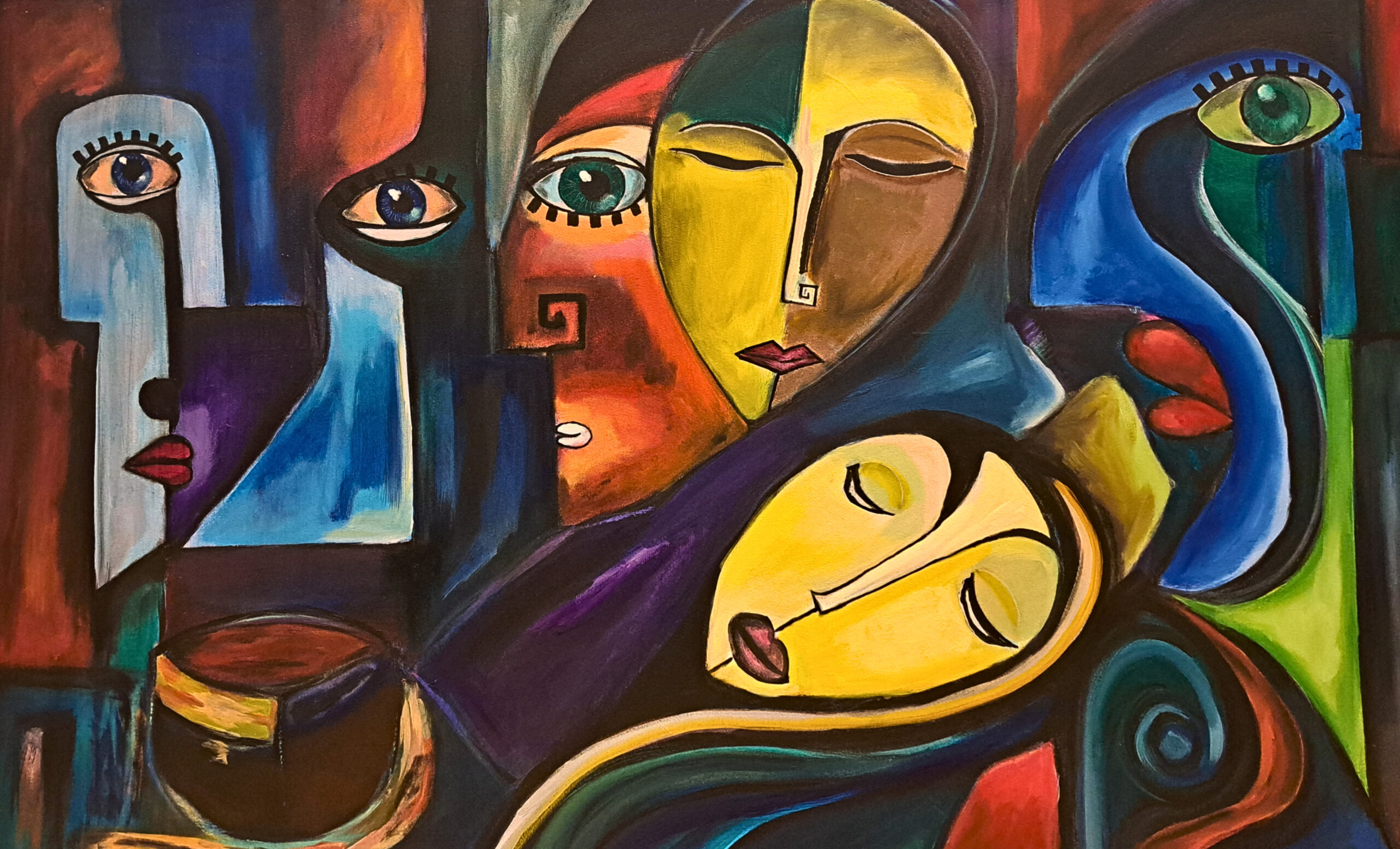
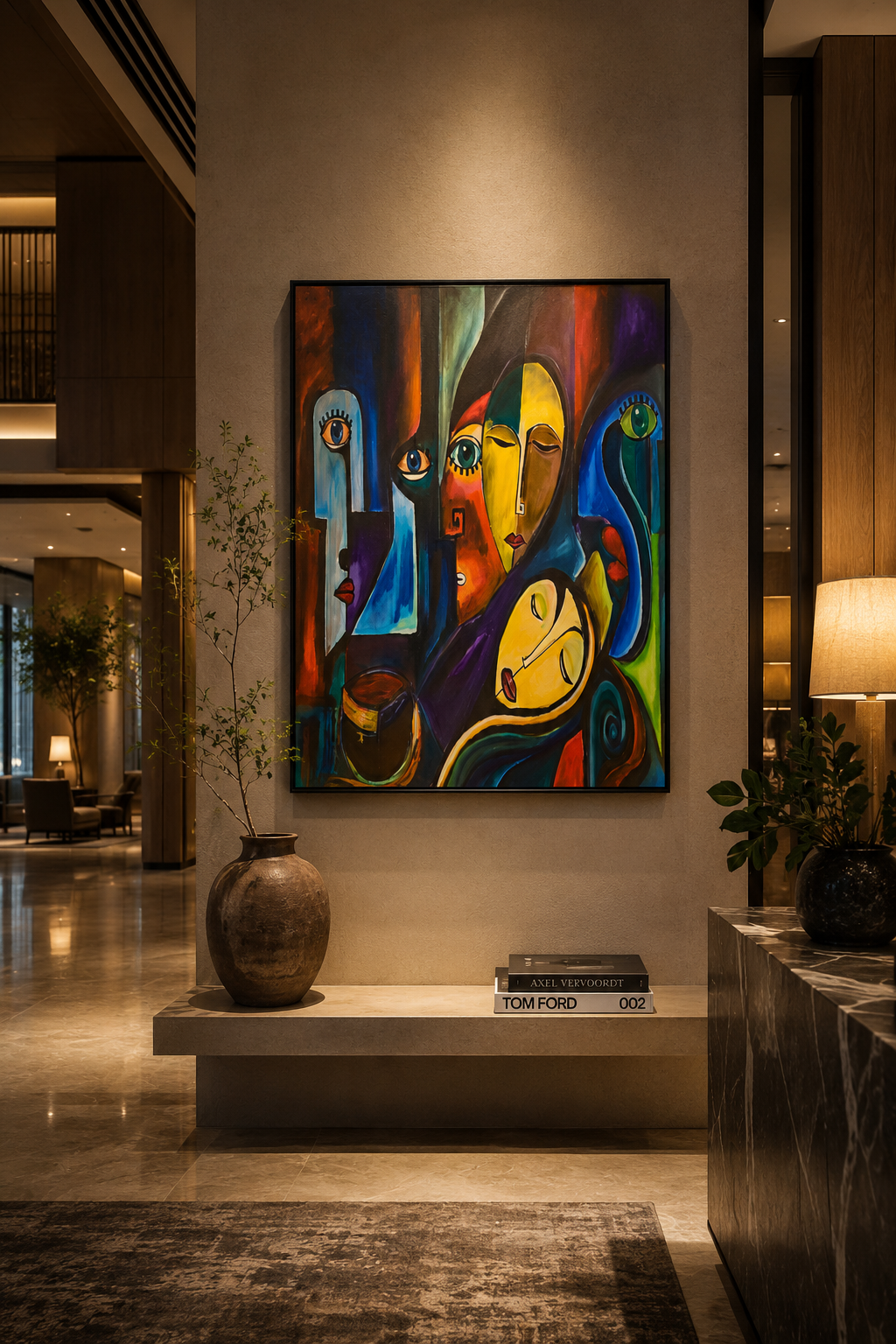
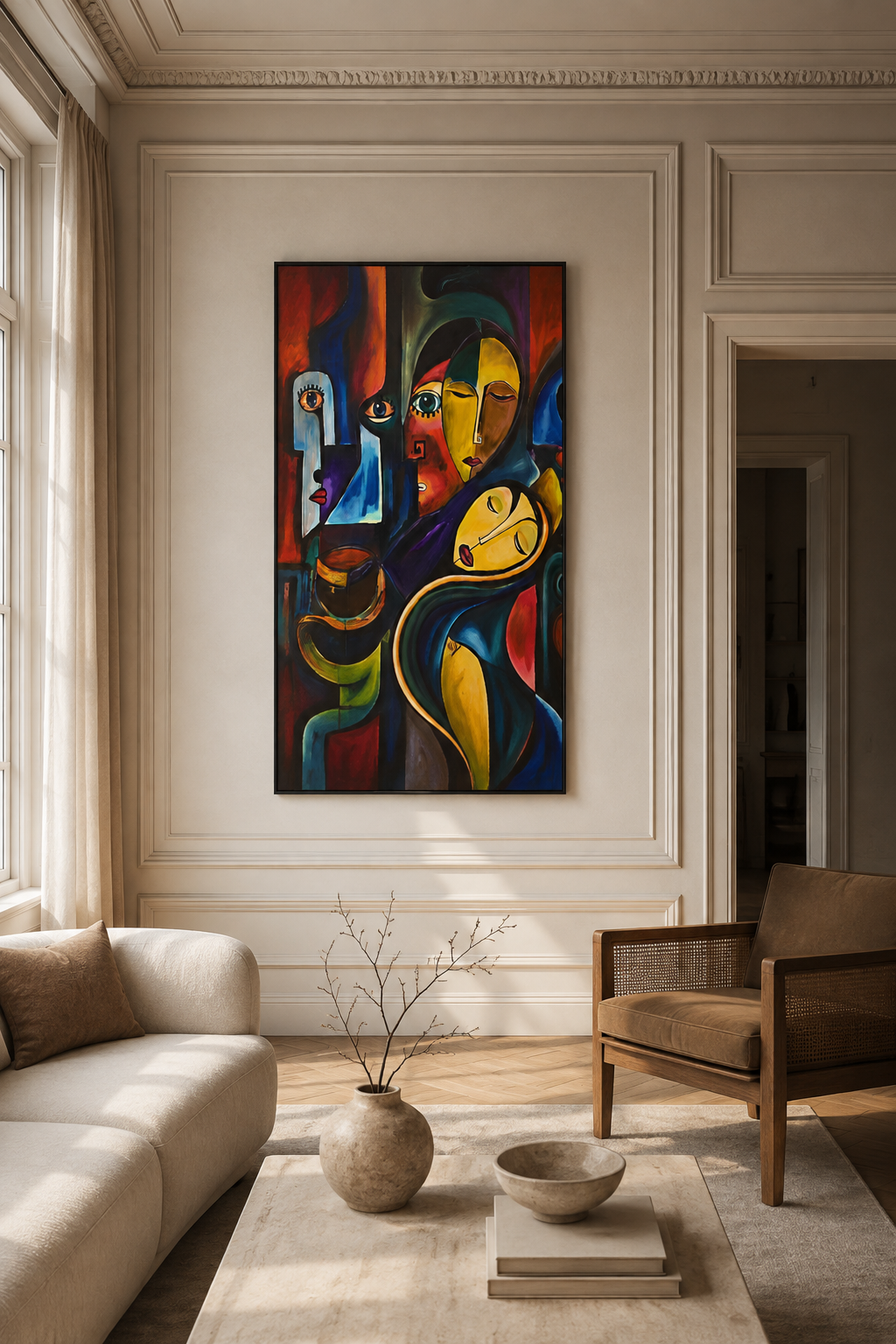
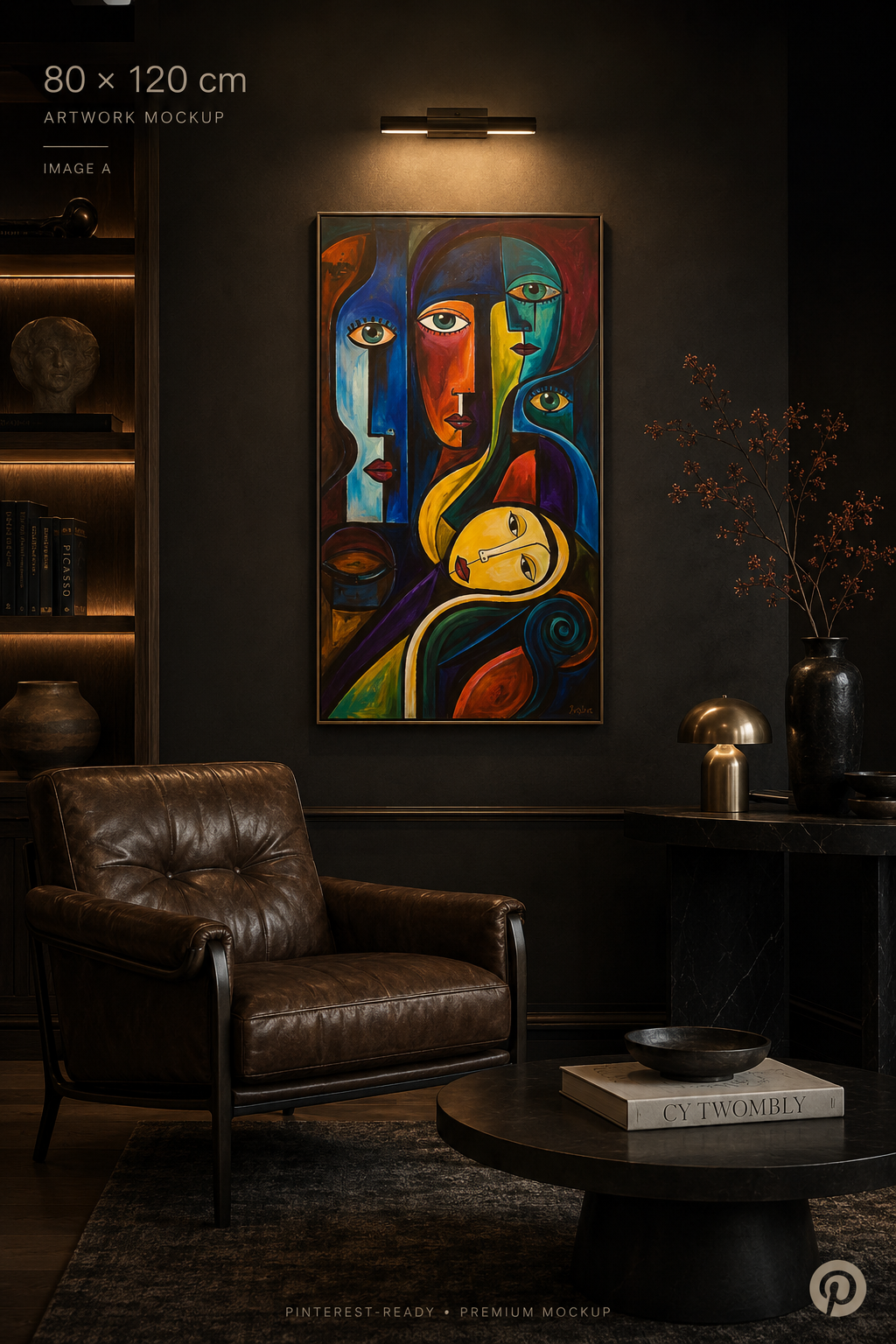
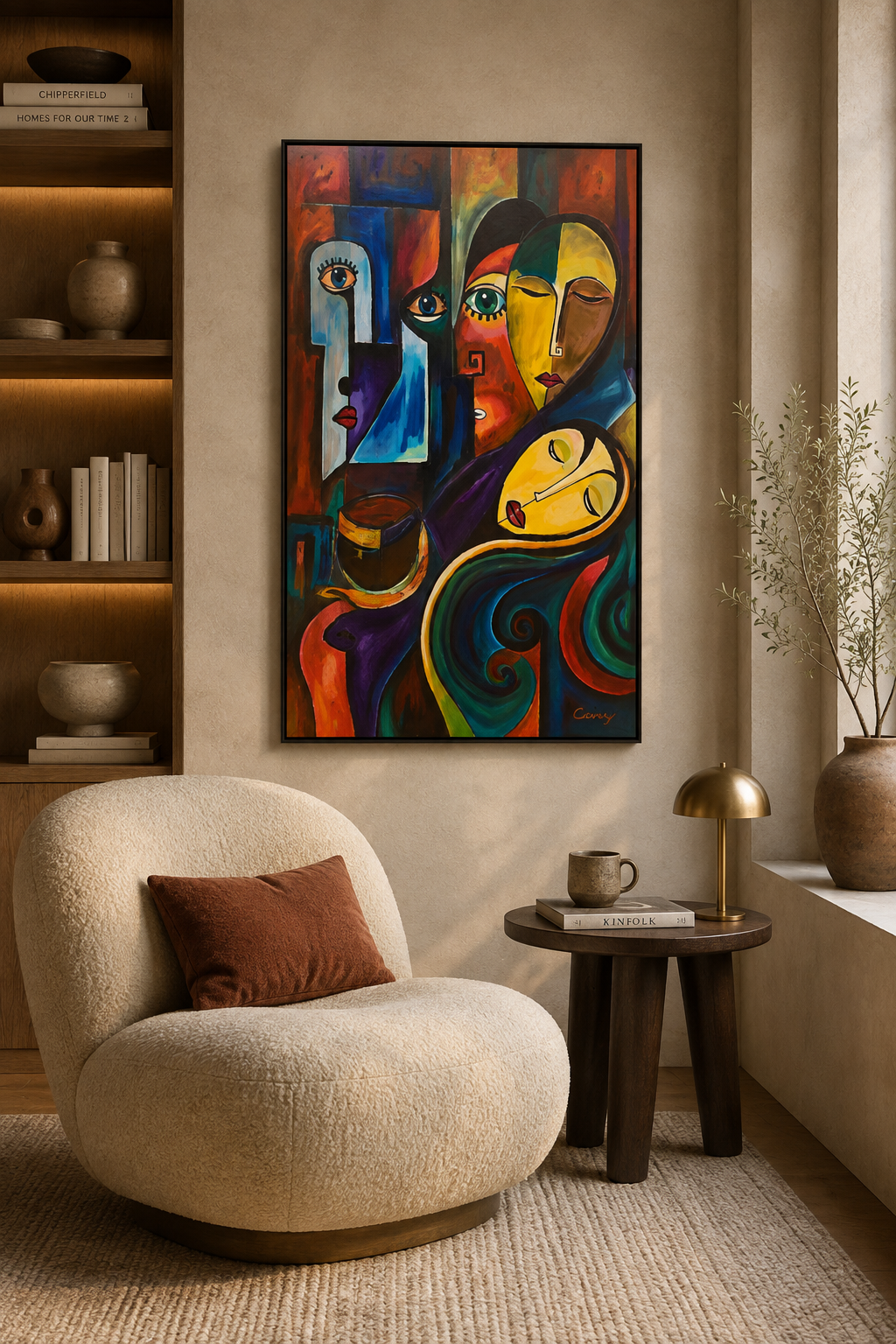
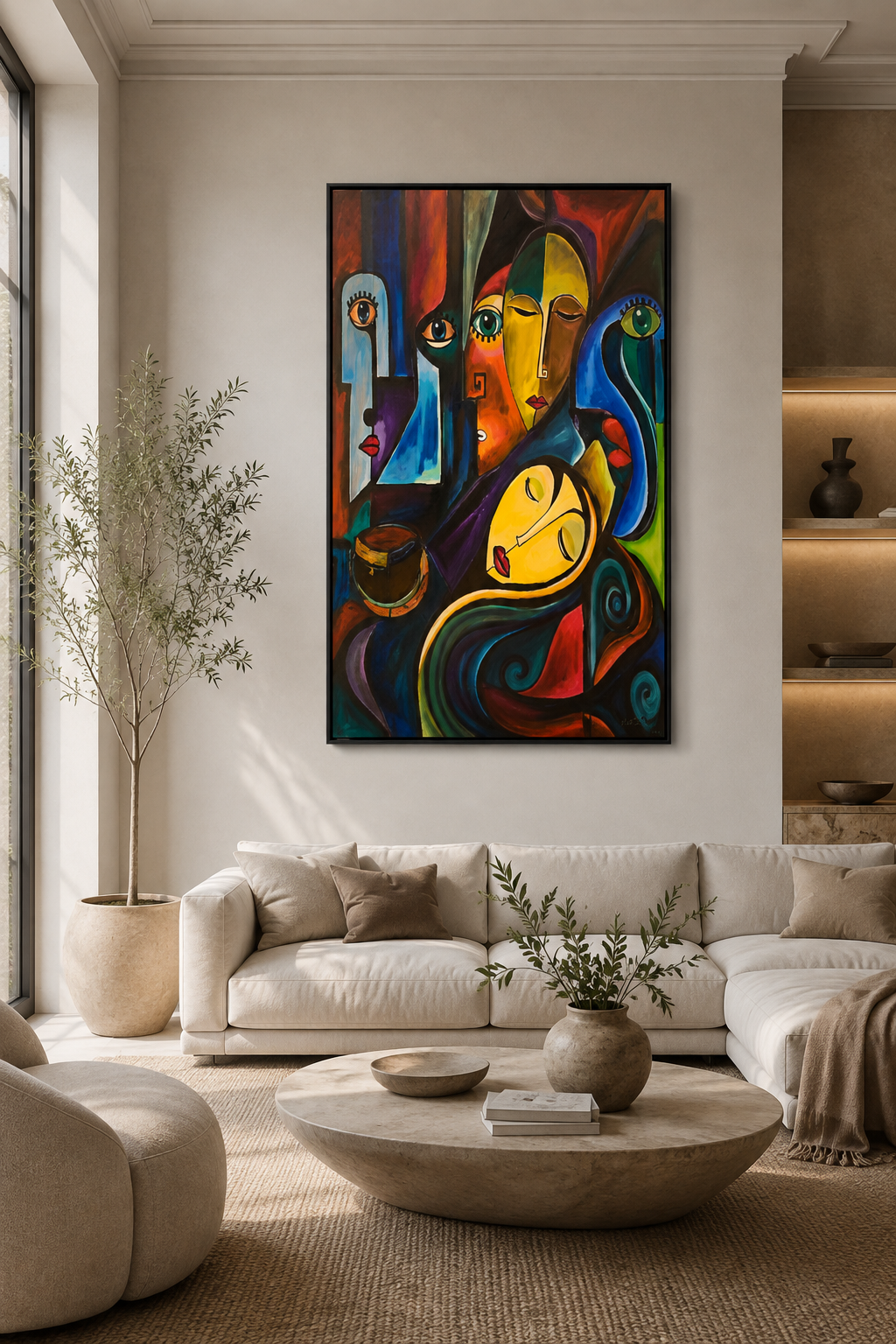
What the Eyes Cannot Hold is an expressive eyes figurative painting for sale by contemporary artist Mamta Jharia, created for collectors attracted to psychologically complex human imagery. This one-of-a-kind contemporary psychological portrait painting combines fragmented faces, repeated gazes and a central resting figure within an expansive 80 × 120 cm landscape canvas. For buyers seeking an original identity painting for sale, a fragmented face painting for sale, sophisticated contemporary relationship art, or large figurative wall art, this work offers both powerful visual presence and a deeply private meditation on what it means to see another person without ever fully knowing them.
Created in acrylic on canvas in 2026, What the Eyes Cannot Hold examines the boundary between observation and understanding.
Across the composition, open eyes and fragmented faces create a persistent atmosphere of looking. Some gazes confront the viewer directly. Others appear from the edges of the scene.
At the centre, however, one figure closes her eyes.
Her stillness changes the entire emotional structure of the painting.
A Contemporary Figurative Painting About Seeing and Being Seen
The central figure is surrounded by watchful presences, yet she appears psychologically removed from them.
She is visible, but not fully accessible.
There is vulnerability in her position, but also a sense of protection.
Her closed eyes create a boundary between the external world and an inner space that remains entirely her own.
The painting therefore asks a deceptively simple question:
Does seeing someone mean that we understand them?
Mamta Jharia deliberately answers through ambiguity rather than explanation.
When Observation Does Not Become Understanding
Human beings often believe that familiarity creates knowledge.
We observe expressions. We recognise habits. We understand fragments of another person’s life.
Yet every individual retains memories, fears, desires and private territories that remain inaccessible even to those standing closest to them.
The repeated eyes initially suggest knowledge and awareness.
The central figure challenges that assumption.
She can be observed, but observation does not reveal everything.
That tension makes What the Eyes Cannot Hold particularly compelling as a contemporary psychological portrait painting.
Fragmented Faces and the Complexity of Identity
The faces are constructed through overlapping geometric forms, distorted proportions and saturated areas of colour.
Deep blue, turquoise, green, yellow, burnt orange, burgundy, purple, black and warm earth tones move across the canvas, creating an emotionally layered visual field.
The fragmentation is not simply stylistic.
For Mamta Jharia, identity is not a single complete image.
People are shaped by memories, experiences, relationships, contradictions and the aspects of themselves they choose—or are able—to reveal.
For collectors searching for a fragmented face painting for sale, this gives the geometric language a conceptual purpose.
The fragmented forms represent the impossibility of understanding another person through appearance alone.
Expressionist Colour with Cubist and Symbolic Influences
Although the painting contains abstraction and strong geometric fragmentation, it remains fundamentally figurative.
The human forms, faces, eyes and psychological relationships are clearly recognisable.
The strongest classification is therefore Contemporary Figurative Art, supported by Expressionist colour, Cubist-inspired fragmentation and Symbolic meaning.
This balance gives the painting immediate accessibility while maintaining conceptual depth.
From across a room, the repeated eyes and strong colour structure create visual impact.
Closer viewing reveals different relationships between the figures, fragments and gazes.
Intimacy, Vulnerability and Protection
The relationship between the figures is deliberately undefined.
They may represent protection.
They may suggest love, memory, social expectation or different aspects of one person’s identity.
The ambiguity is essential.
Rather than giving the viewer a predetermined narrative, Mamta leaves room for personal interpretation.
The reclining central figure can appear peaceful to one viewer and vulnerable to another.
Her closed eyes may suggest trust, exhaustion, withdrawal, protection or a deliberate retreat into private consciousness.
The painting changes according to the emotional experience brought to it.
Interior Placement Suggestions
Living Room
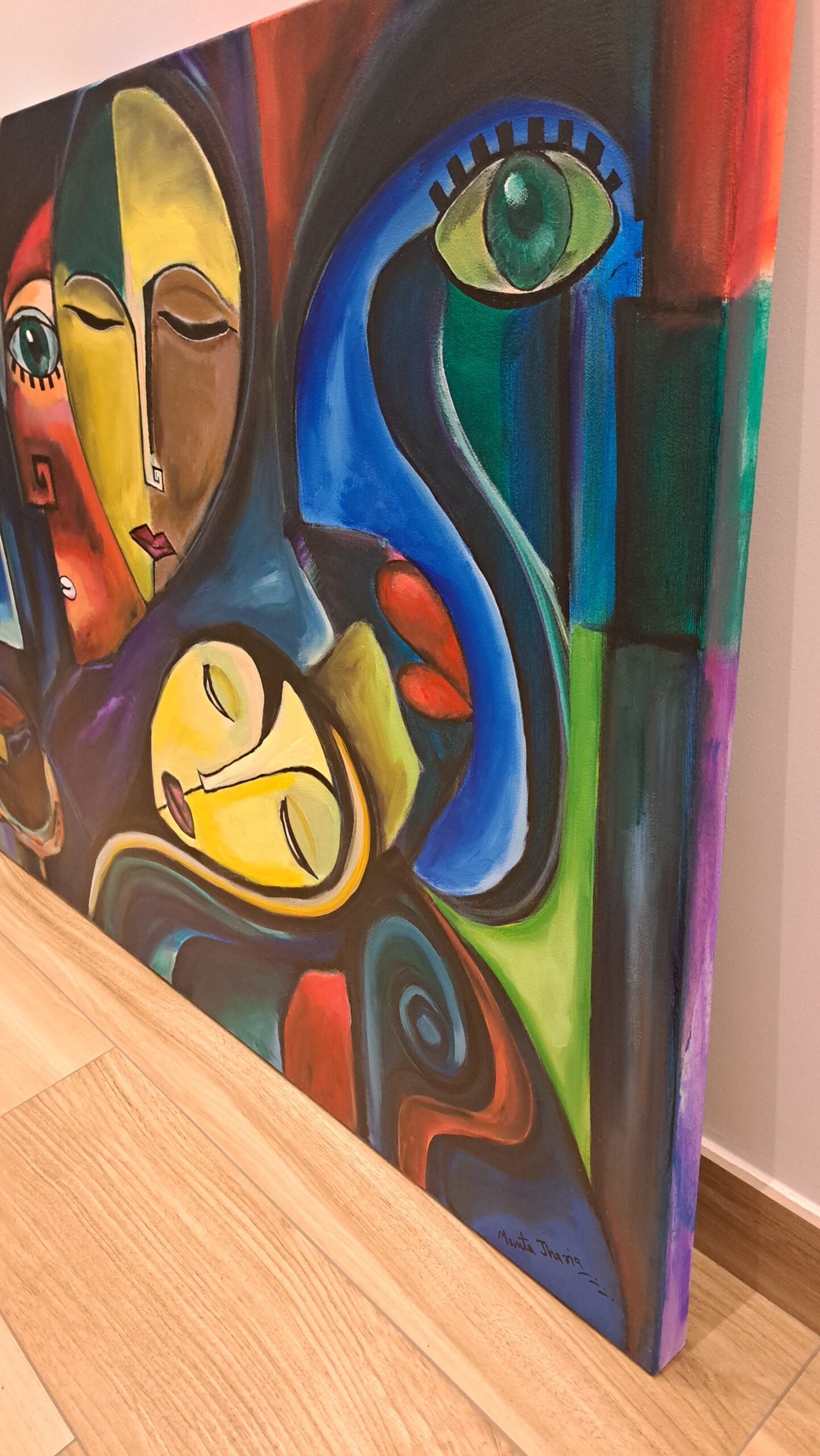
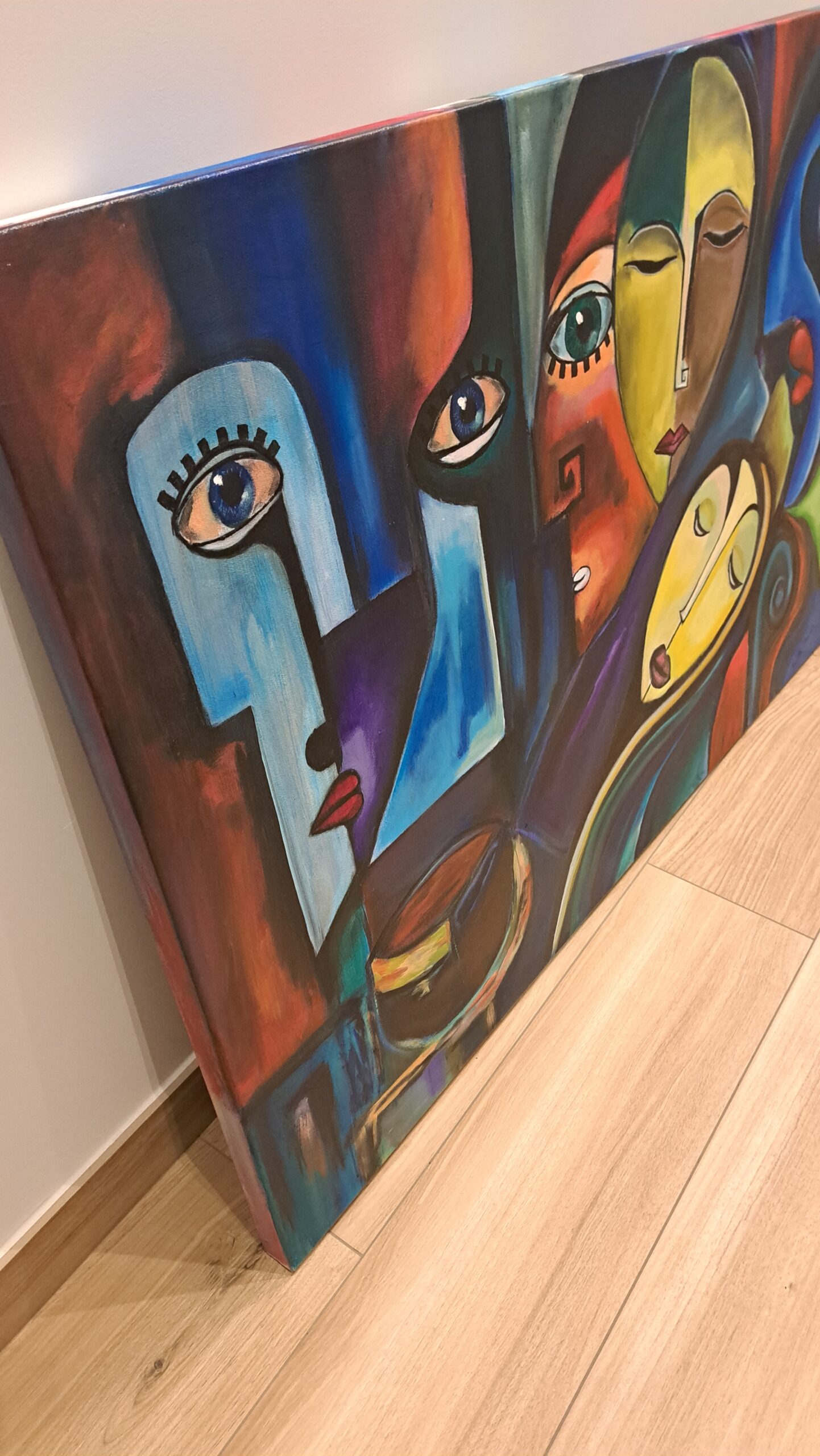
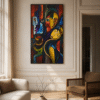
At 80 × 120 cm, the landscape format gives What the Eyes Cannot Hold substantial wall presence.
In a contemporary living room, it works particularly well above a long console, sideboard or sofa.
Warm white, beige, stone, taupe or soft-grey walls allow its blue, green, yellow and burgundy passages to become a powerful focal point.
Executive Office or Creative Studio
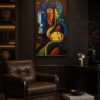
The work is particularly effective in an executive office, architectural practice, design studio or creative workspace.
Rather than acting as conventional decoration, it introduces questions of perception, identity and human relationships.
Bedroom or Private Retreat
Its themes of privacy, vulnerability and inner life also make it suitable for a sophisticated bedroom or private reading environment.
The central figure’s closed eyes introduce a quieter emotional register despite the visual complexity surrounding her.
Private Gallery or Boutique Hotel
As large figurative wall art, the 80 × 120 cm format also gives the painting sufficient visual authority for a private gallery, collector residence or curated boutique hospitality interior.
Why Choose What the Eyes Cannot Hold?
This is not a reproduction, poster or mass-produced decorative image.
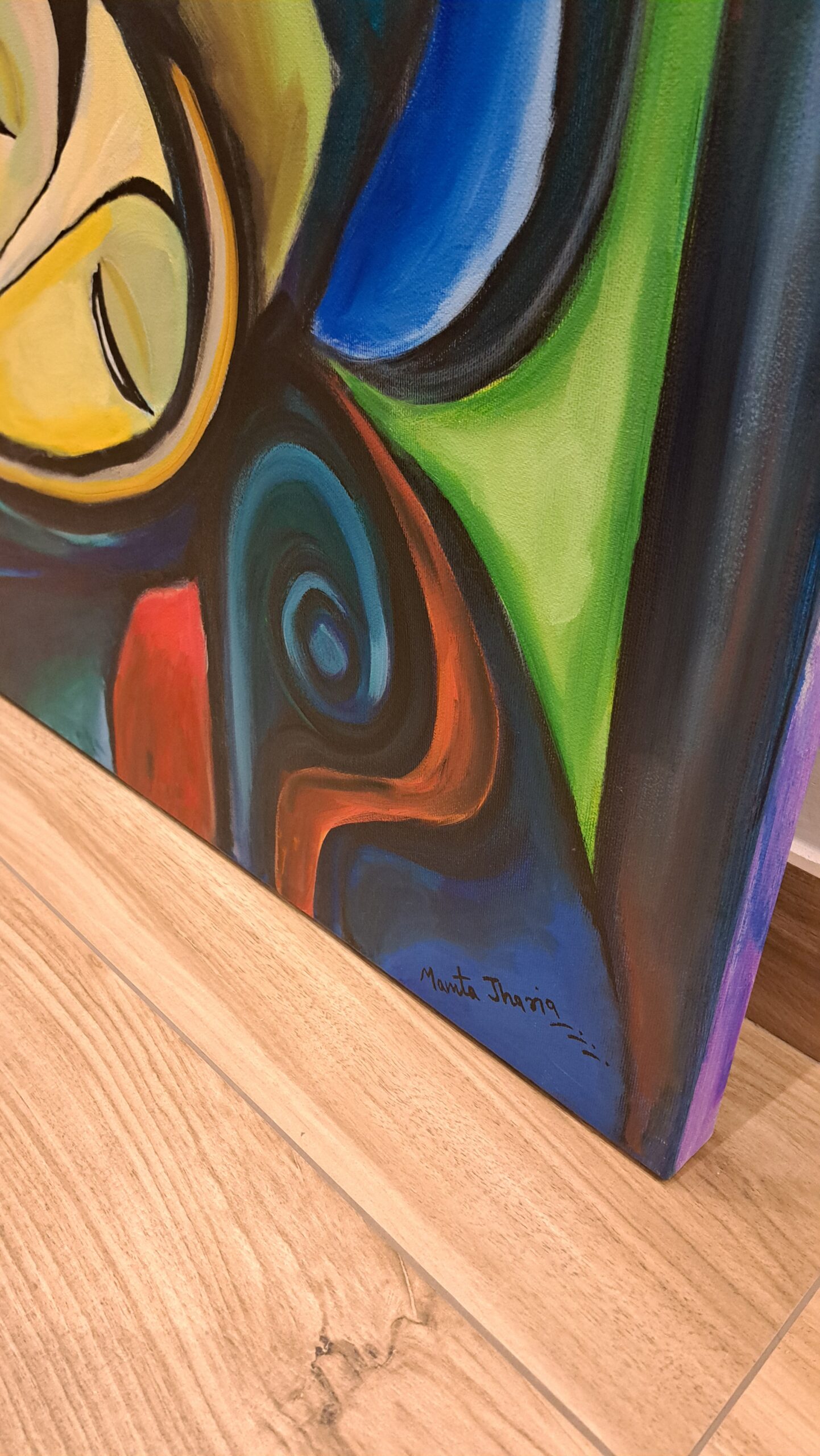
It is a one-of-a-kind original acrylic painting by Mamta Jharia.
For someone searching for contemporary relationship art, its strength lies in the fact that no specific relationship is imposed upon the viewer.
For a collector seeking an original identity painting for sale, the work explores identity through visibility and privacy rather than conventional portraiture.
The repeated eyes create immediate visual recognition, but the deeper narrative develops gradually.
The work can therefore function simultaneously as a striking interior statement and as a psychologically layered artwork that rewards repeated viewing.
FEATURE BULLETS
- One-of-a-kind original artwork
- Acrylic on canvas
- Created by Mamta Jharia in 2026
- Major 80 × 120 cm landscape format
- Repeated expressive-eye imagery
- Multiple fragmented human faces
- Central resting figure with closed eyes
- Contemporary Figurative composition
- Expressionist colour language
- Cubist and geometric fragmentation
- Symbolic exploration of private identity
- Themes of intimacy, vulnerability and protection
- Strong blue, turquoise and green colour identity
- Yellow, burnt-orange, burgundy and purple accents
- Psychological and emotionally layered narrative
- Strong visual impact from a distance
- Detailed viewing experience at close range
- Suitable for premium residential and professional interiors
- No duplicate original available
TECHNICAL SPECIFICATIONS
- Artwork Title: What the Eyes Cannot Hold
- Artist: Mamta Jharia
- Brand: Mamta Jharia Art
- Year: 2026
- Artwork Type: Original Painting
- Medium: Acrylic on canvas
- Dimensions: 80 × 120 cm
- Orientation: Landscape
- Primary Style: Contemporary Figurative
- Secondary Style: Expressionism
- Additional Influences: Cubist / Geometric / Symbolic
- Main Theme: Portrait / People
- Secondary Theme: Relationships / Identity
- Subject: Human figures, fragmented faces, expressive eyes, intimacy and observation
- Dominant Colours: Deep blue, turquoise, green, yellow, burnt orange, burgundy, purple, black and warm earth tones
- Mood: Introspective, intimate, protective, psychological, mysterious, contemplative and emotionally layered
- Originality: One of a kind
Care Instructions
Display the artwork indoors in a stable environment.
Avoid prolonged exposure to strong direct sunlight, excessive humidity, condensation and direct heat sources.
For routine maintenance, gently remove surface dust using a clean, dry and very soft brush or microfiber cloth.
Do not apply water, solvents, household cleaning products or abrasive materials directly to the painted surface.
For specialist cleaning, conservation or structural treatment, consult a qualified professional art conservator.
Frequently Asked Questions
Is What the Eyes Cannot Hold an original painting?
Yes. What the Eyes Cannot Hold is a one-of-a-kind original acrylic painting by Mamta Jharia, created in 2026. It is not an open-edition print or mass-produced artwork.
What size is What the Eyes Cannot Hold?
The artwork measures 80 × 120 cm in landscape orientation, giving it substantial presence for a living room, office, bedroom, private gallery or hospitality interior.
What does What the Eyes Cannot Hold mean?
The painting explores the difference between looking at someone and truly understanding them. It considers the private memories, fears, emotions and inner experiences that remain invisible even to those closest to us.
Why are there so many eyes in the painting?
The repeated eyes create a field of observation. They represent looking, perception and the belief that seeing another person gives us knowledge, while the central figure’s closed eyes challenge that assumption.
Is this an abstract painting?
No. Although it uses geometric fragmentation and abstract passages, the recognisable human figures, faces and psychological interaction make Contemporary Figurative Art the strongest classification.
Where would this expressive eyes figurative painting look best?
It is particularly suitable for a sophisticated living room, executive office, bedroom, reading room, creative studio, private gallery or boutique hotel interior.




 English
  Italian
Reviews
There are no reviews yet.