
Limited Edition Handbags: Why Modern Luxury Is Becoming More Personal
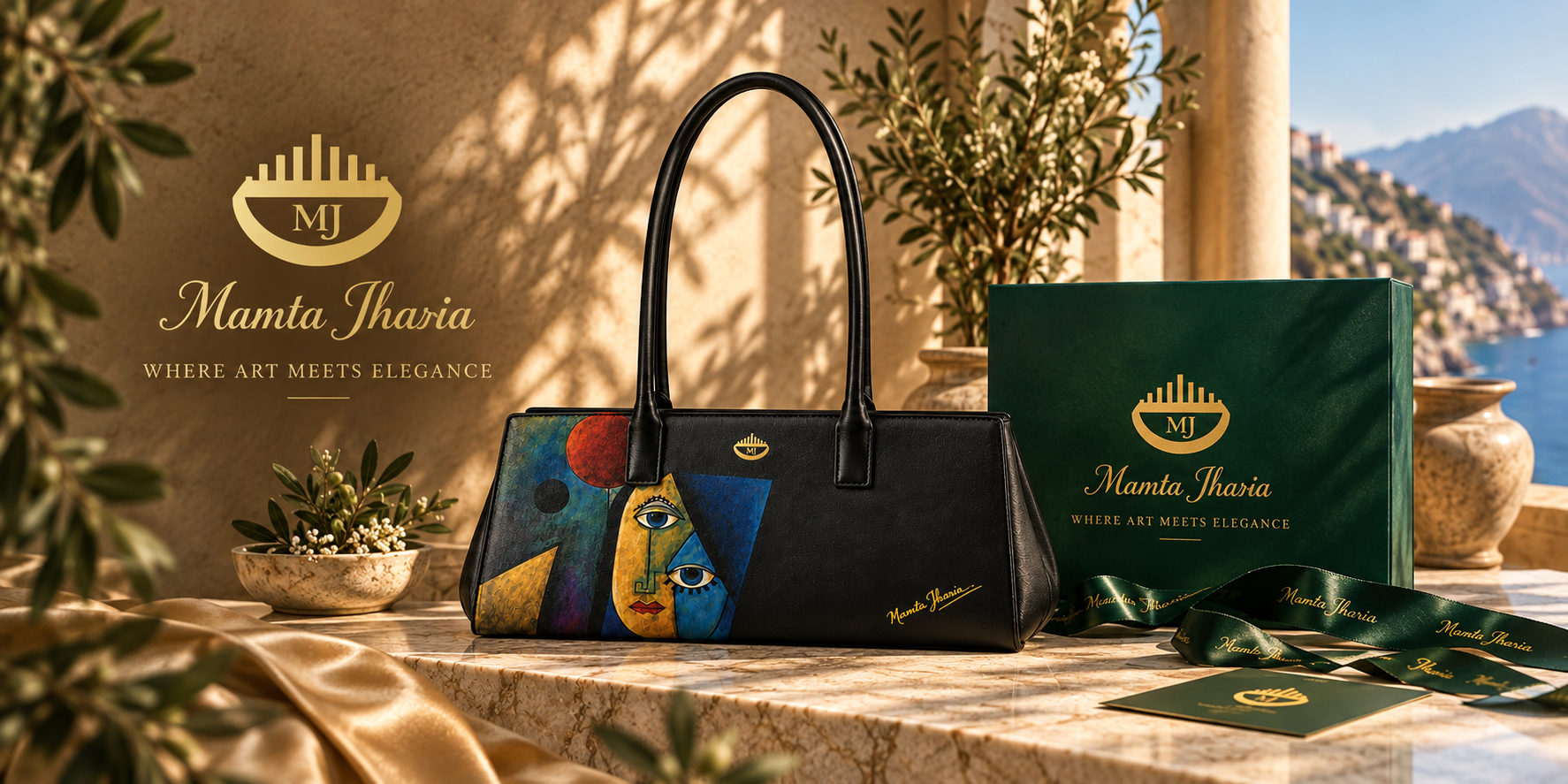
Limited edition handbags invite us to think about luxury in a more personal way. Beyond a familiar label or a seasonal silhouette, they offer the possibility of owning a design connected to a particular creative idea, artistic series or moment in a brand’s development.
A handbag accompanies its owner through ordinary and memorable occasions alike. It sits beside a desk, travels to dinner, joins a weekend away and becomes part of the way someone presents themselves to the world.
That makes choosing one a surprisingly intimate decision.
You might be drawn to an expressive portrait, a distinctive colour combination or a shape that feels natural with your wardrobe. You may appreciate the story behind the design, its practical details or the knowledge that its production belongs to a defined edition.
A MAMTA JHARIA, this relationship between object and owner begins with original art. Paintings become the starting point for handbags that explore colour, composition, function and individual expression.
The appeal of a limited edition becomes strongest when the design gives you a reason to care about it.
What Are Limited Edition Handbags?
Limited edition handbags are designs produced within a stated production limit. That limit might apply to a particular artwork, colourway, material combination or complete model.
For example, a brand could release a specific artistic design as an edition of 100 pieces. Another might produce a small collection using a particular textile, then close that edition once the declared quantity has been completed.
The important detail is clarity.
A meaningful edition description should explain what is limited and how the limit applies. Customers should be able to understand whether the number refers to the entire design, one colour or a particular size.
Limited edition designer bags can also be individually numbered, although numbering is not universal. Some include certificates or digital product information that connects the physical item to its series.
Small-batch production and limited editions are related concepts, but they are not identical. A brand can make small batches repeatedly without setting a final production ceiling.
When considering exclusive handbags, look for a clear edition statement rather than relying on the word “exclusive” alone.
Why Modern Luxury Is Becoming More Personal
Luxury has always carried emotional meaning, but current research gives that connection renewed attention.
McKinsey and The Business of Fashion’s 2026 research into luxury clients in the United States and China identifies emotional connection as a leading driver of brand desirability among surveyed consumers. Its findings also describe forms of exclusivity built around recognition and personal attention.
These findings concern those markets rather than every customer worldwide. Nevertheless, they provide useful context for a broader design question: what makes a luxury product feel relevant to its owner?
An object may impress through its materials and construction, yet someone still needs a reason to choose it over another well-made piece.
That reason can be deeply individual.
A painting may remind someone of a place. A face may suggest confidence or contemplation. A botanical composition may reflect their affection for nature. A colour might connect with something already meaningful in their life.
For an artist-led brand, this creates an opportunity to make the creative identity of the product visible and understandable.
Personal luxury grows through that relationship.
7 Reasons Limited Edition Handbags Can Feel More Meaningful
1. They Belong to a Defined Creative Series
A limited edition gives a design a clear context.
It can represent one artistic composition, a particular colour exploration or a collection developed around a shared idea. Understanding that context makes the handbag easier to appreciate as part of a creative body of work.
For artist-designed handbags, the connection may begin with an original painting and continue through the way that painting is adapted.
A portrait can appear differently on a compact shoulder bag and a larger tote. The selection of details, the amount of negative space and the proportions of the panel all affect the result.
A defined edition helps document that particular interpretation.
It also gives the owner a useful answer when someone asks about the bag: who created the artwork, what inspired the composition and which series it belongs to.
2. Original Artwork Creates a Distinctive Identity
A recognisable artistic language can give a handbag character before any accessory is added.
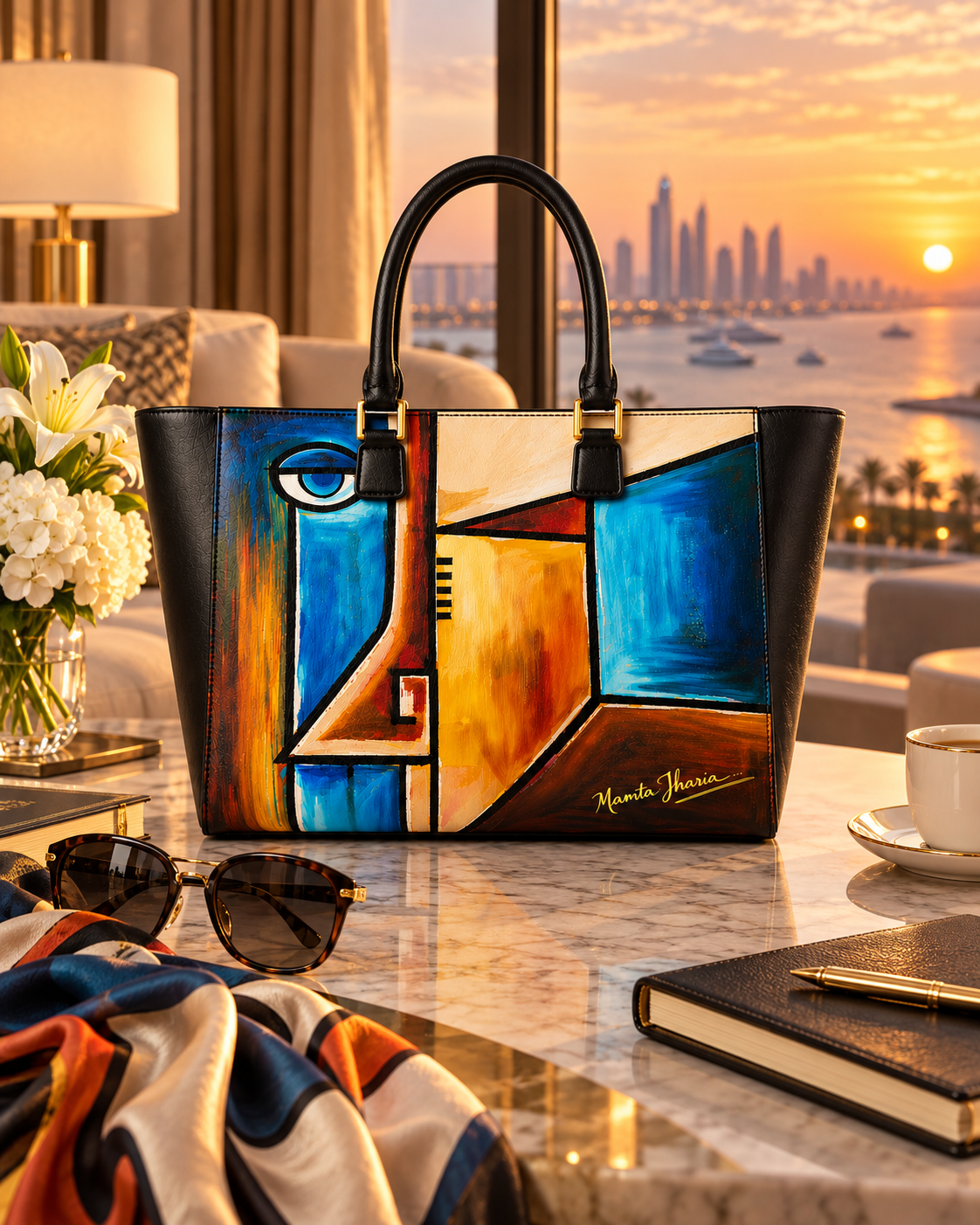
Expressive eyes, geometric faces, botanical forms and painterly colour relationships communicate through imagery. They invite attention in a way that depends on the artist’s composition.
At MAMTA JHARIA, original paintings provide the creative foundation for wearable art handbags.
The process involves choosing what to preserve, what to crop and where to place the image. It requires sensitivity to both the painting and the object that will carry it.
A carefully selected fragment can retain the emotional strength of a larger work. An eye or profile may create a clear focal point without covering the entire surface.
Limited edition handbags can therefore give owners access to a specific expression of an artist’s visual language.
3. They Support Individual Style
Personal style develops through repeated choices.
The colours you wear, the shapes you prefer and the details you notice gradually create a wardrobe that feels like yours.
An artistic handbag can become part of that pattern. You might choose a restrained black design with a small portrait detail or a more colourful composition that brings energy to neutral clothing.
The value of individuality is not dependent on having something nobody else owns. It comes from choosing something that feels connected to you.
A limited edition can add interest to that choice, but the design itself should remain the main attraction.
Ask yourself whether you would still enjoy the bag if you never discussed its edition size. If the answer is yes, the connection is likely to extend beyond scarcity.
4. They Offer a Story You Can Understand
A product story becomes valuable when it explains the actual design.
Who made the original artwork? Which part appears on the handbag? Why was it placed there? How does the format affect the composition?
These are concrete questions that help customers understand artist-designed handbags.
A clear story can also explain the intended use of the piece. A larger tote may be designed around everyday organisation, while a compact pouch may focus on carrying essentials.
For MAMTA JHARIA, the meeting point between painting and handbag design provides a natural narrative.
Art moves from the studio into a setting where it is handled, carried and seen from changing angles. Understanding that transformation can make the finished object more engaging.
5. They Encourage More Considered Purchases
Choosing a handbag takes time when you look beyond the first photograph.
You consider its dimensions, opening, handle drop, weight, materials and interior. You think about whether it suits your daily habits and the clothes you already own.
Limited edition handbags deserve the same careful assessment as any other premium purchase.
A production limit should never replace those practical questions. Instead, it can become one additional detail within a considered decision.
A smaller wardrobe of pieces you regularly enjoy may feel more satisfying than frequent purchases that rarely leave their dust bags.
This is a personal approach to ownership rather than a promise about sustainability. Limited production alone does not establish a product’s environmental impact.
What it can do is encourage attention to the specific design you are choosing.
6. They Can Connect Owners with an Artist’s Work
An artist-designed accessory creates an accessible meeting point between fine art and everyday life.
Someone may first encounter a painter through a handbag, then become interested in the original works behind the collection. Another person may already follow the artist and enjoy seeing their visual language interpreted in a new format.
The handbag becomes part of that connection.
This is particularly relevant when the artist remains clearly identified and the artwork’s origin is explained.
For MAMTA JHARIA, paintings and accessories belong to a shared creative practice. Faces, colour and expressive composition continue across different surfaces, while each format introduces its own requirements.
The owner can appreciate both the practical object and the artistic work that informed it.
7. They Make Everyday Objects Feel Significant
The objects we use regularly often become meaningful through familiarity.
A handbag may accompany a first day at a new job, a journey, an exhibition opening or an evening with friends. Over time, the owner’s experiences become part of its personal story.
An artistic edition can provide a strong starting point for that relationship.
Its imagery, creative origin and production context give it an identity when it is purchased. Carrying it adds another layer.
This is one reason personal luxury can be difficult to measure. The significance of a product grows through use, affection and memory.
The best limited edition handbags leave room for that experience while remaining useful, comfortable and visually appealing.
Craftsmanship Still Matters in Limited Edition Handbags
A limited production number tells you about quantity. It does not, by itself, establish quality.
Materials, construction and finishing need to be assessed separately.
When evaluating a premium handbag, look closely at how its parts work together. A beautiful artistic panel should belong to a complete object whose practical details have received equal attention.
Leather and Other Exterior Materials
Read the material description for the exact model.
Different leather types and synthetic materials have different characteristics, care requirements and surface appearances. An artistic collection can include more than one material category, so avoid assuming that every design uses the same exterior.
Look for clear information that helps you understand what you are purchasing.
The description should be specific enough to support your decision without relying only on broad terms such as “premium” or “luxury.”
Handles and Attachment Points
Handles influence both appearance and comfort.
Consider their length, shape and relationship to the body of the bag. If you want to carry the piece on your shoulder, check the handle drop rather than relying on a front-view photograph.
Attachment points should suit the bag’s intended use. Reinforcement, stitching and the placement of rings are important construction considerations.
These details may be visually subtle, but they contribute to the everyday experience of ownership.
Stitching and Edge Finishing
Consistent stitching helps define the structure of a handbag.
Look at corners, handle tabs, pocket edges and other areas where construction becomes more complex. Edge finishing should appear controlled and appropriate to the material.
On a restrained artistic design, these details can be especially noticeable because the surrounding surface is visually quiet.
Good photographs should help customers inspect them before buying.
Hardware and Closures
Hardware should feel proportionate to the bag.
A ring, clasp or zipper can add interest while supporting function. Consider whether the opening is practical and whether the closure suits the way you intend to use the piece.
Gold-tone colour alone does not identify the metal or coating. Consult the product’s specific material information if those details matter to you.
Interior Organisation
The interior should match the purpose of the handbag.
A work-oriented tote may need useful pockets and space for larger items. A small shoulder bag may prioritise quick access to essentials.
Check the measurements of compartments where relevant. A pocket described as suitable for a device should have dimensions that support that claim.
Limited edition designer bags become more rewarding to own when the inside receives the same attention as the exterior.
Why Negative Space Works in Wearable Art Handbags
Negative space gives an artistic composition room to be understood.
On a predominantly black handbag, a selected face or botanical detail can create a clear focal point. The surrounding surface supports the image by reducing visual competition.
This approach is particularly useful when the bag already includes handles, hardware, seams and closures.
Those components occupy space and influence where the eye travels. Leaving parts of the surface quiet helps the artwork and construction coexist.
At MAMTA JHARIA, expressive imagery and considered negative space are important parts of the design direction.
The objective is to preserve the character of the painting while allowing the handbag to retain a balanced silhouette.
That can mean adapting only one section of an original work rather than reproducing the entire canvas.
Limited Editions, Product Information and Digital Passports
Clear product information helps an owner understand a piece long after the purchase.
For limited edition handbags, useful details can include the model name, artwork reference, edition statement, exterior material, lining, hardware and care guidance.
Where provided, a digital product passport or QR-linked information page can bring these details together.
Its usefulness depends on the accuracy and accessibility of the information. A digital page should explain the actual product and remain easy to consult.
A QR code alone does not prove authenticity or establish regulatory compliance. Those depend on the systems and evidence behind the information.
For an artistic edition, a well-maintained digital record can nevertheless provide a convenient reference to the design’s identity and story.
It can also help the owner find care instructions when they need them.
How to Choose Limited Edition Handbags for Your Lifestyle
Start with your routine.
What do you carry most days? Do you prefer shoulder handles, a crossbody strap or a top handle? Do you need a secure closure, several compartments or a compact shape?
Then consider the design.
Look at the artwork from different views and imagine it with the clothes you wear regularly. Check whether the image remains visible when the bag is carried.
Review the edition information alongside the product specifications. If the production limit is unclear, ask what the declared number includes.
Finally, think about your response to the piece.
A strong choice combines practical suitability with a design you enjoy looking at. The edition adds context to that decision.
You should feel comfortable choosing the handbag for your own reasons and at your own pace.
Styling an Artistic Limited Edition
An expressive handbag can work with a surprisingly versatile wardrobe.
With Tailoring
A blazer and simple trousers provide a clear setting for portrait imagery or abstract colour.
Choose a bag whose scale feels comfortable alongside the outfit. Let one or two colours connect the accessories rather than matching every detail.
With Neutral Clothing
Cream, grey, navy and black can give artwork a strong visual presence.
A restrained outfit allows the handbag’s composition to become a focal point while remaining easy to wear.
With Denim
A white shirt, dark denim and clean shoes create an uncomplicated background.
This combination can make an artistic handbag feel natural for everyday use rather than reserved for special occasions.
With Eveningwear
A compact pouch or small shoulder bag can introduce original imagery beside a simple dress.
Check its capacity and carrying style so the piece remains practical throughout the evening.
Styling limited edition handbags becomes easier when you treat them as part of your wardrobe, with proportions and function considered alongside the artwork.
Are Limited Edition Handbags Collectible?
Some people collect handbags because they enjoy their design, artistic significance or connection to a particular brand.
A documented edition can make a piece interesting within that kind of collection. Information about the artwork, release and production quantity helps establish its context.
However, limited production does not guarantee resale demand or future price appreciation.
Condition, brand recognition, provenance, market interest and many other factors influence resale outcomes. An emerging artist’s handbag should not be presented as a guaranteed financial investment.
Choose it first for the artwork, construction and pleasure of ownership.
Any later collector interest is separate from the reasons that make the bag useful and meaningful today.
Frequently Asked Questions About Limited Edition Handbags
What makes a handbag limited edition?
A handbag is limited edition when its production is restricted within a clearly defined release. The limit may apply to a design, artwork, colourway or material combination. Check the brand’s edition statement to understand the scope.
Are limited edition handbags always numbered?
No. Some are individually numbered, while others are identified through product records, certificates or edition descriptions. Numbering can be useful, but clear production information matters more than the presence of a number alone.
Are artist-designed handbags painted by hand?
Not necessarily. Original paintings can be adapted through printing and other surface processes. A handbag based on an original artwork is different from one individually hand-painted. The product description should make the technique clear.
Does limited edition mean better quality?
No. Edition size concerns production quantity. Quality depends on materials, construction, finishing and suitability for use. Assess those details independently.
How should I care for a wearable art handbag?
Follow the instructions for the specific model. Leather, printed panels, textiles and hardware may require different care. Avoid applying cleaning products to artwork without guidance from the manufacturer.
Can a limited edition bag be an everyday handbag?
Yes, if its dimensions, weight, carrying style and construction suit your routine. Being part of an edition does not mean it must remain unused. Choose a model that combines artistic appeal with the function you need.
MAMTA JHARIA — Where Art Meets Elegance
At MAMTA JHARIA, original paintings provide the beginning of the handbag’s story.
Expressive portraits, botanical imagery and abstract compositions are adapted with attention to placement, proportion and negative space. Each format offers a different way to encounter the artwork.
Our approach to limited edition handbags brings that creative identity together with the practical considerations of an accessory intended to accompany its owner.
The result is an invitation to choose through personal connection: the image that holds your attention, the shape that suits your life and the detail you enjoy discovering again.
Modern luxury becomes personal through these choices.
Explore the MAMTA JHARIA artist bag collection and discover original artwork reimagined for everyday expression.
Where Art Meets Elegance.
 Italian
 English