
What Makes a Handbag Look Expensive? 10 Details That Define Premium Quality

What makes a handbag look expensive? Often, it is the way several small decisions work together: the proportions of the body, the placement of the handles, the finish of the edges and the relationship between the materials and hardware.
You may notice the overall impression before you can explain it. A bag looks balanced. Its details feel deliberate. The artwork or colour draws your attention, while the construction supports the design.
Looking expensive and being well made are related, but they are different judgments. Photography can make a bag appear impressive, while its comfort, durability and functionality become clearer through inspection and use.
For anyone choosing a premium handbag, understanding the details helps connect that first visual impression with something more substantial.
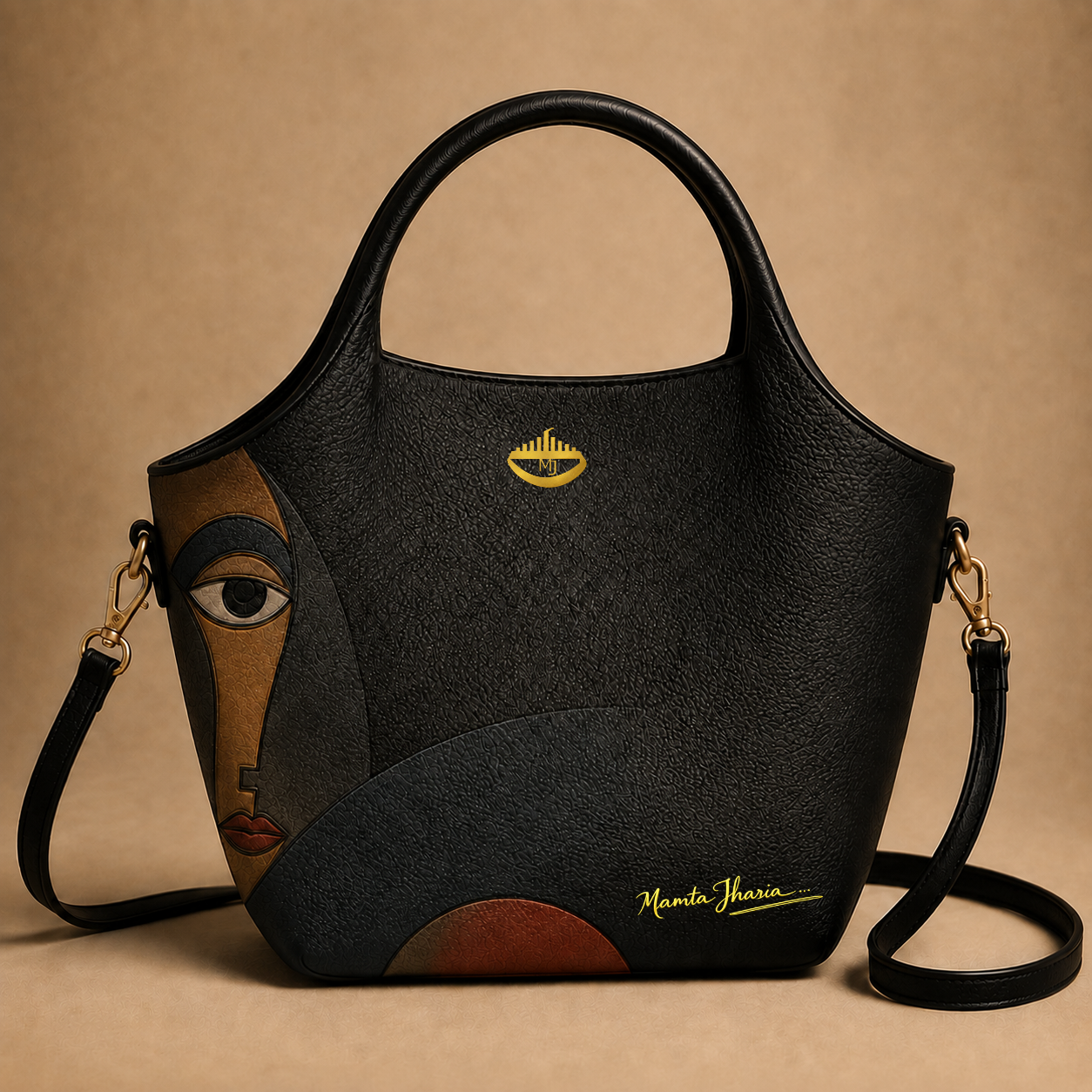
A MAMTA JHARIA, original artwork provides a distinctive starting point. Bringing that artwork into a handbag also requires attention to the complete object: its silhouette, construction, finishing and everyday purpose.
Here are ten details that help explain premium handbag quality—and what to look for beyond an attractive photograph.
1. Balanced Proportions
A handbag’s proportions influence nearly everything you notice about it.
The width, height and depth establish the silhouette. Handles, pockets, closures and hardware then introduce smaller shapes within that structure.
When these elements feel balanced, the bag looks cohesive. A handle can be substantial enough to suit the body without overwhelming it. A metal logo can be visible while remaining proportionate to the available space.
There is no single ideal shape.
An elongated shoulder bag, a structured tote and a compact pouch all have different requirements. What matters is whether their individual parts support the intended design.
What to Look For
Study a straight-on photograph and a side view.
Notice whether the handles sit evenly, the top line follows the intended shape and the base feels appropriate to the body. Consider how the design looks when carried, too.
A bag may appear beautifully balanced on a table but sit awkwardly against the body. Good proportions should support both presentation and use.
For an artist handbag, the artwork is another part of that balance. Its scale should relate naturally to the bag rather than appearing squeezed into a leftover space.
2. Materials That Suit the Design
Materials contribute to appearance, touch, weight and how a bag behaves over time.
Leather can offer natural grain and variation. Textiles can introduce softness or structure. Synthetic materials can provide other surface characteristics and design possibilities.
Premium quality depends on choosing and working with a material appropriately.
For leather handbags, terms such as full-grain, top-grain and corrected-grain describe aspects of the surface and processing. They are useful information, but no single label tells you everything about the finished bag.
Understanding leather terminology can help you assess a handbag’s material description. The Leather Working Group’s guide to leather provides background on leather and its production. Always check the specifications of the individual handbag alongside its construction and finishing.
Tanning, thickness, finishing and construction also matter.
What to Look For
Read the description for the exact model. Check whether the exterior, lining and decorative panels are identified separately.
Examine photographs for surface consistency while allowing for natural variation where relevant. Leather may show grain differences without those differences being defects.
An artistic collection may include several material categories. Confirm the specifications of the individual bag rather than assuming that the whole collection uses one exterior material.
Understanding what you are buying also helps you choose the appropriate care routine.
3. Clean, Consistent Stitching
Stitching is one of the most revealing handbag craftsmanship details.
It defines edges, secures components and creates visual rhythm. On a restrained design, a line of stitching may be especially noticeable because there is little around it to distract the eye.
Consistent stitch spacing and controlled placement help the bag look finished. Corners and transitions deserve particular attention because they can be more difficult to execute neatly.
Tone-on-tone stitching can create a subtle effect. Contrasting thread makes the seam more prominent. Either can look refined when it suits the design.
What to Look For
Inspect the handle tabs, pocket edges, zipper areas and corners.
Look for unintended wandering lines, skipped stitches, loose thread ends or puckering. Remember that some reinforcement areas deliberately use a different stitching pattern.
Double stitching can create an attractive border and serve a construction purpose, but more rows do not automatically mean greater quality.
The stitch type, thread, material and seam design need to work together. A clean result reflects control rather than decoration alone.
4. Carefully Finished Edges
Edges reveal how much attention a bag has received after its components have been cut and assembled.
Depending on the material and design, an edge may be painted, folded, bound, burnished or intentionally left exposed with a suitable treatment.
Each method produces a different appearance. A painted leather edge can create a crisp outline, while a folded edge offers another kind of finish.
The important quality is consistency.
What to Look For
Check handles, straps, tabs and exposed panel edges.
An edge finish should suit the material and follow the shape neatly. Painted edges should not appear carelessly spilled onto the surrounding surface. Folded edges should sit cleanly without unintended bulk.
Photographs may reveal uneven application, but flexibility and long-term behaviour are harder to judge remotely.
Ask for close-up images when necessary, especially around curved areas and strap ends.
Edge finishing contributes strongly to what makes a handbag look expensive because it defines the boundary of the object. A controlled outline helps the entire silhouette feel more precise.
5. Handles and Attachments That Feel Integrated
Handles are both a design feature and a part you interact with constantly.
Their shape, diameter, length and position influence the appearance of the bag. Their construction and attachment influence comfort and function.
A refined attachment should look connected to the body rather than added as an afterthought. Tabs, rings and stitching need to be proportionate to the surrounding panel.
However, a slim appearance must still be supported by appropriate construction.
What to Look For
Check whether the handles are positioned evenly and whether the attachment tabs sit neatly.
For shoulder carrying, confirm the handle drop. Allow for the clothing you normally wear, including jackets or coats.
Look at how rings and leather tabs meet. Consider whether the hardware can move comfortably without pressing awkwardly against the material.
Some reinforcement sits inside the bag and cannot be assessed from a photograph. Clear product information and reliable construction practices matter alongside appearance.
For an art handbag, handle placement also affects the image. Attachments should be considered during composition so they do not unintentionally interrupt an important feature.
6. Hardware with Thoughtful Scale and Finish
Metal components can bring light, definition and movement to a handbag.
Rings, clasps, feet, buckles and zipper pulls all contribute to its visual character. Their finish can complement the artwork, leather and overall mood.
Premium-looking hardware is often distinguished by how well it fits the design.
A large component may suit a substantial tote. The same component could overwhelm a small pouch. Matching every piece in scale is not necessary, but the relationships should feel deliberate.
What to Look For
Inspect visible surfaces for rough edges, uneven colouring and awkward alignment.
Check whether components appear suitable for their function. A clasp should be accessible, a ring should fit the attached leather and a buckle should work comfortably with the strap.
Gold-tone describes colour rather than the underlying metal. Brass, steel and zinc alloys have different characteristics, while coatings and surface treatments influence appearance and performance.
Weight alone is also an unreliable measure of quality. A heavier fitting may add unnecessary load without improving the bag.
Useful material descriptions explain more than words such as “luxury hardware.”
7. A Structure That Supports the Intended Shape
A handbag should behave in a way that matches its design.
A structured model is intended to hold a defined silhouette. A relaxed shoulder bag may be designed to soften and fold. Neither approach is inherently more premium.
The important question is whether the structure looks intentional and works in use.
Support can come from the material, panel construction, base and internal reinforcement. These elements influence how the bag carries its contents.
What to Look For
View the bag from several angles and, where possible, with representative contents inside.
Check whether the base provides the intended support and whether the sides and top behave consistently with the design.
A freestanding photograph is useful, but it does not show everything. Stuffing can temporarily improve a bag’s shape during photography.
For larger bags, consider how they respond to a realistic load. A work tote and an evening pouch have very different requirements.
What makes a handbag look expensive is often the confidence of its silhouette. Its construction should support that impression during ordinary use.
8. Closures That Are Neat and Easy to Use
A closure affects both the front-facing design and the daily experience of carrying a bag.
Zippers, magnetic fastenings, turn locks and other systems each offer different benefits. The right choice depends on the bag’s purpose and structure.
A closure can look elegant while remaining easy to access. Its placement should make sense when the bag is being carried or set down.
What to Look For
Check whether a zipper is aligned cleanly and whether the surrounding material puckers unexpectedly.
Look at the opening width. A bag may have generous external dimensions but a restricted entrance that makes its capacity difficult to use.
A recognised zipper manufacturer can be a useful specification, although the exact zipper and its installation still matter.
For metal fastenings, check the alignment and the space available for your fingers. Practical interaction is part of quality.
If you are purchasing remotely, a short demonstration video can explain more than a still image.
9. An Interior Designed Around Real Use
The inside of a bag should make its purpose clear.
A larger everyday tote may benefit from a secure pocket and accessible compartments. A compact bag may need a simpler arrangement that preserves usable space.
More pockets are not automatically better.
Organisation becomes valuable when it matches what you carry and allows you to find those items easily.
What to Look For
Read the internal dimensions and inspect the pocket arrangement.
Check whether the lining sits neatly, whether pocket openings are accessible and whether compartments take up too much of the main space.
A device compartment should have measurements appropriate to the intended device. General labels such as “laptop bag” are less useful without dimensions.
Lining colour also influences usability. A lighter interior can make small objects easier to see, although personal preference and maintenance matter.
Premium handbag quality includes these ordinary interactions. Being able to reach keys or close a pocket comfortably contributes to the pleasure of ownership.
10. A Distinctive Design with Clear Visual Focus
The final detail is the relationship between everything you see.
A handbag can have good materials and neat stitching yet still feel visually unresolved. Too many competing focal points can make the composition difficult to read.
A clear design gives attention somewhere to go.
That focus might be a sculptural silhouette, a carefully chosen texture or an original painting.
For MAMTA JHARIA, artwork provides a personal visual identity. Expressive faces, eyes, botanical forms and abstract colour can become focal points within the handbag’s architecture.
What to Look For
Notice what attracts your eye first.
Does the artwork have enough space? Does the hardware complement it? Do seams or attachments interrupt important details?
On artist-designed handbags, negative space can help establish clarity. A selected fragment of a painting against a quiet background may communicate strongly without filling the entire panel.
Printed adaptations of original paintings and individually hand-painted bags are different techniques. A clear product description should identify the approach used.
Distinctive design becomes more convincing when the artistic idea and physical object feel connected.
Why Looking Expensive Is Only Part of the Decision
A photograph gives you a first impression. It cannot fully reveal comfort, surface feel, construction strength or long-term performance.
That is why visual appeal should begin the assessment rather than complete it.
Use close-up images, measurements, material descriptions and carrying photographs together. Where possible, handle the bag or request a demonstration of its opening and interior.
Consider the brand’s clarity, too.
Accurate information about materials, manufacture and care helps you make a more confident decision. Vague claims can leave important questions unanswered, even when the photography is beautiful.
A premium price also needs to be assessed in context. Artistic development, materials, production, service and brand positioning can all contribute to cost.
The most useful question is whether the actual product offers the qualities you value.
How MAMTA JHARIA Brings Art and Handbag Design Together
At MAMTA JHARIA, the creative starting point is an original painting.
Translating it into an accessory introduces a new set of decisions. The image must respond to the size of the panel, the placement of handles and the way the bag moves through everyday life.
Selected colour and negative space help preserve a clear focal point. Different formats offer different opportunities: a compact shoulder bag may feature an intimate portrait detail, while a tote can accommodate a broader composition.
The wider development process considers the object around that artwork, including proportions, attachment details, stitching, edges, hardware and interior organisation.
Specifications can vary between models, so each product’s description should guide the purchase.
This relationship between artistic character and practical detail is central to the collection’s direction.
A Practical Checklist Before Buying a Premium Handbag
Before choosing a bag, ask:
Do its dimensions and carrying style suit my routine?
Are the materials described clearly for this model?
Can I inspect stitching, edges and attachment points?
Does the closure provide comfortable access?
Is the interior useful for what I carry?
Does the design remain appealing from different angles?
Are care instructions available?
Do I enjoy the artwork or silhouette beyond its first impression?
These questions help connect appearance with ownership.
You do not need every bag to serve every purpose. A compact artistic pouch and a larger work tote can each be excellent choices within their intended role.
Domande frequenti
What makes a handbag look expensive without a large logo?
Balanced proportions, controlled finishing, cohesive hardware and a clear design identity can create a refined impression. A logo is only one possible visual element.
Does full-grain leather always mean a better handbag?
Full-grain leather can be an attractive material, but the finished result also depends on its processing, thickness, suitability and construction. Assess the complete bag.
Is heavier hardware better quality?
Not necessarily. Material, manufacture, finish and suitability matter more than weight alone. Hardware should function well without adding unnecessary load.
Can a printed art handbag look premium?
Yes. Artwork placement, surface execution and the surrounding construction can produce a refined result. The technique should be described accurately.
Are natural leather markings defects?
Some variation is characteristic of natural leather. Other marks may relate to damage or unsuitable finishing. Their significance depends on the material, location and effect on function.
Should an expensive-looking handbag hold its shape?
It should behave as intended. A structured bag should retain its designed form, while a relaxed model may deliberately soften and fold.
MAMTA JHARIA — Where Art Meets Elegance
Understanding what makes a handbag look expensive brings attention to the decisions behind the object.
Proportions establish its presence. Materials create its surface and feel. Construction supports its use. Artistic detail gives it an individual voice.
At MAMTA JHARIA, original paintings enter that conversation through expressive imagery, considered placement and space that allows the artwork to be seen.
The most rewarding handbag brings these qualities together in a design you enjoy carrying.
Explore the MAMTA JHARIA artist bag collection and discover original art shaped for everyday expression.
Where Art Meets Elegance.
 Italian
 English