Logo-Free Luxury: Why Distinctive Design Can Speak Louder Than a Monogram
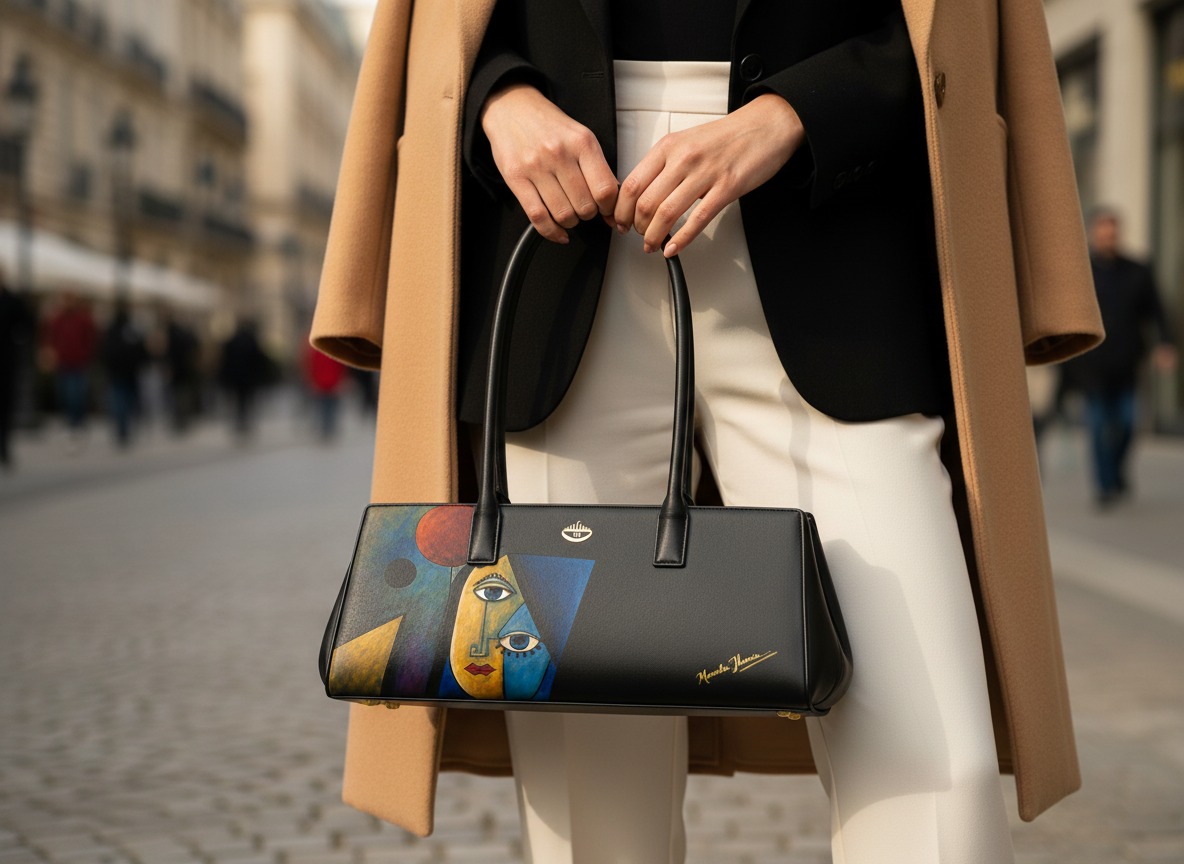
Logo free luxury bags invite us to look more closely at the object itself.
You notice the silhouette, the relationship between colours, the placement of hardware and the finish of the handles. On an artist-designed handbag, your attention may settle on an expressive eye, a painted profile or a botanical detail.
The design gives you something to recognise before you read the name.
This is an interesting possibility for contemporary luxury: a handbag can establish its identity through a creative language that extends beyond a prominent logo.
For MAMTA JHARIA, that language begins with original paintings. Expressive portraits, abstract compositions and botanical imagery become the starting point for accessories that bring art into everyday life.
The appeal lies in a personal encounter with the design. You see something that holds your attention, and you want to carry it.
What Does Logo-Free Luxury Mean?
In the strictest sense, logo-free luxury describes a product without visible exterior branding.
In fashion conversation, the phrase is also used more broadly for designs where branding is discreet and the shape, material or creative detail takes visual priority.
These are related approaches, but they are different.
A handbag with a small metal brand name is discreetly branded. A handbag with no exterior name or emblem is literally logo-free. Both can appeal to someone who prefers design-led accessories.
This distinction matters for MAMTA JHARIA, where selected designs can include a visible signature or brand detail. The connection to this article is the broader philosophy of letting artwork and design lead the impression.
A brand mark can provide attribution while remaining one component of the composition.
Why Understated Design Still Has Relevance
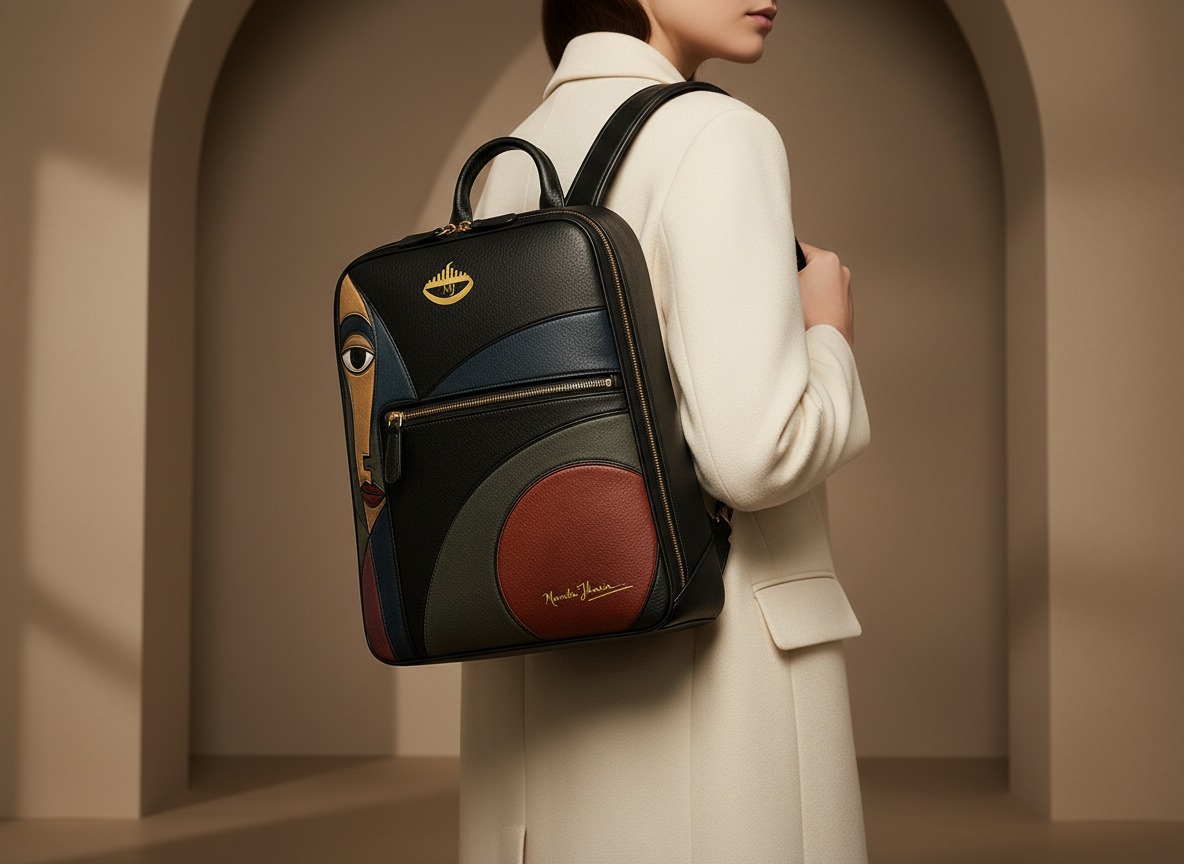
Understated handbags give attention to qualities that reward a closer look.
A clean silhouette makes proportion more apparent. A quiet surface reveals the material. Selective hardware allows each fitting to become more noticeable.
British Vogue’s recent minimalist handbag coverage continues to explore this design territory, including shapes whose identity comes through their construction and silhouette. You can explore its edit of minimalist handbags for examples of the aesthetic.
This does not establish that every luxury customer wants the same kind of bag. Preferences remain varied.
Some people enjoy monograms. Others prefer discreet names, sculptural forms or artistic imagery. Many choose differently depending on the occasion.
The useful question is how a handbag communicates the qualities its owner values.
For a design-led brand, that communication can happen through a consistent visual language.
Personal Connection Gives Luxury Another Dimension
A handbag can appeal through its appearance, function and relationship to the person who created it.
Current research provides context for the importance of that connection.
McKinsey and The Business of Fashion’s 2026 study of luxury clients in the United States and China identifies emotional connection as a leading driver of brand desirability among surveyed consumers. The findings concern those markets and help explain why the meaning of a product can matter alongside established luxury attributes.
For further reading, see the State of Luxury research.
Our interpretation is that artist-designed accessories have a useful opportunity here.
An original image can create a response before someone knows much about the brand. A face may suggest confidence, a colour may evoke a memory, or a botanical composition may connect with an existing interest.
The brand’s story then gives that first response more context.
7 Design Details That Create Identity Beyond a Logo
1. A Recognisable Silhouette
Shape is one of the first things we understand about a handbag.
An elongated shoulder bag creates a different impression from a deep tote or a compact, rounded pouch. The height, width and depth establish a visual outline that can become familiar over time.
Handles and straps contribute to that outline.
Their length, curvature and placement affect how the bag looks on a table and against the body. A well-developed silhouette should feel coherent from several viewpoints.
For logo free luxury bags, this coherence is particularly important because the form carries much of the visual identity.
A distinctive silhouette need not be unusual for its own sake. It can emerge from careful adjustments to familiar proportions.
2. An Original Artistic Language
Artwork offers another route to recognition.
An artist’s way of shaping a face, combining colours or arranging geometric forms can create continuity across different designs.
That continuity is more meaningful when it comes from original work and the artist is clearly identified.
At MAMTA JHARIA, paintings provide the creative foundation. Expressive eyes, profiles, botanical forms and abstract details can appear in different arrangements while retaining a shared artistic character.
A tote may present an extended composition. A small shoulder bag may focus on a selected fragment.
The individual bags remain different, while the imagery connects them to the same creative practice.
3. Thoughtful Use of Negative Space
Negative space gives the eye room to understand a composition.
On a predominantly black handbag, a selected painted detail can become a clear focal point. The surrounding quiet surface helps establish emphasis.
This is especially useful when the bag also includes handles, seams, rings and a closure.
Those elements already occupy visual space. Artwork placement needs to consider them rather than treating the entire panel as an uninterrupted canvas.
A face positioned away from an attachment point can remain easier to read. A painted detail along the lower section can preserve a quiet upper area.
For MAMTA JHARIA, controlled placement and negative space are important parts of the design direction.
They help the artwork and the accessory feel connected.
4. A Considered Colour Palette
Colour can make a handbag distinctive without requiring a complex composition.
A dark foundation with one strong accent creates a different mood from a broad, colourful arrangement. Both can work when the relationships are deliberate.
The hardware, edge finish, lining and artwork also contribute to the complete palette.
Gold-tone fittings may introduce warmth. Black leather can provide a clear background for a portrait. A restrained blue or green detail can connect the image with a wider outfit.
Consistency does not require every design to use the same colours.
It means that each combination feels resolved and recognisably connected to the brand’s creative direction.
Art inspired handbags can be expressive while remaining easy to integrate into a wardrobe.
5. Hardware That Belongs to the Design
Hardware has a practical role and a visual presence.
Rings, clasps, buckles and zipper pulls create small points of emphasis. Their proportions should suit both their function and the size of the bag.
A fitting can become part of a design signature through repeated shape or placement. That identity works best when it is supported by comfortable use.
Examine how metal components meet the surrounding material.
A ring should fit its leather tab appropriately. A clasp should be accessible. A zipper pull should provide a comfortable grip.
Material and finish information also matters. Gold-tone colour alone does not identify the underlying alloy or coating.
In quiet luxury handbags, selective hardware can contribute a great deal because each component remains visible.
6. Finishing That Rewards Close Inspection
Discreet design brings craftsmanship into view.
Stitching, edges, corners and handle tabs become more noticeable when the surrounding surface is restrained.
Look for controlled lines, appropriate seam placement and finishing that follows the intended shape.
Different materials require different techniques. An edge may be painted, folded or treated in another suitable way. The result should be consistent with the design and construction.
Premium appearance is strengthened when the bag feels considered at close range as well as from a distance.
Photographs can reveal visible finishing, although they cannot establish every aspect of durability or internal reinforcement.
Clear specifications and construction information help complete the picture.
7. Continuity Across the Collection
A recognisable brand develops through repeated decisions.
The same artistic sensibility may appear in different formats. A particular approach to negative space, hardware or colour can create familiarity across a collection.
This continuity gives customers something to recognise beyond the name.
It also allows a brand to explore new shapes while maintaining its identity.
For MAMTA JHARIA, the paintings provide that creative thread. Their adaptation changes with the bag, while the original artistic language remains central.
A compact pouch and a larger tote can belong to the same world without using an identical front panel.
Distinctive handbag design becomes stronger through this kind of thoughtful development.
Can a Statement Art Bag Belong to Understated Luxury?
Yes. Understated branding and expressive imagery can exist together.
The overall impression depends on composition, scale and the relationship between details.
A predominantly black bag with a carefully placed portrait can feel balanced and expressive. Its artistic focal point may be strong, while its silhouette and fittings remain restrained.
A more colourful design creates another mood, but it can still be cohesive.
The important consideration is whether the elements support one another.
Art does not need to be visually small to feel considered. A prominent image can work when it is given a clear setting and the surrounding details are controlled.
This is where wearable art creates an interesting interpretation of luxury: expression comes through the artist’s visual language.
The MAMTA JHARIA Approach: Artwork as a Signature
MAMTA JHARIA begins with paintings and considers how their character can move onto an accessory.
The process requires more than selecting an attractive image.
A painting is usually viewed as a flat composition. A handbag has depth, curves, seams and a carrying position. It moves through changing light and surroundings.
Adapting the artwork means deciding which details retain their impact at a new scale.
An eye may become the focal point of a compact design. A profile may sit within a wider panel. A botanical fragment may introduce movement beside a structured edge.
The brand detail can then sit within the composition as attribution.
The aim is to create bags whose artistic identity is noticeable and whose practical form feels considered.
That approach connects with the appeal of logo free luxury bags, even where an individual model uses discreet exterior branding.
How to Style Design-Led Luxury Bags
An expressive handbag can work naturally with simple wardrobe foundations.
With Monochrome Clothing
Black, navy, grey or cream worn as a cohesive outfit creates a clear setting for artwork.
A colour in the painting can become the main accent. Keep additional accessories selective so the overall composition remains easy to read.
With Tailored Separates
A blazer and trousers provide structure beside an artistic bag.
Consider the scale of the handbag relative to the outfit. A substantial tote can suit broader proportions, while a compact style creates a different balance.
With Denim and a White Shirt
This familiar combination makes an artistic handbag approachable for everyday use.
The simplicity of the clothing gives the image room to become visible without requiring elaborate styling.
With Eveningwear
A clean dress silhouette can pair beautifully with an expressive pouch or small shoulder bag.
Choose a carrying style and capacity that suit the occasion. The artwork can provide the main decorative detail.
Choosing Logo Free Luxury Bags Beyond Their Appearance
Design is a strong starting point, but the bag also needs to suit your life.
Check its usable dimensions, opening, handle drop and internal arrangement.
Read the material description for the exact model. Different designs within an artistic collection may use different exterior materials or construction methods.
Look for photographs showing the front, sides, interior and carrying position.
Consider the artwork technique as well. Printed adaptations of original paintings and individually hand-painted surfaces are different approaches, and the description should explain which applies.
Then ask a personal question: would you still enjoy carrying this bag if no one recognised the brand?
Your answer helps reveal whether the appeal comes from the design itself.
Limited Editions and Creative Identity
A defined artistic edition can give a handbag additional context.
It may represent a particular composition, colour interpretation or release within the artist’s work.
Clear edition information helps owners understand that context. Check what the production limit applies to and whether the series is documented.
Scarcity alone does not establish quality or guarantee future resale value.
The artistic character, construction and usefulness remain central to the decision.
For a design-led brand, a limited edition becomes most meaningful when it preserves a particular creative idea and gives customers a clear account of its origin.
Domande frequenti
What are logo free luxury bags?
They are luxury bags without visible exterior logos. The phrase is sometimes used more broadly for bags with discreet branding, but a small exterior brand mark means the design is not literally logo-free.
Can a bag be recognisable without a monogram?
Yes. Its silhouette, hardware, colour relationships, texture or original artwork can create a distinctive identity.
Are discreetly branded bags always better quality?
No. Branding size does not establish quality. Materials, construction, finishing and practical suitability need to be assessed separately.
Can an artistic handbag feel understated?
Yes. Controlled artwork placement, negative space and balanced details can create an expressive design with a restrained overall composition.
Does MAMTA JHARIA make completely unbranded bags?
Exterior branding can vary by model. The design philosophy discussed here focuses on artwork and composition as the leading visual identity. Check the photographs of the individual product for its branding details.
Do logo-free designs stay fashionable longer?
No design has a guaranteed lifespan in fashion. A bag is more likely to remain useful in your wardrobe when its appearance and function suit your own preferences over time.
MAMTA JHARIA — Where Art Meets Elegance
A handbag can communicate through shape, colour, craftsmanship and original imagery.
These details create something worth looking at before the brand name is read.
At MAMTA JHARIA, paintings provide that first connection. Expressive faces, botanical forms and abstract compositions are adapted with attention to proportion, placement and everyday use.
The result is a design direction where artwork becomes a recognisable creative signature.
Explore the MAMTA JHARIA artist bag collection and discover a piece whose design connects with your personal style.
Where Art Meets Elegance.
 Italian
 English